
Dogwood Therapeutics Advances Synthetic Halneuron® Development and Navigates Clinical Progress in Neuropathic Pain
Recent quarter highlights progress on a synthetic formulation to enable scalable manufacturing and intellectual property extension, alongside ongoing Phase 2b clinical trials for its lead analgesic candidate.
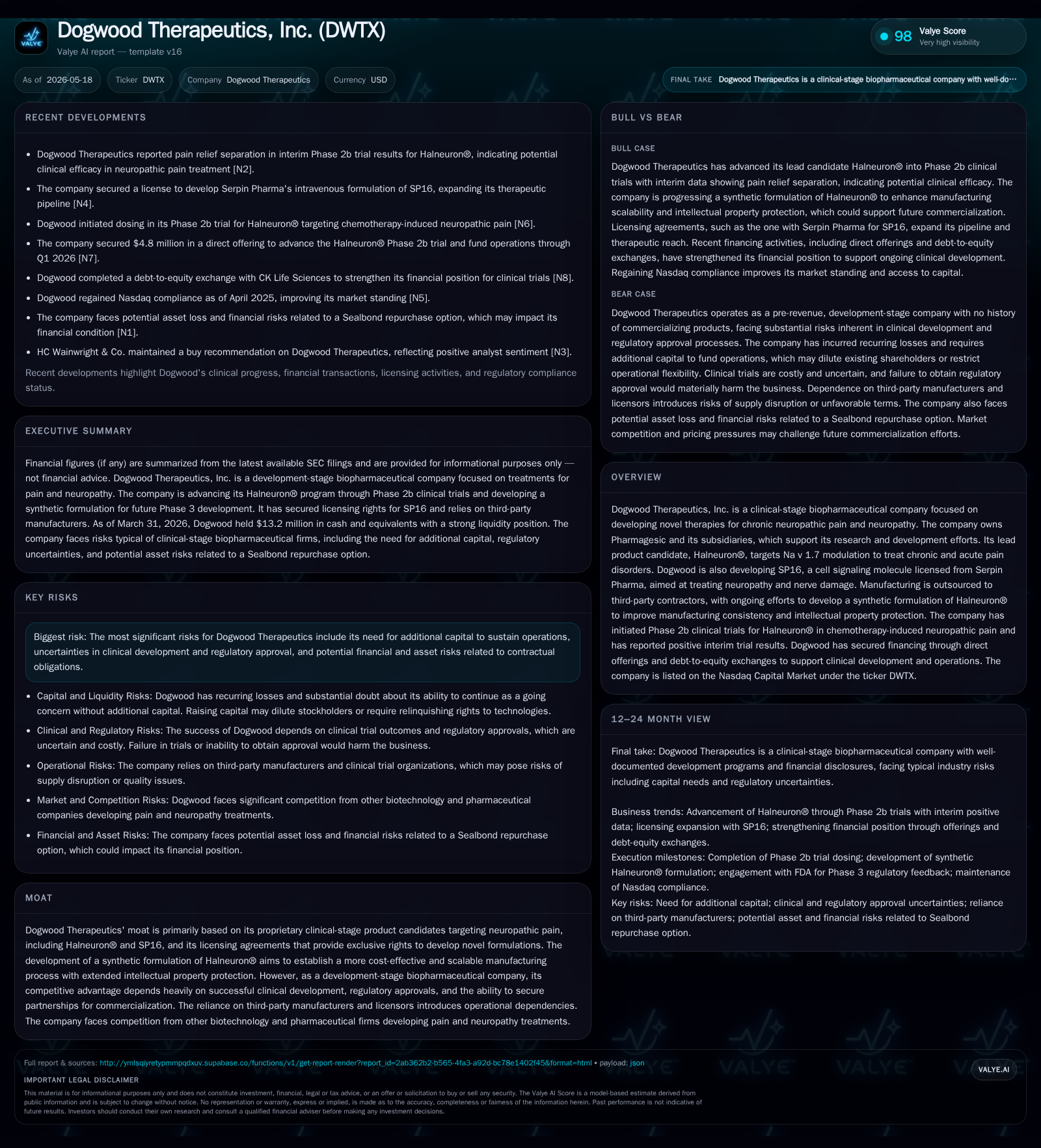
Dogwood Therapeutics reported continued advancement of its Halneuron® program with positive interim Phase 2b data in chemotherapy-induced neuropathic pain and near completion of a synthetic formulation expected to enter Phase 3 development. The synthetic version aims to address manufacturing scalability and patent longevity. Concurrently, Dogwood is developing SP16 via a license agreement for neuropathy treatment. The company maintains sufficient liquidity but remains reliant on successful clinical outcomes and regulatory approval to transition from development-stage status.
Recent Operating Update
The latest quarterly filing dated May 15, 2026 [S2] provides the most recent operating insight into Dogwood Therapeutics’ progress, underscoring significant clinical developments and strategic manufacturing initiatives. Most notably, the firm is advancing the synthetic formulation of its lead product candidate, Halneuron®, which has achieved chemical equivalence to the naturally sourced tetrodotoxin utilized in prior formulations. This milestone positions the company to engage with the FDA later in 2026 for guidance on initiating Phase 3 trials slated for 2027.
Interim data from ongoing Phase 2b trials of Halneuron® targeting chemotherapy-induced neuropathic pain have been positively received internally, bolstering confidence in the molecule’s clinical profile [S3]. The filing also confirms that while Dogwood continues relying on contract manufacturing organizations (CMOs) for clinical supply, efforts to transition toward scalable synthetic production are nearing fruition.
In parallel, Dogwood maintains its exclusive licensing agreement with Serpin Pharma for SP16, a novel cell signaling molecule therapy focused on neuropathy — a strategic diversification within its pipeline [S1]. This program remains in early development but leverages Serpin’s research and proprietary bioactive molecules.
Business Model
Dogwood Therapeutics operates as a clinical-stage biopharmaceutical company specializing in treatments for chronic neuropathic pain conditions and related disorders. Its revenue model is pre-commercial — investments currently target successful clinical advancement to unlock value through eventual product approvals or partnership deals.
The key revenue drivers will depend on either direct commercialization or license/royalty arrangements post-approval [S23]. For now, costs embody R&D expenditures, outsourced manufacturing, and clinical trials management. Manufacturing is fully outsourced to third parties, splitting API synthesis (currently natural tetrodotoxin-based) from fill-finish lyophilized product formulation
The shift toward synthetic Halneuron® seeks to resolve several strategic constraints: natural toxin sourcing is expensive and variable; synthetic chemistry offers reliability, repeatability, and cost control at scale. Importantly, it potentially lengthens IP protection — critical for downstream pricing power and market exclusivity.
Licensing SP16 from Serpin Pharma incurs royalty-free fees currently but would transform if Dogwood successfully commercializes or sublicenses this pipeline candidate. The dual-pillar pipeline comprising Halneuron® and SP16 reflects an approach balancing risk across different mechanisms of action within neuropathic pain.
Industry Structure and Competitive Position
Neuropathic pain therapeutics represent a challenging market segment marked by high unmet need due to the complexity of pain pathophysiology and historically limited effective treatments without opioid risk profiles. Voltage-gated sodium channel modulation (specifically Na v 1.7) — the mechanism targeted by Halneuron® — is recognized as promising due to its role in nociceptive signal conduction.
Dogwood competes primarily among biotechnology companies pursuing novel non-opioid analgesics as well as specialty pharmaceutical divisions of larger firms focused on chronic pain therapies. The field benefits from a robust pipeline ecosystem but faces high R&D costs and stringent regulatory scrutiny.
Exclusivity over a synthetically produced toxin with expanded IP rights could provide dogwood meaningful differentiation if clinical efficacy translates into label claims superior to existing options or potentially fewer side effects than opioids or anticonvulsants frequently used off-label.
SP16’s position remains early stage; however, cell signaling molecules addressing nerve damage present an attractive adjunct or complementary therapy class within neuropathy treatment markets that are expanding due to rising populations of chemotherapy survivors and diabetic patients.
Growth Drivers
Clinical Advancement of Lead Candidates
Progression of Halneuron® through pivotal trials represents a primary growth engine. Positive Phase 2b interim data reduce development risk and pave the way toward potential FDA approval pathways starting with chemotherapy-induced neuropathic pain indications. Successful trials will unlock milestones including partnership interest or eventual commercialization revenue.
Synthetic Manufacturing Transition
Completion of a highly reproducible and economically viable synthetic manufacturing process will reduce supply chain vulnerabilities tied to natural toxin harvesting. This advance supports scaling production necessary for late-stage development and commercialization phases while extending intellectual property protections essential for market exclusivity.
Pipeline Expansion through Licensing
SP16’s ongoing development under license from Serpin adds diversification potential. If clinical signals strengthen, SP16 could enlarge Dogwood’s addressable market footprint into broader neuropathy conditions beyond cancer-related pain.
Strategic Partnerships & Commercialization Deals
Given Dogwood's pre-revenue status, forging alliances with pharmaceutical firms possessing sales infrastructure could accelerate patient access upon approval whilst providing non-dilutive funding sources via licensing royalties or milestone payments.
Risks and Growth Constraints
Capital Constraints and Financial Sustainability
Dogwood continues operating at a loss typical of development-stage biotech [F1], necessitating further capital raises which may dilute shareholders or constrain operational flexibility [S16]. Maintaining sufficient runway amid costly Phase 3 trials will be critical.
Clinical & Regulatory Uncertainty
As with any experimental drug development effort dependent upon regulatory approvals, there is substantial risk that safety or efficacy endpoints may not be met despite encouraging early data. Regulatory feedback on innovative synthetic formulations also carries timing uncertainties.
Operational Dependence on Third Parties
Complete reliance on CMOs for API synthesis, lyophilization, and drug supply chain exposes the company to supply disruptions or quality control issues outside internal control [S23]. Additionally, licensing terms govern access to SP16 assets.
Competitive Landscape & Market Adoption Challenges
Competing therapies with distinct mechanisms may capture market share or prompt reimbursement challenges limiting penetration even if approved. Neuropathic pain treatment adoption also depends heavily on physician acceptance patterns influenced by efficacy-safety tradeoffs.
What To Watch Next
- Timing and content of FDA interactions projected for H2 2026 regarding the synthetic Halneuron® regulatory submission plan.
- Full results from ongoing Phase 2b trials including statistical significance thresholds met and safety profile detailed disclosures.
- Progression timelines toward initiating Phase 3 pivotal studies in designated indications during calendar year 2027.
- Any new licensing deals or commercial collaboration announcements enabling downstream marketing capabilities.
- Updates on capital raising events needed to fund late-stage development efforts beyond current cash reserves.
Financial Profile Brief Summary
As of March 31, 2026 [F1], Dogwood Therapeutics reported cash & equivalents around $13.2 million with current assets totaling approximately $15 million versus current liabilities near $2.56 million — reflecting a strong short-term liquidity position (current ratio ~5.86). The firm recorded operating losses consistent with development stage activity [F1], highlighting ongoing investment focus over near-term profitability [F1].
This liquidity buffer offers operational runway but underscores reliance on future financing rounds aligned with clinical milestones execution as indicated in recent SEC risk disclosures [S2][S16]
This analysis is based solely on information publicly disclosed in SEC filings up to May 18, 2026, without offering investment advice.
Disclaimer: This is research-only, informational analysis and not investment advice. It may include AI-generated interpretation and general industry context. Always verify important details using primary sources.

Comments