
Gilead Sciences in Late 2026: HIV and Oncology Growth, Pricing Pressures, and the Stakes of Pipeline Innovation
Gilead’s Q3 2026 performance was fueled by HIV and Trodelvy sales, but persistent pricing risks and the need for pipeline renewal shape the next phase. This analysis explores how Gilead’s business model, competitive pressures, and product lifecycle dynamics could drive outcomes over the coming quarters.
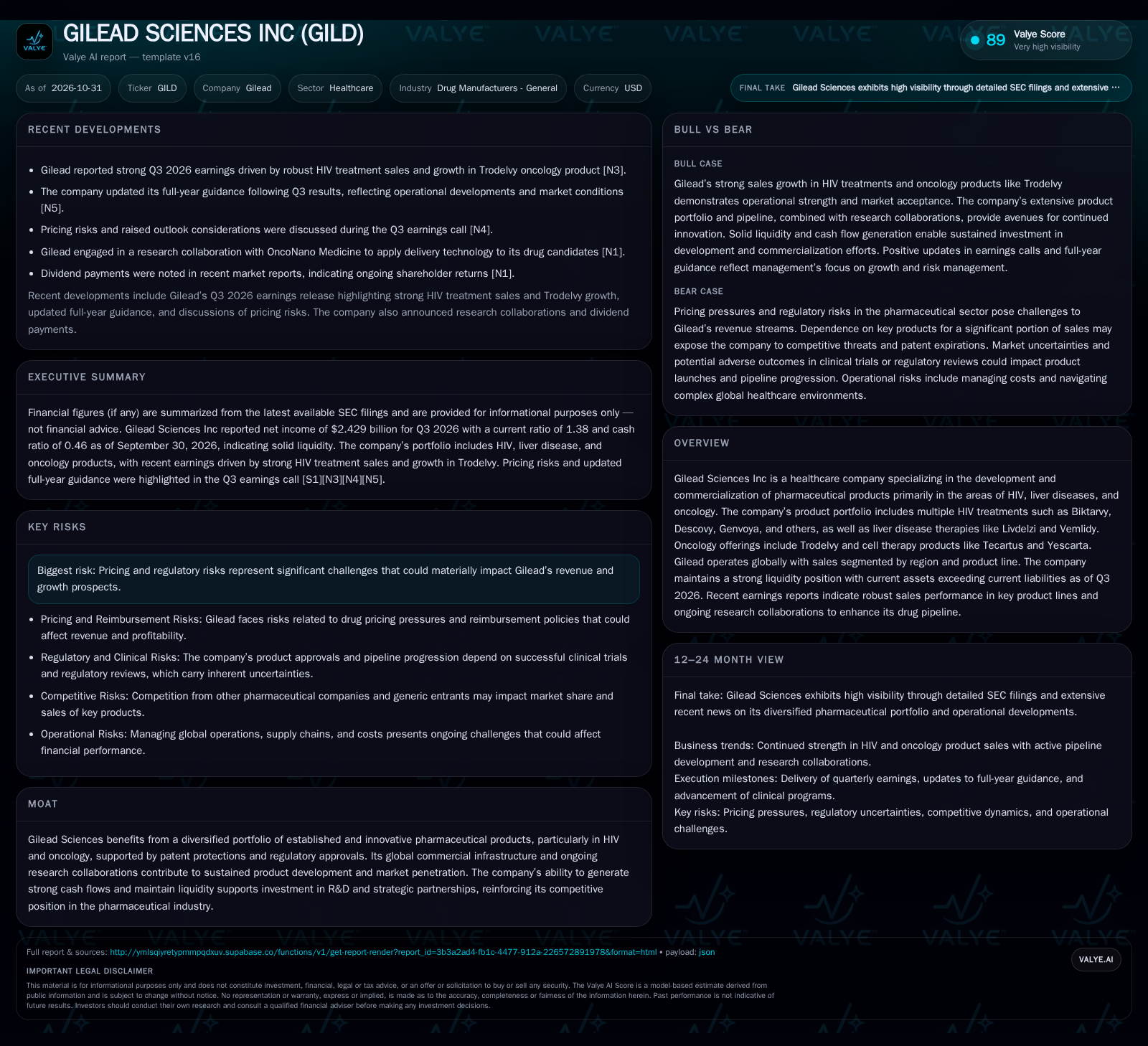
Gilead Sciences reported strong net income and product sales in Q3 2026, led by HIV treatments and Trodelvy. The company updated its full-year guidance and highlighted pricing risks. Research collaborations continue to expand the pipeline, while competition and product concentration remain strategic concerns. The sustainability of growth hinges on managing pricing pressure, pipeline execution, and maintaining market leadership in key therapeutic areas. [S1] [N3] [N4] [N5]
Gilead Sciences enters the final quarter of 2026 with strong earnings momentum, driven by its dominant HIV franchise and growing oncology presence. With research collaborations and pipeline investments underway, the next phase for Gilead will depend on its ability to balance near-term product success with the challenges of competition, regulatory scrutiny, and the need for future innovation.
Recent Performance Anchored by HIV and Oncology Strength
Gilead Sciences reported net income of $2.429 billion for Q3 2026, reflecting strong sales of its core HIV treatments and the oncology drug Trodelvy. The company reported cash and liquidity metrics for the period; these figures do not by themselves establish operating runway, investment capacity, financial flexibility, or financing capacity. Following Q3 results, Gilead updated its full-year guidance, citing both operational developments and market conditions. Management also highlighted ongoing pricing risks and reaffirmed the importance of its research collaborations, such as the partnership with OncoNano Medicine, in strengthening its drug pipeline. These facts set the stage for examining how Gilead’s business model and strategic choices will shape its trajectory over the next year. [S1] [N3] [N4] [N5] [N1]
Revenue Mix, Margin Structure, and the Economics of Scale
Gilead’s economics are dominated by portfolio concentration in HIV therapies, which typically command premium pricing and high gross margins due to clinical differentiation and entrenched prescriber habits. The company’s ability to maintain or grow these margins depends on several factors: payer dynamics, the pace of generic entry post-patent expiry, and the adoption of new regimens. While HIV drugs such as Biktarvy and Descovy are likely priced at a premium, the commercial mechanics—rebates, discounts, and government pricing—create variability in realized revenue per script.
Oncology, led by Trodelvy and cell therapies like Yescarta, introduces a different margin and volume profile. Oncology drugs often carry high list prices, but their commercial adoption is gated by reimbursement hurdles and clinical adoption curves. The cell therapy segment, while innovative, imposes substantial manufacturing and logistical costs, which may limit operating leverage until scale is achieved.
Gilead’s fixed cost base—R&D, regulatory, and global commercial infrastructure—creates operating leverage as volume grows, but also exposes the company to downside if top-line growth falters. The company’s updated guidance underscores the importance of balancing margin preservation with ongoing development costs. [S1] [N4] [N5]
Sustaining Leadership Amid Patent Erosion and New Entrants
Gilead’s competitive strength in HIV is underpinned by multi-drug regimens, established brand equity, and a history of innovation, but the franchise faces medium-term threats from patent cliffs and potential generic competition. The HIV field is also seeing incremental innovation from both large pharmaceutical peers and smaller biotech firms, some of which are developing long-acting injectables or alternative delivery modalities that could alter the standard of care.
In oncology, Trodelvy and the cell therapy portfolio position Gilead as a relevant player, though the segment is inherently more fragmented and fiercely competitive. Large pharma peers, as well as nimble oncology-focused biotechs, are targeting overlapping indications with differentiated mechanisms. The competitive landscape is further shaped by payer and regulatory scrutiny, which can impact both pricing and market access.
Gilead’s global commercial infrastructure and research partnerships provide it with scale advantages and access to external innovation, but these are not unassailable moats. The durability of its lead will depend on continued clinical success, commercial execution, and the ability to navigate pricing and reimbursement headwinds.
Pipeline Productivity and Commercial Execution Drive Outperformance
The most favorable scenario for Gilead involves sustained or accelerating growth in HIV and oncology, coupled with successful pipeline advancement. If the company can defend premium pricing in HIV—perhaps through next-generation regimens or superior real-world outcomes—while expanding Trodelvy’s indications and cell therapy volumes, revenue and margin expansion could exceed current expectations.
A key upside lever is the realization of value from research collaborations, such as the partnership with OncoNano Medicine, which could produce differentiated assets with less development risk. If several pipeline assets reach late-stage clinical milestones or secure regulatory approvals, this would validate the company’s R&D strategy and support a narrative of durable growth.
Confirmation of this scenario would come from above-consensus product revenue growth, positive pipeline data readouts, expanded regulatory approvals, and management raising guidance on future earnings calls.
Portfolio Maturity and Innovation Cycles Define the Next Chapter
A plausible base case is that Gilead maintains leading positions in HIV and achieves steady, if unspectacular, growth in oncology, offsetting gradual margin erosion from pricing pressures and moderate generic risk. The pipeline delivers incremental, but not transformational, innovation—enough to sustain the top line and support ongoing R&D investment, but not to fundamentally alter the company’s growth trajectory.
Under this scenario, management continues to update guidance in response to operational developments, and the company preserves its liquidity and cash flow profile. Shareholder returns—via dividends and possibly buybacks—remain a feature, but upside is capped by the need to reinvest in pipeline renewal and absorb ongoing pricing and regulatory headwinds.
Evidence for this scenario includes stable or slightly improving product sales, regular but cautious guidance updates, and a pipeline that advances at a measured pace without major clinical or regulatory setbacks.
Pricing Pressure, Competition, and Pipeline Setbacks Erode Value
In a less favorable scenario, Gilead faces accelerated pricing and reimbursement pressure in its core HIV and oncology franchises, perhaps triggered by policy changes, payer pushback, or increased competition from generics and novel therapies. If the company is unable to offset these headwinds with new product launches or successful pipeline execution, revenue growth could stall or reverse.
Pipeline setbacks—such as negative clinical trial results, regulatory delays, or partnership failures—would further undermine investor confidence and limit the company’s ability to reinvest for future growth. Increased operating costs to support global commercialization or respond to compliance challenges could compress margins and weaken cash flow.
Confirmation of this scenario would include missed revenue or earnings targets, downward revisions to guidance, pipeline discontinuations, or adverse regulatory outcomes.
Milestones to Test Gilead’s Resilience and Growth Prospects
Quarterly revenue trends for the HIV franchise, broken out by key products such as Biktarvy and Descovy, would help gauge the trajectory of the core business.
Trodelvy sales growth and the pace of new indication approvals will be crucial to measuring oncology momentum.
Updates on the pipeline, particularly late-stage clinical trial progress and regulatory filings for novel assets, would help assess future growth potential.
Disclosure of pricing trends, rebate dynamics, and payer mix (if available) would clarify the magnitude of pricing risk.
R&D spending as a percentage of sales, and any shifts in capital allocation between pipeline investment and shareholder returns, would signal management’s strategic priorities.
Progress and outcomes from research collaborations, such as with OncoNano Medicine, could indicate the likelihood of external innovation translating into commercial products.
Regulatory and policy developments affecting drug pricing or market access in key geographies should be monitored for potential impact.
Disclaimer: This is research-only, informational analysis and not investment advice. It may include AI-generated interpretation and general industry context. Always verify important details using primary sources.

Comments