
Genco Shipping & Trading’s Firm Stance on Takeover Bids Highlights Fleet and Financial Resilience
Genco Shipping’s latest quarter underscores operational discipline, stable revenue from drybulk voyage charters, and solid liquidity amid competitive takeover interest.
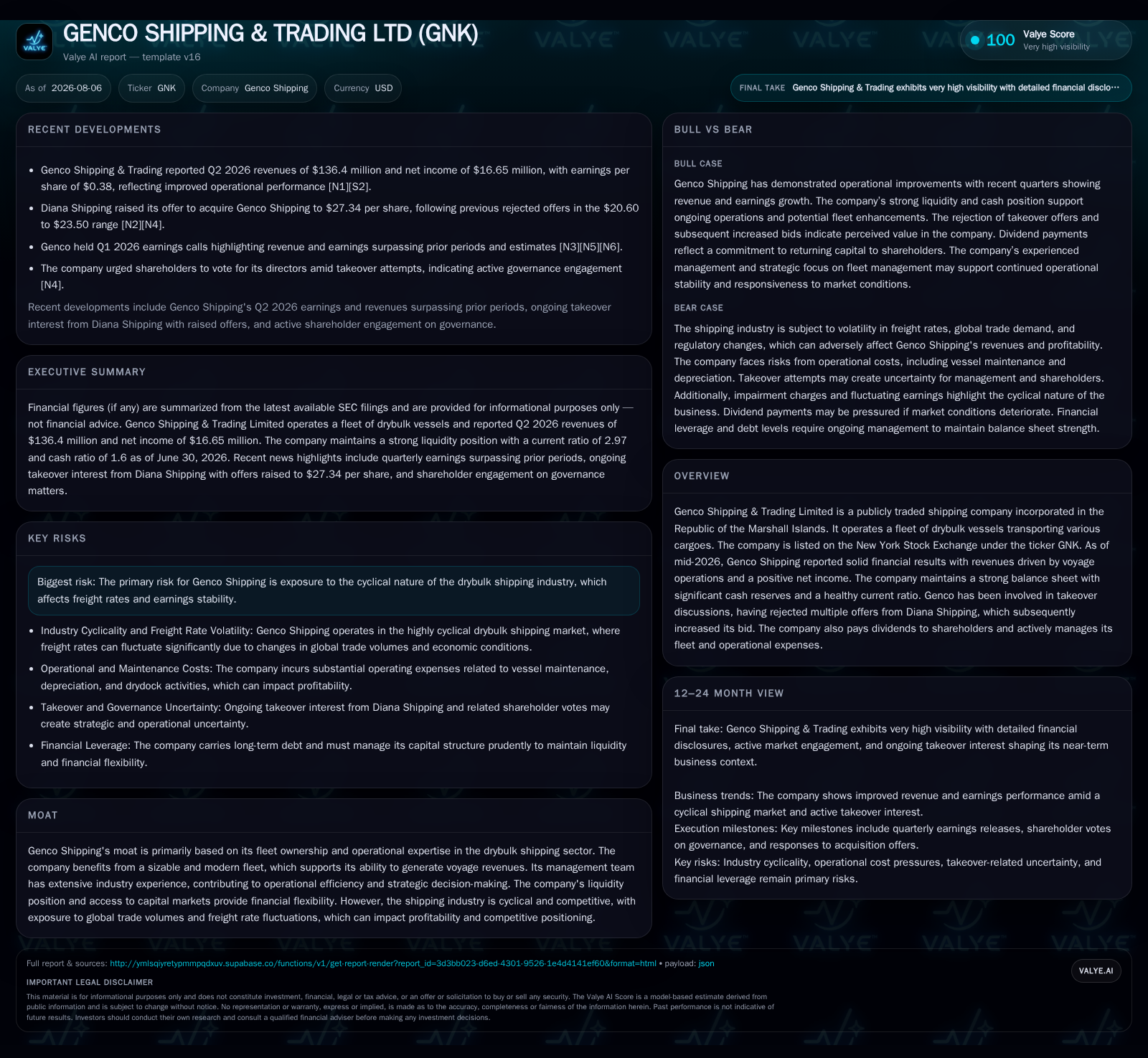
In Q2 2026, Genco Shipping & Trading Ltd demonstrated resilient operating performance driven by steady voyage charter revenues and efficient fleet utilization, underpinning a disciplined dividend policy despite ongoing freight rate cyclicality. The company rejected multiple increased takeover bids from Diana Shipping, signaling confidence in its fleet quality and financial strength. Key growth drivers include fleet modernization aligned with global commodity trade expansion, though costs remain exposed to bunker fuel volatility and regulatory constraints. GNK’s robust balance sheet with a near 3x current ratio offers strategic flexibility in a capital-intensive sector.
Q2 Results Confirm Strategic Operational Resilience Amid Market Volatility
Genco Shipping & Trading Limited released its Q2 2026 filing revealing continued operational stability amid a freight market that remains characterized by cyclical fluctuations. The company reported revenue growth supported by voyage charter activities that transport drybulk commodities across global trade routes. Net income exceeded expectations this quarter, indicating effective cost management alongside firm demand for the company’s shipping services [S2][N1]. Cash levels increased from year-end 2025 figures to $73.6 million as of June 30, 2026, enhancing liquidity that complements a conservative leverage profile [F1]. This snapshot affirms GNK's ability to sustain operations through sector volatility while maintaining shareholder returns.
Voyage Operations and Fleet Utilization Drive Revenue Stability
As a drybulk vessel operator, Genco’s revenue primarily derives from chartering its owned fleet to move unpackaged bulk cargo such as iron ore, coal, and grains. The company's business model hinges on maximizing voyage days—days vessels are actively under contract—and maintaining high fleet utilization rates which translate directly into steady voyage charters revenue streams [S1][S2]. Fleet composition including vessel size measured in deadweight tonnage (DWT) impacts operating expense leverage; larger or more modern vessels generally yield better fuel efficiency and compliance benefits but require significant capital investment.
The Q2 disclosures show that Genco sustained utilization rates that helped mitigate headwinds from any ballast (empty) voyages which typically dilute per-voyage income. Effective ship management practices optimize demurrage risk—penalties arising from delays—to preserve charterers’ contractual revenue commitments. Such metrics are vital KPIs in drybulk shipping where freight contracting balances spot market pricing against longer-term time charters with stable daily rates.
Freight Rate Environment Shapes Revenue Mix and Margin Pressure
The drybulk industry continues to experience pronounced cyclicality in freight rates influenced heavily by global trade volumes of raw materials. GNK's Q2 results reflected these dynamics through variations in the average daily charter rate or time charter equivalent (TCE) rate—a critical marker integrating spot and time charter earnings into a uniform yield metric [S2]
Shipbrokers’ indices indicate competing pressures as spot freight rates fluctuate faster than longer-term contracts allow. This mix affects GNK's gross margin given that spot contracts can generate higher immediate revenues but carry greater volatility. Conversely, time charters provide steadier cash flows at potentially lower rates but reduce exposure to upside spikes.
Operating margins remain sensitive to bunker fuel prices which constitute a substantial portion of operating expenses due to volatility in crude oil markets. Fluctuations can materially impact per-day vessel economics amid increasingly stringent environmental regulations mandating cleaner fuels or retrofitting expenses during dry docking cycles.
Dividend Policy Reflects Confidence Balanced with Cyclical Uncertainty
Genco consistently pays sizeable quarterly dividends tied to cash flow generation from operations rather than purely accounting profits—a practice aligned with industry norms aiming to return capital during favorable earnings periods while retaining flexibility during downturns [S1]. The company’s low financial leverage policy underpins this sustainable payout stance by limiting fixed financing burdens.
The cyclical nature of charter rates injects inherent uncertainty into dividend predictability; however, management’s emphasis on operational discipline and fleet optimization seeks to smooth earnings variability over time while preserving shareholder returns amidst shifting market conditions.
Takeover Talks Illuminate GNK’s Fleet Value and Capital Structure Leverage
A critical development alongside GNK's Q2 disclosure was its firm rejection of several takeover bids by peer Diana Shipping Inc., including an increased offer signaling aggressive acquisition interest [S3]. This defense reflects Genco’s confidence in its modern fleet composition and operative efficiencies generating steady cash flows. The company's robust balance sheet—with substantial cash reserves approximately $73.6 million and a manageable net debt position near $256 million—affords strategic flexibility absent excessive leverage pressure [F1].
These takeover discussions also highlight GNK's bargaining power tied to its asset base quality relative to peers such as Star Bulk Carriers and Golden Ocean Group, both mentioned among industry comparators known for similar drybulk operational profiles. A successful defensive stance underscores management's commitment to independent value creation amid consolidation trends in the drybulk sector.
Mid-Cycle Growth Drivers: Fleet Modernization and Global Commodity Flows
Growth catalysts for Genco center on ongoing investments in fleet renewal programs combined with aligning dry docking schedules necessary for maintenance and regulatory compliance upgrades [S1]. Modernization brings enhanced vessel fuel efficiency reducing bunker consumption per nautical mile—a crucial cost lever—and positions GNK favorably ahead of tightening international emission standards.
Simultaneously, macroeconomic expansion driving raw materials demand sustains cargo volumes transported via maritime trade routes fundamental to Genco’s business model. Infrastructure developments in emerging markets further elevate commodity import-export needs providing structural tailwinds beyond short-term cyclical bouts.
Industry Risk Factors: Fuel Costs, Regulatory Compliance, and Trade Cycles
Key risks articulated in the filings emphasize ongoing vulnerability to bunker fuel price volatility directly affecting operating expenses. Regulatory environment changes necessitate either adoption of more expensive compliant fuels or capital-intensive ship retrofits during scheduled dry docks imposing margin pressure [S2]
Moreover, the inherently cyclical nature of global trade flows subjects freight rates—and thus earnings stability—to economic expansions and contractions influencing commodity consumption patterns worldwide.
What To Watch: Charter Rates, Vessel Utilization, And M&A Developments Ahead
Investors should closely monitor market indicators such as shipbrokers’ freight indices tracking spot rate movements alongside GNK’s reported vessel utilization data expected in future quarterly reports. These KPIs will offer real-time visibility into revenue momentum or headwinds.
Additionally, any updates on takeover negotiations or new bids remain material given their impact on capital allocation decisions and potential shareholder value realization pathways [S3][N3][N5]. Monitoring dividend announcements will also provide insight into management’s view on sustaining cash flows given prevailing market conditions.
Financial Profile Discussion
Disclaimer: This is research-only, informational analysis and not investment advice. It may include AI-generated interpretation and general industry context. Always verify important details using primary sources.

Comments