Grace Therapeutics’ GTx-104: Navigating aSAH Treatment Innovation Amid FDA Review
A focused biopharma company advances a novel therapy for aneurysmal subarachnoid hemorrhage while managing financial and regulatory challenges.
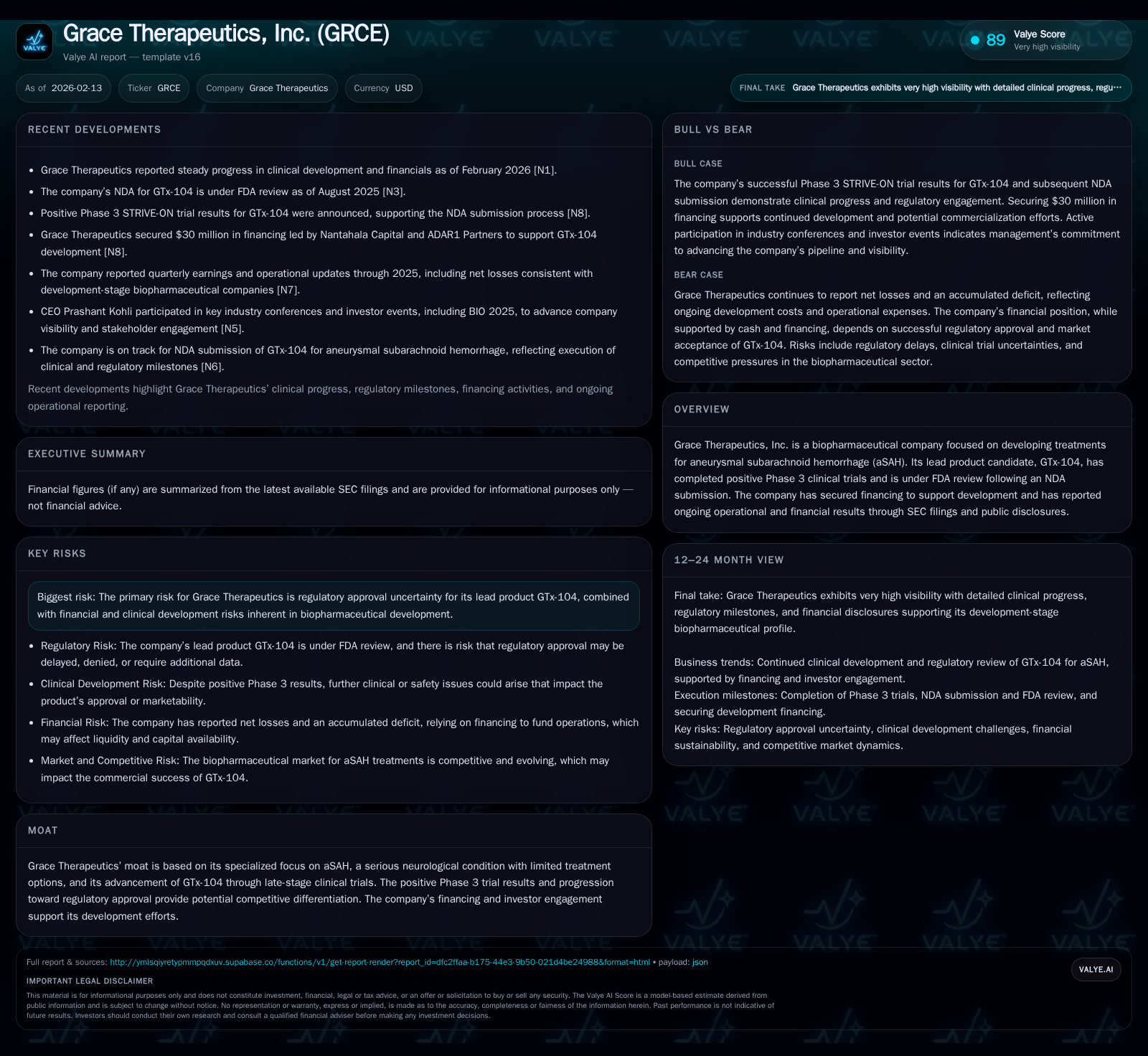
Grace Therapeutics, Inc. operates at the frontier of treating aneurysmal subarachnoid hemorrhage (aSAH), a critical neurological condition with substantial unmet medical needs. Their lead candidate, GTx-104, recently completed positive Phase 3 trials and is currently under FDA review following a new drug application submission, marking a pivotal inflection point. The company's strong cash reserves and operational discipline support it through regulatory uncertainties, while its niche specialization and clinical progress underpin competitive differentiation. Risks remain inherent in drug approval and commercialization pathways, yet management remains cautiously optimistic about near-term milestones.
Grace Therapeutics: Pioneering Treatment for a Rare Neurological Crisis
Aneurysmal subarachnoid hemorrhage (aSAH) demands urgent innovation. Resulting from ruptured brain aneurysms, this form of hemorrhagic stroke causes debilitating neurological damage and death if untreated promptly. Existing therapies offer limited efficacy beyond supportive care, leaving a significant unmet need in acute neurology.
Within this context emerges Grace Therapeutics, Inc., whose mission centers on transforming the outlook for aSAH patients through targeted pharmaceutical innovation. By concentrating exclusively on this rare yet devastating condition, Grace harnesses scientific precision to develop GTx-104 — their flagship therapeutic candidate. This specialized focus forms the bedrock of their competitive advantage, positioning them as frontrunners addressing an otherwise neglected niche [valye_report_excerpt].
From Lab to FDA: The Road to GTx-104’s Potential Approval
The journey from bench to bedside is arduous — particularly so for advanced therapeutics tackling complex neurological disorders. Grace marked a critical milestone when GTx-104 demonstrated favorable outcomes in Phase 3 clinical trials, underscoring its potential as the first-in-class treatment for aSAH. This success propelled the company to submit its New Drug Application (NDA) to the FDA, initiating the high-stakes regulatory review phase [valye_report_excerpt].
Although timelines remain subject to agency discretion, the trajectory exemplifies key achievements: completion of extensive patient enrollment, robust safety profiles, and statistically significant efficacy endpoints. These elements collectively bolster prospects but do not obviate the persistent regulatory hurdles characteristic of novel neurotherapeutics [N1].
Financial Fortitude Amid Biotech Uncertainties
Robust finances are crucial as Grace braces for the FDA's verdict. As of December 31, 2025, the company reported approximately $18.7 million in cash and cash equivalents alongside total current assets of $19.2 million versus current liabilities of just $1.28 million — signifying a formidable current ratio near 15 [F1].
This liquidity cushion is essential for sustaining research and development activities, regulatory engagement costs, and general administration during the protracted NDA assessment period. Notably, net losses stood at $2.3 million over the trailing twelve months ending year-end 2025, reflecting continued investment ahead of anticipated market entry [F1,S2].
Grace’s financial stewardship ensures operational resilience against industry volatility while fostering confidence among stakeholders navigating this critical juncture.
Risk Landscape: Regulatory, Clinical, and Capital Challenges
Despite promising clinical data, Grace faces inherent risks common to biopharma innovators. The FDA’s final ruling on GTx-104 remains uncertain; even minor issues could delay or deny approval. Reliance on a single product candidate concentrates exposure should unforeseen safety or efficacy concerns materialize post-submission [valye_report_excerpt,S2].
Furthermore, capital requirements can escalate unpredictably with additional studies or commercial preparedness needs—pressure compounded by ongoing operating losses documented in recent filings [S2]. Section 1A of their latest Form 10-Q candidly outlines these vulnerabilities alongside external factors such as market dynamics and reimbursement uncertainties.
Balancing optimism with pragmatism defines Grace's risk approach—acknowledging milestones achieved without discounting potential obstacles ahead.
The Competitive Edge: What Sets Grace Apart in Neurotherapeutics
Grace’s moat derives largely from its dedication to one of neurology’s most challenging emergencies – aSAH – where therapeutic options have historically been insufficient or non-existent [valye_report_excerpt]. Their lead candidate’s successful Phase 3 trial results distinguish it from competitors who have either deprioritized this niche or failed to reach comparable developmental maturity.
This strategic focus not only addresses an acute unmet need but also positions Grace as an innovator defining new standards of care within neurocritical illness domains—a sector often underserved despite clinical urgency.
Investor Sentiment and Market Positioning Ahead of FDA Decision
Market reactions underscore steady investor confidence buoyed by transparent progress reporting and methodical execution [N1]. Recent equity financings have furnished working capital aligned with developmental milestones — indicating sustained institutional faith despite sector volatility.
Such financial backing suggests stakeholder belief in both product potential and management’s ability to navigate forthcoming regulatory adjudications effectively.
Strategic Capital Deployment Ensuring Long-Term Viability
Financial disclosures reveal disciplined allocation toward achieving pivotal trial follow-ups and preparing commercial frameworks while vigilantly controlling overheads [N1,S2,F1]. Research & development expenditures predominate spending patterns reflective of commitment to trial completion and manufacturing scale-up capabilities.
Concurrent general & administrative costs remain proportionate relative to operating scale—signaling prudent resource stewardship designed to extend cash runway through uncertain approvals without compromising agility.
Outlook Beyond Approval: Pathways for Growth and Therapy Expansion
Should GTx-104 secure FDA approval, immediate emphases will encompass market launch readiness including physician education initiatives, distribution logistics, and reimbursement negotiations. Moreover, growth avenues may extend into related cerebrovascular disorders or adjunctive therapeutic combinations within neurocritical care [valye_report_excerpt].
However, acknowledging typical biopharma commercialization timelines tempers expectations; real-world adoption follows measured phases influenced by clinical guidelines integration alongside payer frameworks.
Voices from the Frontline: Management’s Perspective on Future Milestones
Executive commentary shared publicly reflects measured optimism tempered with readiness for comprehensive post-submission interaction with regulators. Management emphasizes operational transparency coupled with strategic pacing aimed at validating long-term value creation [N1,S2].
Statements underscore confidence in internal capabilities while acknowledging external dependencies inherent in FDA review processes — portraying leadership cognizant yet adaptive amid evolving landscapes.
Disclaimer: This report provides an analytical synopsis based on publicly available information as of February 2026. It does not constitute investment advice or an endorsement of any securities mentioned herein.
Disclaimer: This is research-only, informational analysis and not investment advice. It may include AI-generated interpretation and general industry context. Always verify important details using primary sources.

Comments