
InterGroup Corp: Hotel-Led Earnings Volatility, Asset Concentration, and the Economics of Urban Hospitality
InterGroup’s results now hinge more tightly than ever on the performance of a single flagship hotel in San Francisco, with recent swings in profitability highlighting the risks and opportunities of operating leverage, asset concentration, and active management amid volatile urban real estate and hospitality markets.
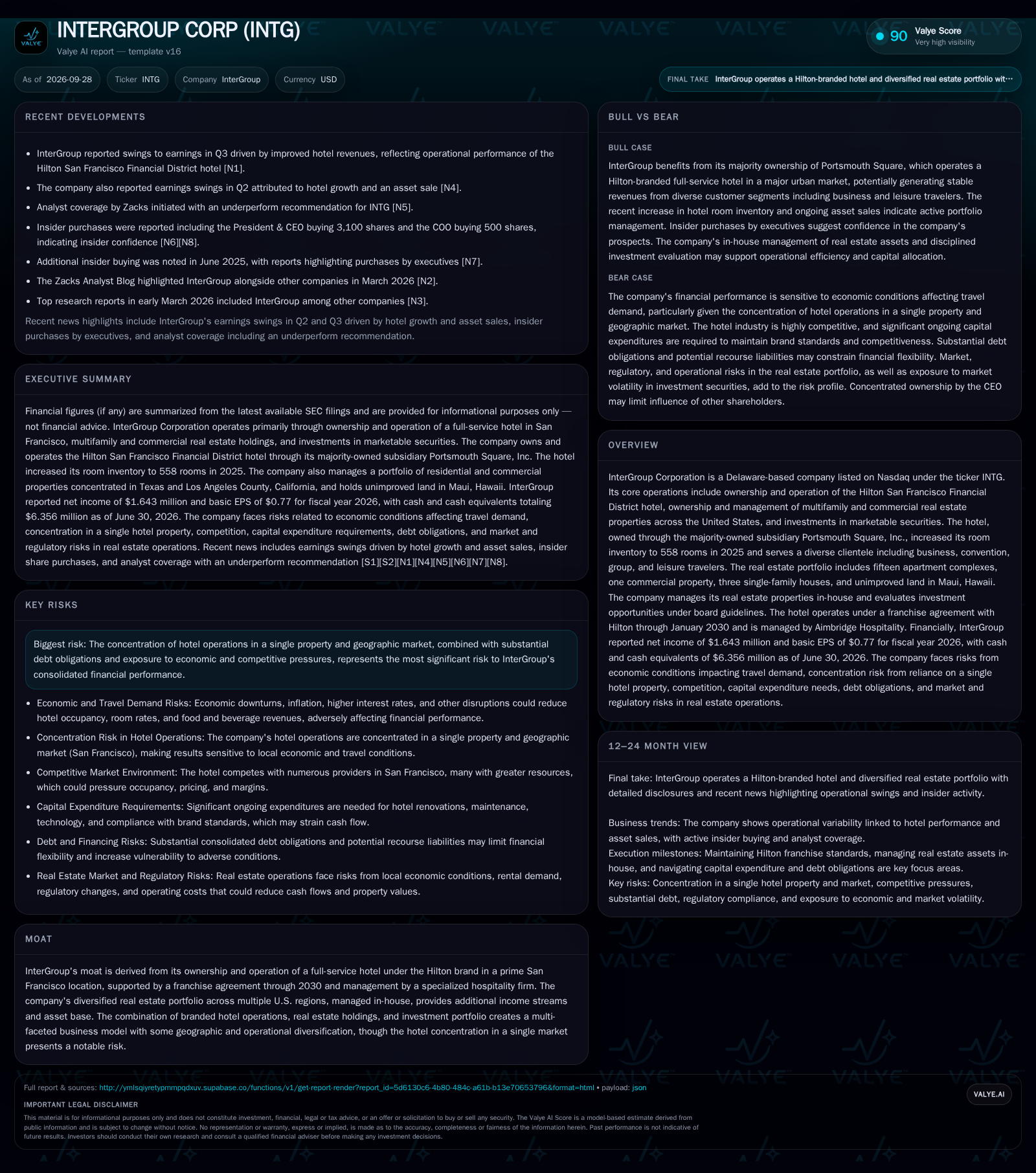
InterGroup Corp’s financials are increasingly shaped by the operational fortunes of its Hilton San Francisco Financial District hotel, as evidenced by recent earnings swings linked to hotel revenue growth and asset sales. While the company benefits from a diversified real estate portfolio and insider buying activity, heavy exposure to one hotel asset, ongoing capital needs, and significant debt obligations heighten both upside and downside potential. The path forward will be determined by the hotel’s ability to sustain occupancy and rates in a competitive market, the company’s capital allocation discipline, and its management of debt and required brand-driven investments. [S1] [N1] [N4] [N6] [N7] [N8]
InterGroup Corp’s recent financial results have become a barometer for the economic health of San Francisco’s hospitality sector. The company’s concentrated reliance on its Hilton-branded hotel, now expanded to 558 rooms, has produced pronounced earnings swings tied directly to travel demand, asset management decisions, and real estate market shifts. With substantial capital requirements, debt obligations, and a real estate portfolio managed in-house, InterGroup’s future will hinge on its ability to navigate competitive pressures, execute necessary property investments, and manage the risks inherent in its concentrated asset base and volatile markets. [S1] [N1] [N4]
Recent Earnings Swings Highlight Hotel Dependence and Asset Activity
InterGroup’s latest reported net income of $1.643 million and basic EPS of $0.77 for the fiscal year ended June 30, 2026, reflect a period of pronounced earnings volatility. The company’s Q3 and Q2 swings to profitability were directly attributed to improved hotel revenues and the sale of certain assets, demonstrating the outsized influence of its flagship Hilton San Francisco Financial District hotel on consolidated results. Insider purchases by senior executives—including the President/CEO and COO—were reported in mid-2025, indicating internal confidence but not altering the company’s core exposure to hotel performance and capital allocation decisions. [S1] [N1] [N4] [N6] [N7] [N8]
Operating Leverage and Capital Needs in Urban Hospitality and Real Estate
InterGroup’s economics are dominated by the high fixed-cost structure and operating leverage inherent in full-service urban hotels. With 558 rooms under the Hilton brand, the San Francisco hotel generates revenue from room nights, food and beverage, parking, and ancillary services. Fixed costs—such as franchise fees, property taxes, labor, and debt service—create significant sensitivity to changes in occupancy and average daily rate (ADR): incremental revenue above breakeven can disproportionately boost profit, but revenue declines can quickly erode margins.
The franchise agreement with Hilton (through 2030) requires ongoing capital expenditures to maintain brand standards, which, combined with substantial debt obligations, creates regular outflows and potential strain on cash generation, particularly in downturns. The multifamily and commercial property portfolio offers some income diversification, but these assets tend to provide steadier, lower-volatility returns compared to the lumpy, event-driven nature of hotel earnings. The company reported cash and liquidity metrics for the period; these figures do not by themselves establish operating runway, investment capacity, financial flexibility, or financing capacity. [S1]
San Francisco Hotel Market Pressures and the Limits of Asset Diversification
InterGroup’s flagship hotel occupies a prime location but competes in a San Francisco market characterized by substantial supply, price-sensitive business/leisure travel segments, and periodic demand shocks (e.g., from economic cycles or city-specific events). The Hilton brand provides marketing reach, loyalty-program access, and brand standards, but also imposes cost and investment requirements. Larger peers—such as REITs and multi-asset hotel operators—may have greater scale, potential financial flexibility, and operational diversification, while boutique and alternative lodging options (short-term rentals, tech-enabled hospitality) add further competition.
The company’s real estate portfolio, spanning multifamily and commercial properties plus Hawaii land, helps smooth cash flow but is not large enough to offset a severe downturn at the hotel. Furthermore, all real estate properties are managed in-house, which may provide cost control but could limit access to best-in-class operating practices compared to specialist third-party managers. [S1]
Sustained Urban Travel Recovery and Asset Monetization Unlock Value
A plausible upside scenario would see strong recovery in San Francisco’s business, convention, and leisure travel, driving high hotel occupancy and ADR. Under this scenario, the hotel’s operating leverage could meaningfully expand margins and earnings, especially if capital expenditures are well-managed and debt is refinanced or reduced.
Confirmation of this scenario would come from reported sustained growth in hotel revenues and profitability, successful execution of property sales at attractive prices, and visible improvements in debt ratios and liquidity. Upward revisions in analyst outlooks or further insider buying could reinforce market confidence. Conversely, stagnation in hotel metrics, inability to sell assets, or rising capital costs would invalidate this scenario. [S1] [N1] [N4] [N6] [N7] [N8]
Earnings Volatility Persists Amid Cyclical Hotel Performance and Capital Demands
The most plausible course is continued earnings volatility, with hotel revenues fluctuating in line with San Francisco’s variable travel and convention calendar, while the real estate portfolio provides steady but non-transformative support. The company will likely face ongoing capital expenditure requirements to maintain Hilton franchise compliance, with debt service consuming a significant portion of cash flow. Modest asset sales or operational improvements may occasionally boost results, but overall profitability will remain highly sensitive to hotel operating trends.
This scenario would be confirmed by recurring swings in quarterly results tied to hotel performance, continued emphasis on property maintenance and debt management in company communications, and limited change in the diversification profile. Should the hotel experience a sustained negative shock or a major asset sale fail to materialize, downside risks would intensify. [S1] [N1] [N4]
Adverse Travel Shocks or Capital Shortfalls Expose Structural Weakness
In a downside scenario, a local or macroeconomic downturn—such as a recession, negative city press, or travel demand shock—could sharply reduce hotel occupancy and rates. Given the hotel’s high fixed costs, even moderate revenue declines could swing the property into operating losses, while required capital expenditures and debt service would continue unabated. Inability to access capital markets or successfully sell assets could force asset write-downs, covenant breaches, or even distress scenarios.
Evidence of this scenario would include reported declines in hotel revenues and margins, rising leverage, warnings on liquidity or compliance, and negative analyst or management commentary regarding San Francisco travel trends. If asset sales occur only at distressed prices or are delayed, cash flow pressures would compound. [S1] [N1] [N4] [N5]
What Will Determine InterGroup’s Trajectory in the Next 12-24 Months?
Quarterly hotel occupancy and ADR trends at the Hilton San Francisco Financial District, if disclosed, are critical to gauging earnings momentum and downside risk.
Actual capital expenditures on hotel renovation and brand compliance versus disclosed plans or minimum franchise requirements would help test cash flow adequacy.
Progress on real estate asset sales, including reported prices and timing, would clarify balance sheet flexibility and capital allocation discipline.
Changes in the company’s debt load, interest coverage, and refinancing terms will indicate vulnerability to rising rates or liquidity stress.
Any shifts in the geographic or segment composition of the real estate portfolio, such as new acquisitions or dispositions, could alter the diversification profile.
Insider buying or selling activity by senior executives, while not a thesis driver alone, could provide sentiment signals if paired with operational disclosures.
Updates on the Hilton franchise agreement, including any modifications or compliance issues, would be material to both capex needs and brand value.
External developments affecting San Francisco’s travel and convention economy—such as city policy, business migration, or major event announcements—will directly impact hotel demand.
Disclaimer: This is research-only, informational analysis and not investment advice. It may include AI-generated interpretation and general industry context. Always verify important details using primary sources.

Comments