
Medtronic’s Multi-Front Push: AI-Enabled Devices and Supply Chain Resilience Power Growth
Medtronic’s Q3 2026 results underscore strategic acquisition, innovation in digital health, and robust operational management amid pricing pressures.
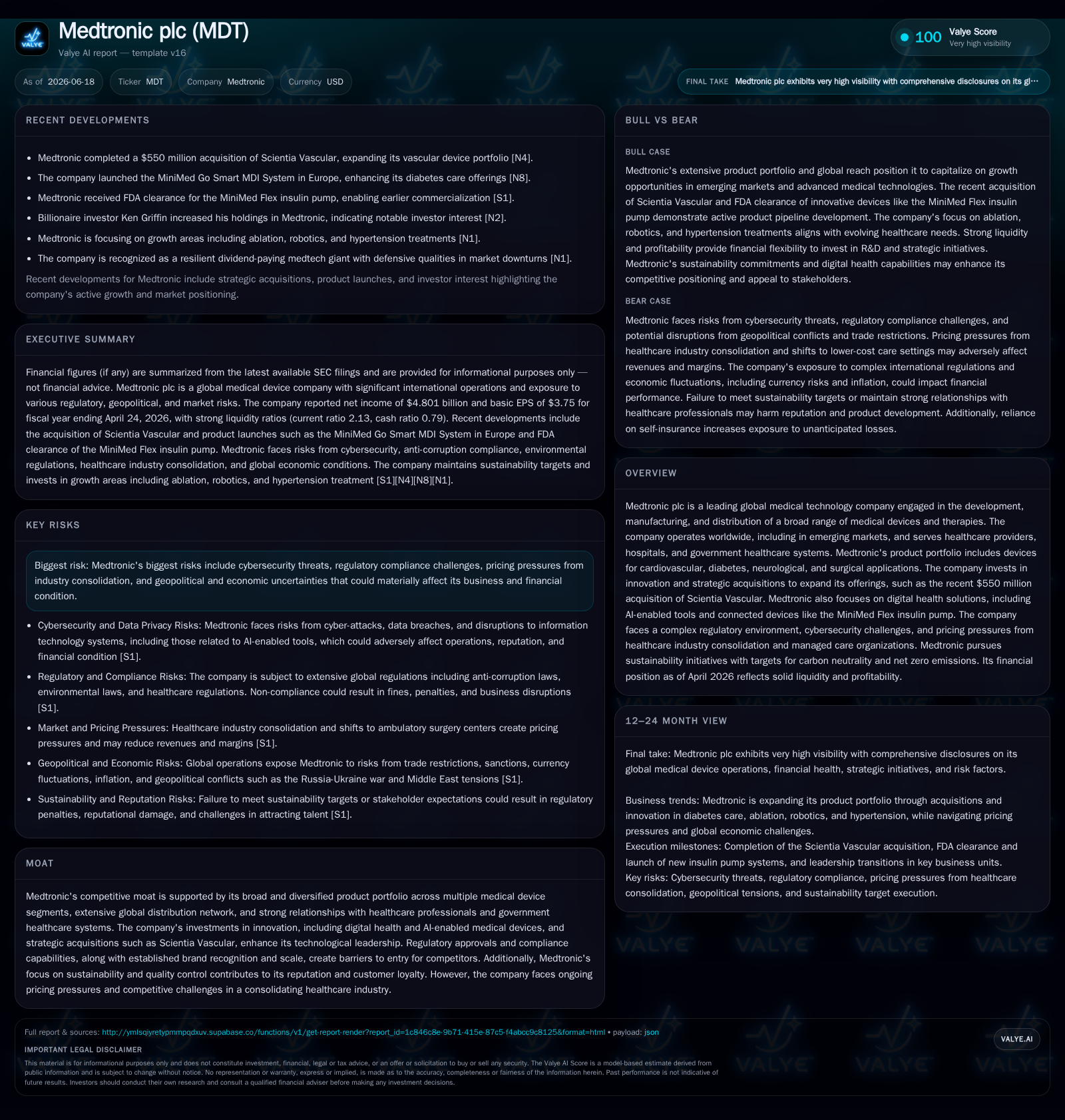
In its latest quarterly filing ending April 2026, Medtronic completed the $550 million acquisition of Scientia Vascular and advanced commercialization of AI-enabled devices like the MiniMed Flex insulin pump. These moves strengthen Medtronic’s diversified product portfolio across cardiovascular, neurological, diabetes, and surgical segments, leveraging regulatory approvals to accelerate device adoption. The company continues to navigate industry-wide pricing pressure from managed care organizations while bolstering supply chain management and cybersecurity resilience. Emerging market expansion and digital health platform engagement remain key growth drivers, supported by sustained R&D investment and a complex global distribution network.
Q3 Operating Update: Acquisition and Innovation Impact
Medtronic’s fiscal third quarter ending April 24, 2026 marked an important inflection with completion of its $550 million acquisition of Scientia Vascular—an addition that broadens Medtronic’s cardiovascular intervention portfolio with innovative stent technology [N2][S2]. Concurrently, the company secured FDA clearance for the MiniMed Flex insulin pump months ahead of schedule, a connected device integrating smartphone control with AI algorithms to optimize diabetes management [S28]. This early approval accelerates commercial launch timing and bolsters Medtronic's digital health offerings within its Diabetes business segment.
These developments underscore how Medtronic is leveraging strategic acquisitions coupled with accelerated regulatory approval cycles to expand implantable device innovation alongside next-generation digital therapeutics. The MiniMed Flex launch represents an evolution towards AI-enabled medical devices that enhance patient engagement through connected care platforms—reflecting broader industry trends toward integrating software intelligence in therapy delivery.
Market Reach through Product Portfolio Diversification
Medtronic’s revenue model relies on selling a wide spectrum of medical devices spanning cardiovascular implants (e.g., stents, pacemakers), neurological therapies (e.g., deep brain stimulators), diabetes management devices (implantable pumps combined with digital monitoring), and advanced surgical tools including robotics [S1]. Hospital systems, healthcare providers, and government healthcare programs form the core customer base globally.
This diversified product suite mitigates segment-specific demand fluctuations while enabling cross-selling opportunities across clinical specialties. Distribution benefits from a vast global network that navigates complex regulatory environments through multiple product approvals annually—a critical operational capability given the protracted cycle times typical in medtech industry regulatory pathways [S1]. Peers like Abbott Laboratories similarly emphasize portfolio breadth as a moat to withstand pricing pressures and reimbursement changes.
Competitive Landscape: Innovation Amid Pricing Pressure
The medical device sector faces intensified pricing pressures driven by consolidation within managed care organizations and hospital groups that wield greater negotiation leverage over suppliers [S1][S2]. Medtronic confronts these challenges by emphasizing product differentiation via innovation in implantable and AI-enabled connected devices.
Compared to peers such as Dexcom—recognized for pioneering continuous glucose monitoring integrated with AI—Medtronic leverages its scale to invest meaningfully in R&D expenditure as a percentage of sales to maintain technological leadership. Boston Scientific exemplifies similar competitive dynamics where speed of regulatory approvals combined with innovation pipeline strength dictate market share gains [S2]. The managed care environment compels companies to balance maintaining premium pricing for differentiated therapies while managing volume-based competition.
Growth Catalysts: AI Integration and Emerging Markets
Demographic trends such as aging populations increase chronic disease prevalence driving demand for precision medical devices. Medtronic capitalizes on this structural tailwind through expansion of its digital health ecosystem anchored by products like MiniMed Flex that incorporate real-world data analytics powered by AI [N2][S1]. Regulatory clearance velocity—improved via process efficiencies—is another growth enabler accelerating time-to-market for new therapies.
Additionally, Medtronic targets emerging markets where healthcare infrastructure investments are expanding access to advanced diagnostics and treatments. Growing government healthcare spending in these regions combined with rising middle-class affordability illustrate medium-term unit growth opportunities beyond developed markets.
The company closely monitors KPIs such as device adoption rates post-launch along with number of regulatory clearances received annually—both markers signaling successful innovation delivery aligned with market demand profiles.
Operational Risks: Cybersecurity, Regulatory Delays, Supply Chain
Securing operational continuity remains vital amid evolving cybersecurity threats targeting enterprise IT systems and connected medical devices alike. Medtronic’s cybersecurity risk management is overseen by a Chief Information Security Officer (CISO) reporting directly to the CIO; the Board’s Quality Committee actively governs cybersecurity strategy ensuring protective controls against unauthorized access or data breaches jeopardizing patient safety or business operations [S1][S6].
Supply chain management is equally critical given complex manufacturing processes reliant on upstream material suppliers subject to geopolitical or logistical disruptions. Any delays ripple through production cycles affecting device availability.
Regulatory approval timelines pose inherent risks due to scrutiny variability across geographies or unanticipated compliance challenges—potentially delaying commercial launch dates impacting revenue recognition timing.
Next Steps: Milestones to Monitor for Investor Confidence
Stakeholders should monitor integration of Scientia Vascular technologies into Medtronic’s Cardiovascular division indicating synergy realization pace following the acquisition announced mid-Q3 [S3][N2]. Additionally, FDA filings for next-generation AI-enabled connected devices will provide signals on R&D productivity post-MiniMed Flex rollout.
Reimbursement landscape shifts within managed care organizations remain key given their impact on pricing structures; changes could either constrain margins or unlock broader procedural volumes depending on policy developments.
Digital health platform engagement metrics emerging over coming quarters offer tangible indicators of patient adoption trends central to recurring revenue models tied to software services embedded within hardware sales.
Financial Snapshot: Recent Performance Highlights
As of April 2026 quarter-end, Medtronic reported operating income totaling approximately $6.47 billion supported by steady top-line momentum across diversified device categories while managing raw material cost inflation pressures effectively [F1][S3]. The company’s capital structure shows total debt near $28.13 billion partly offset by cash reserves around $1.95 billion yielding a current ratio above 2x—indicative of comfortable short-term liquidity positions [F1].
Continued R&D investment sustains innovation pipelines underlying long-term growth despite margin headwinds from pricing pressure in highly consolidated healthcare markets. Free cash flow generation capacity remains significant supporting ongoing strategic acquisitions alongside shareholder capital return programs.
This analysis synthesizes the latest quarterly filings and company disclosures without invoking projections or research views. It highlights how Medtronic’s multi-pronged strategy rooted in innovation leadership, strategic M&A execution, operational resilience, and diverse global footprint underpins its position amidst dynamic medtech sector challenges.
Disclaimer: This is research-only, informational analysis and not investment advice. It may include AI-generated interpretation and general industry context. Always verify important details using primary sources.

Comments