
3M CO Advances Through Diverse Industrial Segments with Innovation-Focused Growth
3M’s Q1 2026 results reflect operational resilience amid global challenges, driven by its diversified industrial portfolio and sustained innovation efforts.
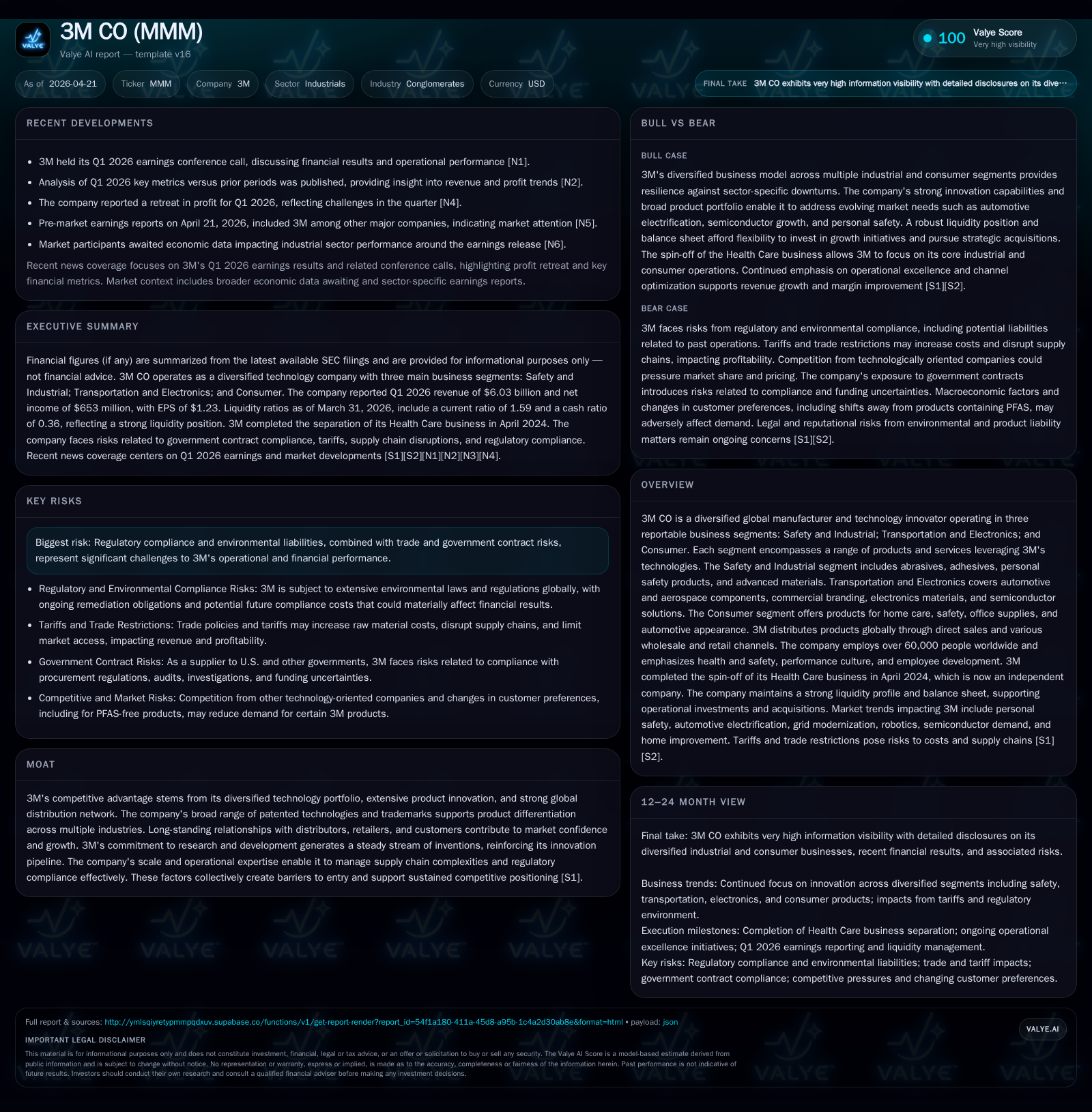
In its latest quarterly filing for Q1 2026, 3M CO maintained steady performance across its core segments despite external headwinds, including regulatory and geopolitical pressures. The company’s business model leverages a diversified technology platform spanning Safety and Industrial, Transportation and Electronics, and Consumer products, supported by a robust global distribution network. Key growth is underpinned by continuous R&D investment fueling product differentiation and expanding end-market applications. However, risks related to environmental litigation and trade uncertainties remain significant considerations for near-term operational execution.
Latest Operating Update Highlights and Its Immediate Implications
The April 21, 2026 Form 10-Q filing (Q1 2026) signals continued operational stability for 3M CO though with noteworthy profit margin pressure amid macroeconomic and regulatory headwinds [S2][N9]. While there were no material changes reported in the risk factors from the prior annual disclosure, the quarterly notes clarify that geopolitical tensions, supply chain disruptions, and PFAS-related liabilities continue to influence cost structures. Profit retreat noted during Q1 reflects these rising costs rather than structural demand erosion [N9]. The contemporaneous Form 8-K filing provides no new substantive event disclosures but reaffirms ongoing debt maturity management without liquidity concerns [S3]. This near-term operating snapshot sets the tone for evaluating the company’s strategic posture amid a complex external environment.
Business Model Overview: Segment Synergies and Technology Leadership
3M's business model operates through three reportable segments: Safety and Industrial; Transportation and Electronics; and Consumer [S1]. The Safety and Industrial segment encompasses abrasive products, adhesives, personal protective equipment, roofing granules, and advanced materials primarily targeting manufacturing and construction sectors. The Transportation and Electronics segment addresses automotive and aerospace components alongside commercial branding solutions and semiconductor materials. Meanwhile, the Consumer segment serves broad markets including home care products, office supplies, automotive appearance products, and consumer safety.
This tripartite structure is more than a mere aggregation of product lines; it enables cross-segment leveraging of patented technologies and manufacturing advances. For instance, adhesives technologies developed under Safety & Industrial contribute to innovations in automotive aftermarket products within Transportation & Electronics. Integrated R&D efforts enhance product development efficiency while diversified revenue streams help mitigate sector cyclicality. Distribution channels combine direct sales force relationships with wholesale and retail partnerships globally.
Competitive Landscape and Industry Structure Insights
3M operates within a highly competitive conglomerate industrial landscape characterized by substantial technological complexity. Its competitive moat stems largely from an extensive portfolio of U.S. and foreign patents protecting differentiated offerings across segments [S1]. These intangible assets bolster pricing power by erecting barriers to entry for competitors lacking similar innovation capabilities or scale.
Moreover, established relationships with distributors and retailers fortify market access against challengers. The broad scope of operations spanning abrasives through electronics materials involves managing complex supply chains under stringent regulatory regimes. Pricing power benefits from trademark strength that facilitates brand recognition in both industrial channels (e.g., personal safety equipment) and consumer avenues (e.g., home care). However, the necessity to comply with diverse international standards can introduce operational complexity impacting margins.
Key Growth Drivers and Operational Constraints
Structural growth drivers revolve around steady industrial demand for innovative safety products aligned with expanding workplace regulations globally; burgeoning electronics markets requiring advanced semiconductor materials; as well as resilient consumer needs in home care and office products [S1]. The robust innovation pipeline fuels expansion into high-growth end-markets such as aerospace composites where performance materials deliver competitive advantages.
Conversely, growth faces constraints from macroeconomic volatility including currency fluctuations given 56%+ revenue from international operations; trade frictions notably between major economies that may impose tariffs or export controls; raw material price inflation; plus escalating environmental compliance costs tied especially to PFAS substances historically used in certain products [S1][N9]. Geopolitical risks also inject uncertainty around supply chain continuity.
Innovation Pipeline and R&D as Catalysts for End-Market Expansion
3M sustains an aggressive R&D investment approach aimed at disruptive technologies alongside incremental improvements [S1]. This activity generates a consistent stream of patents that extend product lifecycles through enhanced functionalities or cost efficiencies. Patented innovations create customer switching costs as well as enable premium pricing strategies critical in commoditized industrial markets.
In addition to fostering new product introductions across its segments—ranging from safer personal protective gear to advanced adhesives for next-gen electronics manufacturing—R&D supports a strategic pivot away from legacy substances like certain PFAS compounds toward environmentally compliant alternatives aligned with evolving regulations [S1][N9]. This innovation-driven shift helps safeguard long-term relevance amid tightening sustainability standards.
Risk Factors: Regulatory Exposure and Geopolitical Dynamics
The company faces significant risks related to regulatory compliance particularly involving litigation tied to PFAS chemicals which have long functional utility but raise environmental concerns [S1][S26]. Settlements such as the $10.5-$12.5 billion multi-year Public Water Suppliers agreement illustrate the materiality of these contingencies [S26]. Further developments could exert pressure on cash flows or necessitate additional reserves.
Geopolitical factors compound risks through potential export restrictions, tariff impositions, or supply chain disruptions stemming from global conflicts or deteriorating trade relations between key markets like the U.S. and China [S1]. Exchange rate volatility further complicates earnings visibility given multinational footprint. Compliance demands also increase operational costs for monitoring evolving policies worldwide.
Near-Term Watchpoints: Execution Milestones and Market Indicators
Key upcoming milestones include the commercial rollout pace of newly developed environmentally sustainable products which will indicate success in adapting innovation strategy under regulatory pressure. Additionally, monitoring order intake trends within industrial safety equipment—driven by regulation-induced demand—and electronics materials will provide early signals about end-market momentum.
Legal settlements outcome updates related to PFAS liabilities remain critical given their magnitude. Finally, macro indicators such as currency stability or trade policy announcements should be closely watched given their outsized impact on cost bases.
Capital allocation decisions spotlight continued emphasis on funding R&D initiatives while balancing disciplined share repurchases aimed at long-term shareholder value preservation without compromising liquidity—a prudent approach amidst uncertain external conditions [S5][S6].
This analysis synthesizes recent SEC filings including the April 21, 2026 10-Q as primary evidence with broader annual context from February’s 10-K to deliver a comprehensive view on 3M's current positioning within its complex industrial conglomerate framework. It highlights how innovation-focused diversification moderates risks associated with regulatory challenges while supporting growth across critical market verticals.
This report does not constitute investment advice but intends to provide a detailed operational perspective grounded exclusively in validated company disclosures.
Disclaimer: This is research-only, informational analysis and not investment advice. It may include AI-generated interpretation and general industry context. Always verify important details using primary sources.

Comments