
Monster Beverage Harnesses Brand and Distribution Strength to Drive Broad-Based Growth
Q2 2026 results demonstrate robust volume growth and expanding retail presence, powered by strategic Coca-Cola partnerships and ongoing product innovation.
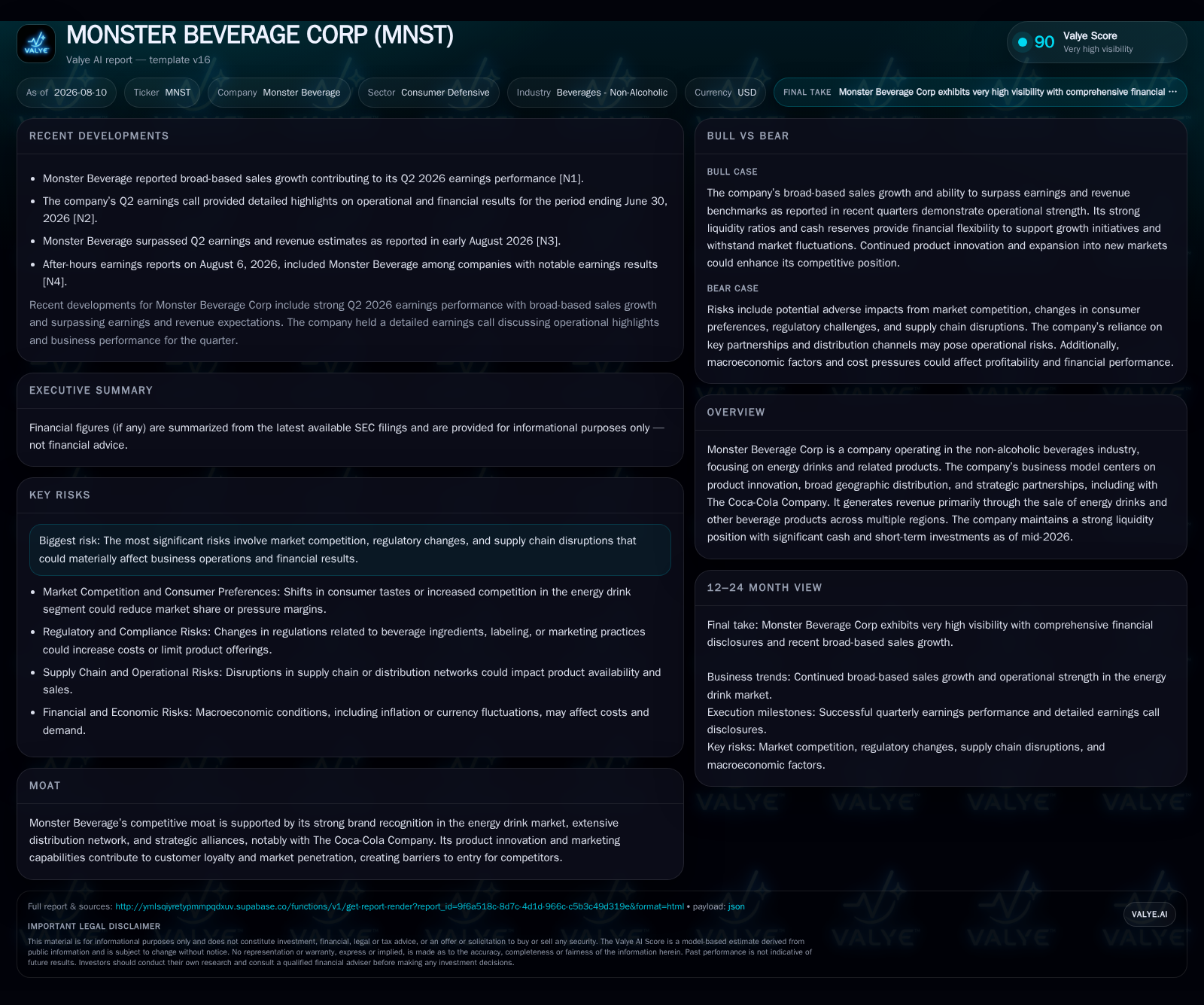
Monster Beverage’s Q2 2026 results reveal strong momentum with notable volume sales increases and enhanced distribution penetration. The company’s business model leverages its iconic energy drink brands combined with a wide-reaching bottler network anchored by The Coca-Cola Company alliance. Competitive strength is reinforced by sustained marketing investments and targeted product innovation aligned with evolving consumer preferences. Key growth areas include geographic expansion and portfolio diversification, while risks persist around regulatory shifts and supply chain pressures.
Q2 Operating Momentum: Broad-Based Sales Gains Underpinning Growth Confidence
Monster Beverage reported solid operating results for the quarter ended June 30, 2026, highlighted by robust volume sales growth that outpaced prior trends, signaling continued demand resilience in the energy drinks segment [S2][N1]. This volume surge coincided with an expanding number of retail distribution points, reinforcing a broader market penetration driven by Monster’s strategic partnership with The Coca-Cola Company’s bottler network. Despite increased marketing spend to fuel brand engagement, average selling prices remained stable, suggesting maintained pricing power amid competitive category dynamics. The combination of volume acceleration and distribution expansion creates a positive feedback loop indicating structural demand rather than transitory gains. Confirmation would be observed through subsequent quarters' consistent volume improvement and sustained margin profiles after marketing investments fully materialize.
Integrated Business Model: Leveraging Brand Equity Through Strategic Partnerships and Innovation
Monster Beverage’s revenue chiefly stems from its portfolio of energy drinks sold primarily through a network of full-service beverage bottlers and distributors—most notably those affiliated with its strategic alliance partner, The Coca-Cola Company [S1]. This collaboration grants Monster unparalleled distribution reach across key geographic markets domestically and internationally. Brand equity cultivated by targeted marketing campaigns ensures strong consumer loyalty and shelf space presence in retail channels ranging from grocery stores to convenience outlets.
Product innovation forms a core pillar of Monster's strategy. Monster invests in new beverage formulations that align with shifting consumer preferences toward functional beverages offering wellness benefits, alongside novel packaging formats designed to improve convenience and appeal. This approach not only sustains relevance but also enables premiumization opportunities that can uplift average selling prices. The integration of innovation with expansive bottler partnerships enhances operating leverage potential by driving higher volumes without a commensurate rise in fixed costs.
Competitive Environment: Distribution Scale and Product Leadership Defend Moat Against Intensifying Rivals
The established distribution infrastructure via Coca-Cola’s bottlers positions Monster favorably relative to other energy drink manufacturers who may lack equivalent scale or international footprint. While Red Bull remains a major competitor with a comparable global presence, Monster’s alliance-driven market access affords it substantial competitive advantages in shelf space allocation—a critical battleground given retailer dynamics.
Pricing power within the energy drink category generally reflects brand strength combined with category growth momentum; Monster's stable average selling prices despite increased promotional activity indicate defensible pricing strategies. Marketing intensity remains high as brand share battles intensify not only against traditional rivals but also against emerging private label energy drinks and functional beverage entrants seeking shelf penetration. Furthermore, regulatory compliance pressures—especially around ingredient transparency and health claims—favor incumbents capable of managing complex labeling requirements without disrupting supply chains.
Growth Trajectories: Geographic Expansion, Portfolio Extension, and Consumer Trends Adoption
Monster’s growth trajectory is supported by rising global demand for energy and functional beverages accompanied by increasing urbanization in emerging markets where middle-class expansion drives discretionary beverage consumption. Penetration into these markets leverages existing bottler relationships while selectively investing in localized marketing efforts.
Portfolio diversification through acquisitions (e.g., Bang Energy) and development of beverages addressing health-conscious consumers enable Monster to capture broader demographic segments beyond traditional core users. Additionally, premiumization trends have facilitated modest ASP increases without compromising volume growth.
E-commerce channels remain a nascent but growing contributor to overall revenue mix, affording direct consumer engagement that complements traditional retail presence. Such channel diversification serves as an important buffer against single-channel disruptions.
Constraints that may temper near-term upside include supply chain bottlenecks—such as aluminum can shortages—and cautious retailer inventory management amid uncertain macroeconomic conditions. These factors require monitoring as they directly impact inventory turnover metrics.
Risks to Monitor: Regulatory, Competitive Dynamics, Supply Chain Constraints, and Health Preferences Shift
Monster faces typical industry risks including intensified competition leading to promotional discounting pressures potentially eroding pricing power [S2]. Regulatory developments concerning caffeine content limits or marketing restrictions could mandate reformulation or altered labeling standards incurring incremental costs.
Supply chain complexities pose risks related to key raw materials like sugar derivatives or packaging components that could elevate input costs or disrupt delivery schedules.
Consumer preference shifts toward natural or organic ingredients may challenge some traditional product lines unless innovation keeps pace. New entrants focusing on health-forward formulations escalate competitive challenges requiring continued investment in R&D.
Macroeconomic headwinds impacting discretionary spending represent an additional uncertainty affecting demand elasticity for premium energy beverages.
What to Watch: Milestones, Guidance Signals, and Execution Hurdles in H2 2026
Key milestones include monitoring quarterly volume sales trajectories to validate whether Q2 momentum sustains amid seasonal effects. Margin performance following current elevated marketing expenditures will indicate efficiency gains or pressure points.
Investors should track expansions within emerging markets enabled via Coca-Cola’s bottler network for evidence of scalable international growth. Progress on new product launches—particularly those tailored for wellness trends—will provide insight into innovation pipeline vitality.
Cost inflation pass-through capacity will reveal pricing flexibility necessary to defend margins against input cost volatility. Finally, updates on regulatory developments linked to ingredient scrutiny could necessitate strategic adjustments impacting near-term profitability.
Financial Profile Discussion: Liquidity Cushion Supports Investment in Marketing and Innovation
As of June 30, 2026, Monster Beverage held approximately $2.19 billion in cash and equivalents with total debt outstanding near $200 million trailing balance-sheet date estimates [F1]
Operating income stability provides capacity for reinvesting in sustained marketing spend critical to maintaining brand equity while funding targeted product innovation initiatives articulated during earnings commentary.
This analysis synthesizes Monster Beverage Corp's disclosed financials and operations through August 2026 alongside industry context reflecting competitive dynamics inherent to the non-alcoholic energy drink subsector. All company-specific facts are drawn strictly from cited SEC filings (), news sources (), or companyfacts snapshot ([F1]). Projections or investor guidance have been intentionally excluded per policy.
Disclaimer: This is research-only, informational analysis and not investment advice. It may include AI-generated interpretation and general industry context. Always verify important details using primary sources.

Comments