
Oklo Inc.: Can an Integrated Advanced Nuclear Model Capture the Next Wave of Data Center Power Demand?
Oklo’s push to commercialize sodium-cooled fast reactors coincides with surging energy needs from hyperscale data centers. With $1.55 billion in cash and a pioneering prepayment agreement with Meta, Oklo faces both a generational opportunity and a gauntlet of regulatory, technical, and commercial risks. The question is whether its vertically integrated approach can overcome deployment, demand, and supply chain uncertainties to establish a new paradigm for distributed nuclear power.
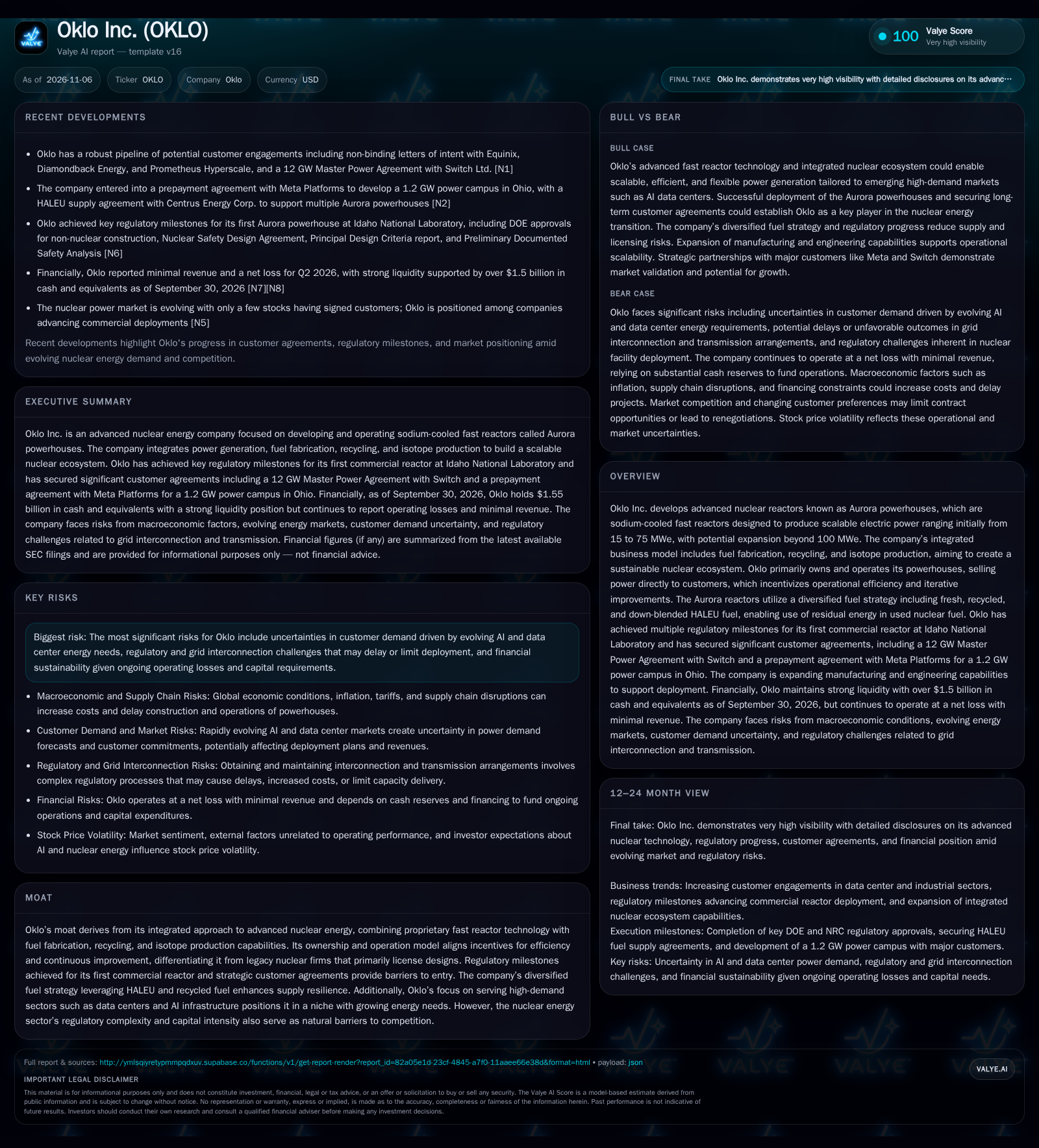
Oklo is attempting to build a vertically integrated advanced nuclear business, focusing on flexible, modular sodium-cooled reactors and targeting high-demand customers such as data centers. Recent milestones include regulatory progress at Idaho National Lab and a landmark prepayment deal with Meta for a 1.2 GW campus. While the company boasts a reported balance sheet position and a differentiated technical and commercial model, it remains pre-revenue at scale, and must navigate complex regulatory, supply chain, and energy market risks to realize its ambitions.
Oklo Inc. is positioning itself at the intersection of nuclear innovation and the digital infrastructure revolution. Its Aurora fast reactors target the surging power needs of AI and data center operators, seeking to deliver scalable, distributed clean energy with a vertically integrated, capital-intensive model. With a landmark Meta agreement, regulatory progress, and a reported cash position, Oklo’s potential is undeniable—but so are the execution hurdles. The company’s ability to bridge the gap between nuclear promise and commercial reality will shape not only its own future, but could influence the trajectory of distributed nuclear power in a rapidly evolving energy landscape.
Regulatory Milestones and a Landmark Meta Agreement Define Oklo’s Strategic Inflection Point
Three recent facts reset Oklo's trajectory. First, the company secured a prepayment agreement with Meta Platforms to develop a 1.2 GW power campus in Ohio, representing a potentially transformative customer commitment and validation of Oklo’s ability to serve hyperscale data center demand [S1] [S2]. Second, Oklo has achieved a string of regulatory and site-related milestones for its first Aurora powerhouse at Idaho National Laboratory, including DOE site use, fuel award, and preliminary safety analysis approvals, which collectively de-risk the initial deployment phase [S1] [S2]. The company reported cash and liquidity metrics for the period; these figures do not by themselves establish operating runway, investment capacity, financial flexibility, or financing capacity. [S2] These developments matter because they test both the commercial appetite for advanced nuclear and Oklo’s ability to execute at scale in a capital- and regulatory-intensive sector.
How Oklo’s Vertically Integrated Model Could (and Might Not) Unlock Nuclear Value
Oklo’s business model is to own and operate its modular Aurora reactors, selling power directly to end customers rather than licensing technology or relying on utilities as intermediaries [S1] [S2]. This approach is designed to keep both the design and operational feedback loop tight, enabling iterative improvement and potential cost reductions over time. The company also aims to capture value across the nuclear value chain—fuel fabrication (including use of HALEU and recycled fuel), recycling, and isotope production—potentially broadening its revenue base beyond power sales.
If Oklo can achieve commercial deployment, its unit economics will hinge on capital costs per MW, fuel sourcing and recycling costs, and the ability to secure long-term power purchase agreements at attractive rates. The prepayment structure with Meta suggests customers may be willing to underwrite some project risk in exchange for dedicated, reliable clean power, especially as grid constraints intensify for data centers. However, the model is capital-intensive up front, with significant R&D, engineering, and regulatory costs flowing through the income statement prior to scale. Oklo’s current losses reflect these realities, and the ability to transition from negative operating leverage to positive cash flows depends on timely, cost-effective deployment and high utilization rates.
A key unresolved issue is whether Oklo’s reactors can achieve sufficiently low levelized cost of electricity (LCOE) relative to incumbent grid and renewable alternatives once full lifecycle costs are included. The economic attractiveness will also depend on Oklo’s success in fuel cycle integration and whether its recycling and isotope production arms can generate meaningful incremental margin.
Differentiation Versus Incumbents and New Nuclear Entrants: Can Oklo Build a Defensible Niche?
Oklo’s competitive position rests on several pillars: a proprietary sodium-cooled fast reactor design, integrated fuel and recycling capabilities, and a customer-facing power sales model targeting high-growth verticals like AI and data centers. This contrasts with legacy nuclear utilities, which typically license large-scale reactor designs and face long lead times, and with other advanced nuclear startups, many of which focus on licensing or joint ventures rather than direct ownership and operation.
The ability to use both fresh and recycled HALEU fuel could provide supply chain resilience and cost advantages if Oklo can secure reliable sources and regulatory approvals. However, other advanced reactor developers are also pursuing HALEU-fueled designs, and fuel supply remains a systemic risk for the sector.
Competition will come from multiple fronts: incumbent grid providers (including those adding renewables and storage), other advanced nuclear players with different reactor technologies (molten salt, SMR, high-temperature gas), and potentially from large data center operators considering their own energy assets. Oklo’s focus on distributed, modular deployments may offer speed and siting advantages, but the technology’s first-of-kind status means customer and regulator risk aversion could slow adoption.
If Oklo’s Model Scales, Data Center Demand Could Drive a Nuclear Renaissance
The most favorable scenario for Oklo is that data center and AI infrastructure demand for clean, dispatchable power continues to outstrip grid capacity, making on-site or dedicated nuclear supply highly attractive. If the first Aurora units at Idaho National Lab and the Meta Ohio campus achieve on-time, on-budget deployment and meet performance targets, Oklo could unlock a pipeline of similar deals with hyperscale and industrial customers. This would validate both the technical and commercial model, potentially driving a flywheel of scale that lowers unit costs and enhances margins.
Evidence that would confirm this scenario includes: successful commissioning and operation of the first Aurora units, expansion of the Meta agreement or new customer prepayments, consistently positive regulatory milestones (e.g., NRC approvals, grid interconnection agreements), and visible progress in manufacturing and deployment capacity. Demonstrated ability to recycle fuel and produce isotopes at scale would provide further upside to the integrated economics.
Commercialization Remains a Grind: Gradual Progress, Persistent Risks
The most plausible mid-term outlook is a slow, staged rollout of Oklo’s reactors, with initial units serving as demonstration projects for both technology and regulatory process. Revenue growth is likely to be lumpy and back-weighted, with expenses remaining high as the company builds out engineering, manufacturing, and regulatory compliance teams. Customer demand from data centers and industrials may remain strong, but actual project commitments will be gated by regulatory approvals, interconnection timelines, and the pace at which Oklo can demonstrate reliability and cost-effectiveness.
This scenario would be confirmed by continued regulatory progress but with deployment delays, modest revenue ramp as first units come online, and a sustained period of operating losses. Evidence to the contrary would include major customer cancellations, persistent regulatory setbacks, or inability to transition from demonstration to commercial scale within the next several years.
Deployment Delays, Regulatory Gridlock, and Demand Shifts Could Derail the Thesis
In the adverse scenario, Oklo faces significant delays or cost overruns in deploying its first Aurora reactors, either due to regulatory setbacks, supply chain disruptions, or technical challenges. If grid interconnection or transmission arrangements prove more complex or costly than anticipated, or if regulatory bodies impose unexpected requirements, the timeline to commercial operation could slip by years.
Additionally, if AI/data center energy demand forecasts prove too optimistic, or if customers prefer alternative solutions (e.g., renewables plus storage, on-site hydrogen), Oklo’s pipeline could stall. The company’s high fixed cost base and ongoing negative operating leverage could amplify financial risk, especially if capital markets tighten or if customer prepayments do not materialize as expected.
Downside evidence would include repeated regulatory rejections or delays, withdrawal or reduction of the Meta agreement, inability to secure additional customer commitments, or a marked deterioration in cash burn relative to remaining runway.
Evidence That Will Determine If Oklo Can Convert Nuclear Innovation Into Commercial Scale
Progress toward full licensing, construction, and commissioning of the first Aurora reactor at Idaho National Laboratory, including completion of safety reviews and site milestones.
Updates on the Meta Ohio power campus: construction start, regulatory approvals, and details of the power purchase/prepayment structure if disclosed.
Success in securing additional customer agreements, especially with other hyperscale data center operators or large industrials.
Demonstrated ability to source, fabricate, and recycle HALEU fuel at scale, including any supply chain or regulatory developments.
Manufacturing and engineering capacity expansion milestones, including facility build-outs, hiring, and supply chain partnerships.
Quarterly trends in operating expenses, especially R&D and headcount, versus revenue recognition and backlog development.
Clarity on grid interconnection and transmission arrangements for new deployments, including regulatory timelines and technical hurdles.
If disclosed, updates on isotope production or other ancillary revenue streams that could diversify Oklo’s income base.
Disclaimer: This is research-only, informational analysis and not investment advice. It may include AI-generated interpretation and general industry context. Always verify important details using primary sources.

Comments