
Scholastic’s Q3 Results Spotlight Shifts in Digital Adoption and Distribution Strategy
Q3 filings reveal Scholastic's evolving revenue mix, emphasizing digital content growth and channel diversification amid legacy print pressures.
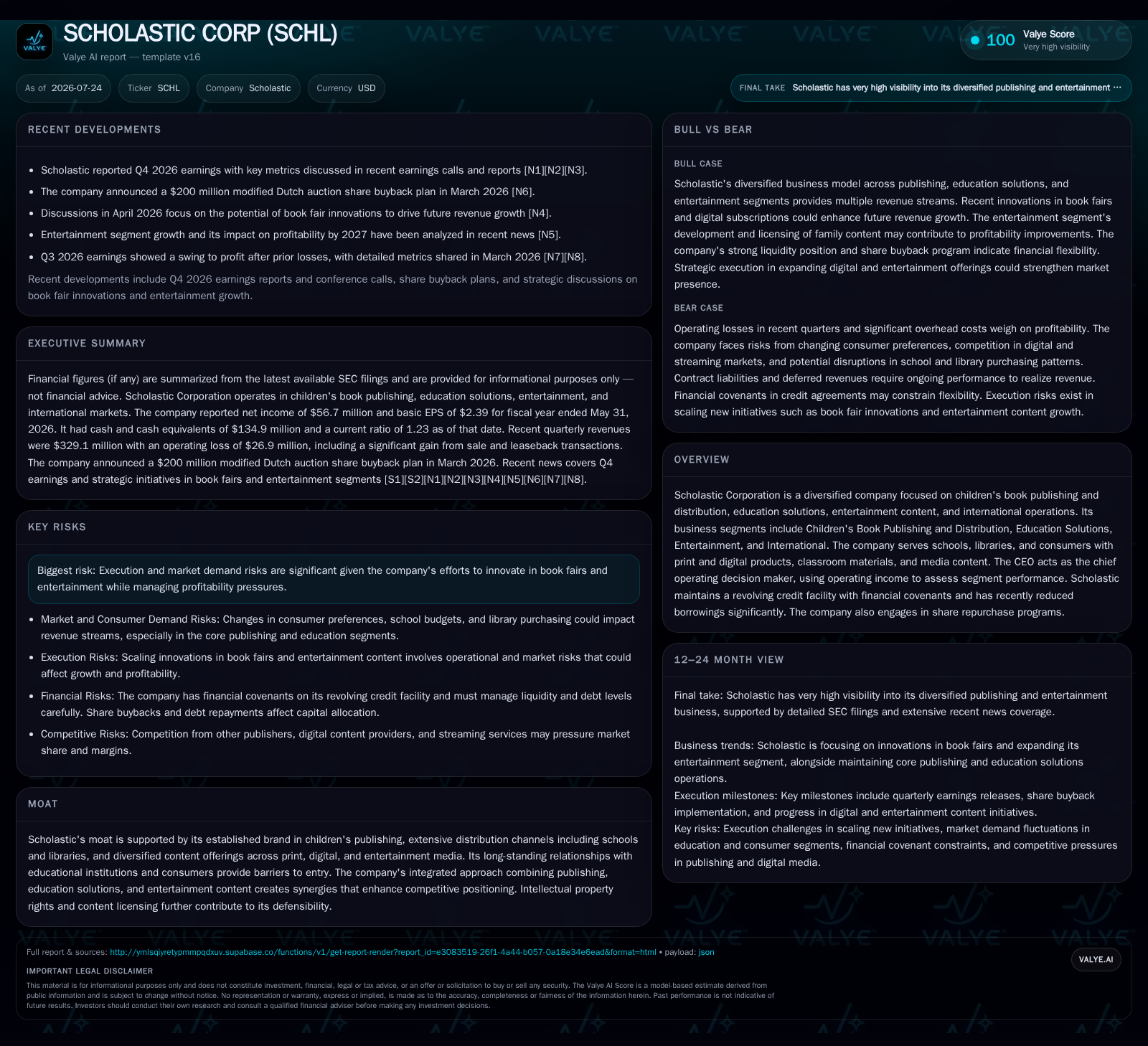
Scholastic Corp’s latest quarterly results underscore a strategic pivot toward expanding digital product adoption and diversifying distribution channels, notably through book clubs and education solutions. While print publishing remains significant, the company is leveraging intellectual property licensing and event sales like book fairs to engage schools and consumers. The reduction to zero borrowings on its credit facility enhances financial flexibility supporting ongoing investments. Execution risks persist around content refresh cycles and seasonality aligned with academic calendars.
Latest Quarterly Dynamics: Digital Revenues and Channel Evolution Drive Early 2026 Trajectory
Scholastic Corporation’s Q3 fiscal 2026 results reveal a strategic shift in revenue composition, marked by accelerating adoption of digital learning platforms alongside sustained performance in legacy print channels. As of February 28, 2026, the company reported zero outstanding borrowings against its $400 million revolving credit facility following a $350 million repayment during the quarter, enhancing liquidity and financial flexibility [S2]. This deleveraging coincided with a positive net income of $47.3 million over the nine months ended February 28, 2026, reversing a prior period net loss of $17.3 million [S2].
Revenue segmentation highlights the U.S. Book Clubs channel as a key growth driver, generating $14.6 million in Q3 2026 [S2]. This channel leverages a subscription-based, direct-to-consumer model that fosters strong customer retention and recurring revenue streams through personalized book selections delivered to homes. Concurrently, Scholastic’s Children’s Book Publishing and Distribution segment reflects a gradual transition from print publishing toward digital classroom materials and multimedia content licensing, expanding scalability beyond physical inventory constraints [S1].
Schools remain foundational customers for Education Solutions, which combines print and digital classroom materials with professional development services designed to optimize product implementation and educational outcomes [S1]. The company’s distribution ecosystem integrates institutional bulk sales, libraries, direct consumer book clubs, and event-based sales such as book fairs, creating multiple engagement touchpoints across the children’s educational landscape [S2,S1]. This diversified channel mix mitigates concentration risk and smooths revenue seasonality tied to academic calendars.
Integrated Content Model: Intellectual Property and Licensing Fuel Multi-Segment Revenues
Intellectual property ownership underpins Scholastic’s competitive moat, anchored by well-established children’s franchises and proprietary educational content [S1]. The company incurs significant prepublication costs, capitalized and amortized in alignment with revenue recognition to manage earnings volatility and optimize return on content investment [S1].
Beyond traditional publishing, Scholastic leverages content licensing agreements to extend its IP into multimedia entertainment, including television and interactive media. The acquisition of 9 Story enhances cross-media storytelling capabilities, complementing core publishing efforts and diversifying revenue streams with higher-margin licensing royalties relative to print sales constrained by physical distribution costs [S1,S25,S22]. This multi-segment revenue model supports operating income diversification and margin expansion.
Distribution Effectiveness: Schools, Book Clubs, Libraries, and Event-Based Sales Synergies
Scholastic’s distribution strategy capitalizes on complementary channels tailored to distinct customer segments. Institutional partnerships with schools drive bulk orders for Education Solutions’ curriculum-aligned classroom materials, often supported by state funding and educational mandates [S1]. Libraries contribute targeted acquisitions to promote literacy within communities.
Direct-to-consumer book clubs provide a sticky revenue base through subscription models that combine personalized marketing and convenience, helping to balance demand fluctuations outside peak academic seasons [S2]. Book fairs serve dual roles as revenue-generating events and brand-building platforms, timed strategically around school calendars to maximize consumer engagement and sales [S2,S1]. This multi-channel approach enhances cash flow consistency by balancing invoicing cycles and reducing reliance on any single distribution avenue.
Industry Competitive Frame: Peer Models Highlight Digital Disruption and Content Differentiation
Within the children’s educational publishing sector, Scholastic competes with firms such as Houghton Mifflin Harcourt, which also blend print publishing with digital platforms. However, Scholastic’s integrated model, encompassing entertainment content production through acquisitions like 9 Story, provides unique cross-media monetization opportunities less accessible to pure-play educational publishers or digital natives like VTech Holdings.
This integrated ecosystem approach allows Scholastic to capture consumer attention across print books, digital learning tools, school programs, and multimedia entertainment, creating synergies that differentiate it from competitors focused on narrower product sets. The company’s diversified portfolio helps mitigate pricing pressures from low-cost or free digital educational resources, which increasingly challenge traditional educational content providers amid constrained school budgets.
Growth Catalysts: Digital Platform Adoption, Multimedia Expansion, Summer Learning Emphasis
Key growth drivers include rising adoption of digital learning tools in classrooms, reflecting pedagogical shifts toward interactive technologies and personalized learning experiences [S1]. Scholastic’s expansion of summer literacy programs addresses seasonal revenue dips by promoting year-round reading habits, often funded by states or philanthropic organizations, extending the company’s reach directly into students’ homes at no cost to families [S1].
Investment in multimedia content—both original productions and licensed IP—supports margin enhancement through scalable fixed-cost structures and international audience expansion [S22,S25]. Additionally, growth in direct-to-consumer book club memberships underpins stable recurring revenue streams that are less sensitive to institutional purchasing cycles.
Risks in Execution: Funding Fluctuations, Product Refresh Cycles, Seasonality Impact
Execution risks include variability in school funding and budget allocations, which can impact institutional purchasing of educational materials. The company must continuously innovate digital and print content to keep pace with evolving educational standards and consumer preferences, managing prepublication cost amortization carefully to avoid impairments [S1].
Seasonality remains a significant factor, with revenue recognition concentrated around academic calendars and key events such as book fairs, which create operating leverage pressures during off-peak periods [S2]. Maintaining high renewal rates for educational service contracts and ongoing content relevance are critical to sustaining revenue and margin stability amid competitive pressures from emerging low-cost digital alternatives.
Forward Indicators: Key KPIs to Signal Sustainable Margin Recovery or Market Share Pressure
Monitoring revenue growth by distribution channel—particularly the trajectory of U.S. Book Clubs versus institutional bulk sales—will provide early signals of consumer engagement strength and potential budgetary constraints in schools [S2,F1]. Tracking active book club membership counts and digital product adoption rates offers real-time insight into the effectiveness of Scholastic’s digital transformation strategy.
Renewal rates for Education Solutions contracts serve as a bellwether for customer retention and recurring revenue stability [S1]. Inventory turnover metrics for print products and engagement metrics for digital content will also be important to assess operational efficiency and product-market fit.
Financially, Scholastic’s net cash position of approximately $135 million as of May 31, 2026, with no outstanding debt as of February 28, 2026, and a current ratio of 1.23, provides a solid liquidity foundation to support ongoing investments in content acquisition and digital platform development [F1,S2]. The company’s positive net income and operating cash flow turnaround further underpin its capacity for discretionary spending on growth initiatives and shareholder return programs, including active share repurchases
Disclaimer: This analysis is for informational purposes only based strictly on publicly available SEC filings and does not constitute investment advice or research views.
Disclaimer: This is research-only, informational analysis and not investment advice. It may include AI-generated interpretation and general industry context. Always verify important details using primary sources.

Comments