
LendingTree Elevates AI Focus and Navigates Economic Headwinds Amid Marketing Cost Pressures
LendingTree’s Q2 2026 results reflect strategic investments in AI and platform expansion while contending with macroeconomic and cost challenges.
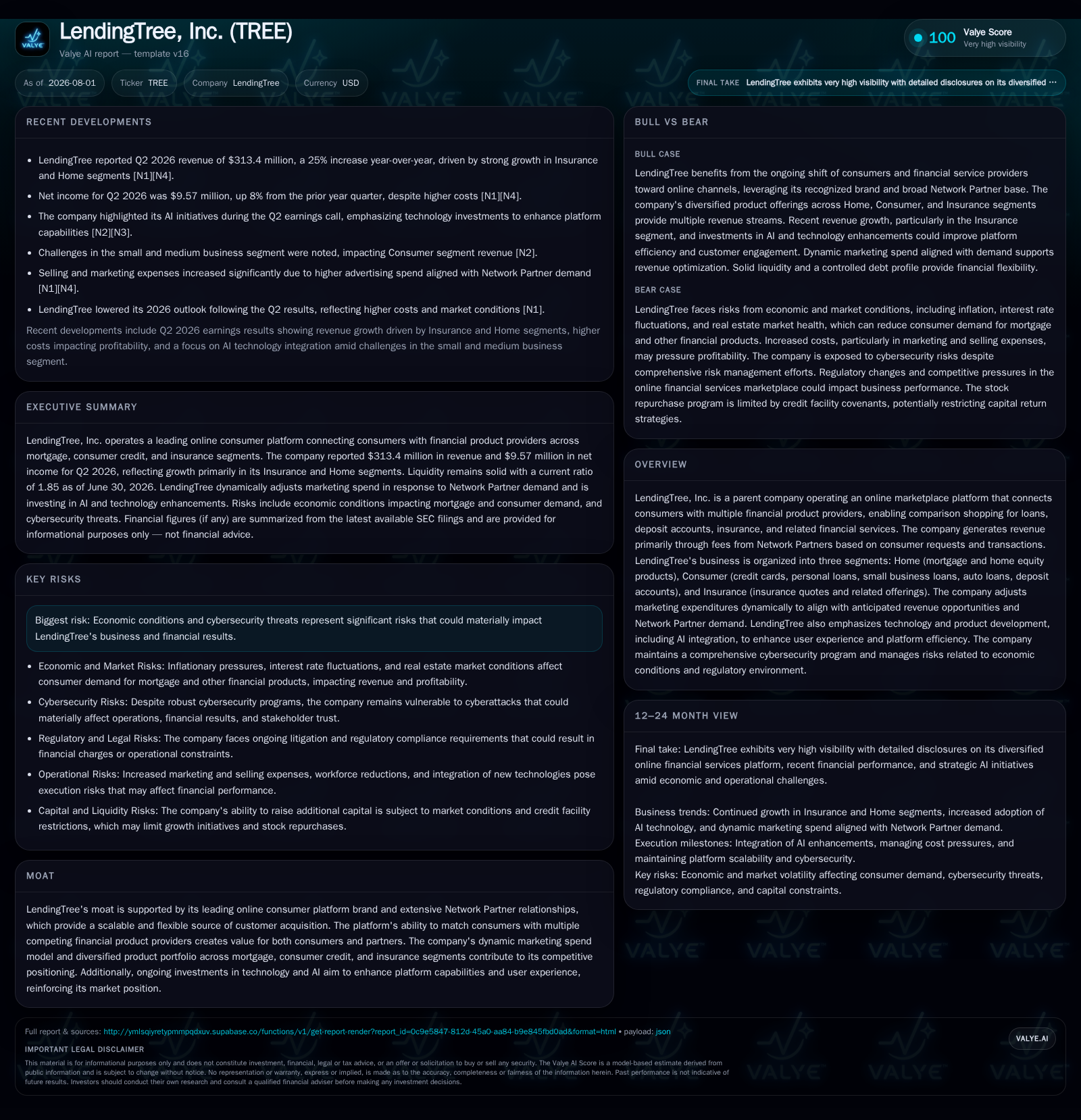
LendingTree, Inc. reported Q2 2026 results highlighting a deliberate push to integrate AI technologies into its online financial services marketplace platform to enhance consumer experience and partner engagement. Revenue growth across Home, Consumer, and Insurance segments was offset by margin pressure from higher marketing expenses amid weaker small-business lending demand, leading to lowered full-year guidance. The company’s marketplace model, driven by referral fees from diverse Network Partners and dynamic marketing spend, supports resilience but remains sensitive to economic cycles and regulatory risks. Continued emphasis on AI innovation, marketing efficiency, and platform scalability will be critical for sustaining growth amid competitive digital channels and interest rate volatility.
Recent Operating Update: Strategic AI Investments during Cost Pressures
Management emphasized accelerated deployment of AI technologies intended to enhance lead generation efficiency by improving the match quality between consumers and Network Partners. This is expected to increase conversion rates—the percentage of consumer inquiries resulting in completed transactions—which directly impacts referral fee revenue streams vital to the marketplace business model [S2][N1]. While the financial impact of these investments is still maturing, this aligns LendingTree with broader sector trends leveraging data analytics for superior user experience.
Business Model: Marketplace-Centric Lead Generation with Dynamic Marketing Spend
LendingTree operates as an intermediary online marketplace connecting consumers seeking various financial products with multiple lenders, insurers, and banks (Network Partners) [S1]. Revenue primarily derives from referral or lead generation fees paid by these partners when consumer inquiries convert into loan originations or insurance purchases.
The company employs performance marketing strategies that dynamically adjust advertising spend based on anticipated return on investment and partner capacity. This flexibility allows scaling of marketing expenditures relative to expected lead volume but also introduces earnings variability when market demand softens or customer acquisition costs rise unexpectedly [S1][S2]. Key operating levers include consumer request volume, conversion rate to completed transactions, average revenue per request, and diversity of Network Partners—each contributing to revenue stability through portfolio diversification.
Additionally, LendingTree offers consumers tools such as free credit score access that increase engagement frequency and foster repeat visits—enhancing customer lifetime value over time.
Industry Structure and Competitive Positioning
The online financial services marketplace sector features intense competition among platforms vying for consumer attention through technological differentiation. LendingTree competes with peers like Credit Karma (Intuit), Bankrate, NerdWallet in credit products and insurance aggregation, alongside mortgage-specialized players such as Rocket Companies.
LendingTree benefits from early brand establishment combined with extensive Network Partner relationships spanning mortgages, personal loans, insurance quotes, auto lending, and deposit accounts. This breadth facilitates cross-selling opportunities beyond traditional mortgage marketplaces and helps diversify revenue sources [S1]
Technological investments in AI-driven matching algorithms are positioned to enhance platform relevance by delivering personalized experiences powered by real-time data analytics—an increasingly critical factor in consumer choice within digital financial services. Moreover, LendingTree’s capability for agile marketing spend adjustments provides competitive advantage in responding swiftly to economic or market shifts.
Growth Drivers: Digital Adoption and Product Portfolio Expansion
Structural tailwinds supporting LendingTree’s growth include accelerating consumer preference for digitally accessible financial product shopping—a transition comparable historically to retail or travel sectors moving online [S1]. Regulatory trends promoting transparency in financial advertising further underpin this shift.
Product expansion into home equity lines of credit alongside growing insurance quote offerings broadens the addressable market while adding incremental lead generation avenues. Enhanced mobile platform adoption improves accessibility driving higher user engagement.
AI investments aim to refine targeting precision improving return on advertising spend by lowering customer acquisition costs over time while increasing conversion ratios. Economic recovery phases typically coincide with increased borrowing activity lifting marketplace volumes.
Risks / Watchpoints: Economic Sensitivity and Cybersecurity Exposure
Despite diversification efforts across products and partners, LendingTree remains sensitive to economic cycles that affect borrower demand—particularly mortgage refinancing activity and small business credit products vulnerable to interest rate increases or tighter underwriting standards [S2]. Inflationary pressures also risk inflating marketing expenses which could reduce profitability if not managed effectively.
Cybersecurity risks remain material given the handling of sensitive consumer data; any breach could erode trust damaging brand equity crucial for repeat engagement [S1][S2].
Regulatory changes impacting telemarketing practices—including amendments to the Telephone Consumer Protection Act—increase compliance complexity potentially raising operational costs or restricting communication channels. Dependency on Network Partners for monetization exposes the company to contract re-negotiation risks that may adversely affect fee structures.
What To Watch Next: KPI Trends & Execution Milestones
Investors should monitor quarterly updates on key KPIs such as lead volume growth; conversion rates; average revenue per consumer request; marketing efficiency measured by cost per acquisition; and platform traffic trends. Progress in AI deployment milestones will provide insight into potential improvements in marketing ROI.
Given macroeconomic uncertainties impacting loan origination volumes—especially within SMB loans noted during Q2 earnings calls [N1]—management’s ability to optimize spending without sacrificing growth is critical. Additionally, diversification progress within non-mortgage categories like insurance will clarify resilience prospects.
Updates regarding cybersecurity enhancements or regulatory compliance initiatives warrant attention due to their implications for operational continuity.
Financial Profile Discussion
As of June 30, 2026, LendingTree held $110.8 million in cash and equivalents against total debt approximating $390.3 million resulting in net debt near $279.5 million with a healthy current ratio of approximately 1.85x indicating strong short-term liquidity [F1]
The company maintains an authorized stock repurchase program capped at approximately $96.7 million; however repurchases have been constrained under existing credit facility covenants reflecting prudent liquidity management amid uncertain market conditions [S4][S23]. Overall capital allocation balances reinvestment for growth alongside disciplined debt management aimed at preserving financial flexibility.
This analysis synthesizes publicly available filings as of referenced dates without providing investment advice.
Disclaimer: This is research-only, informational analysis and not investment advice. It may include AI-generated interpretation and general industry context. Always verify important details using primary sources.

Comments