
VF Corporation’s Growth Through Portfolio Realignment and Brand Focus
VF Corp’s latest quarterly update reveals modest revenue growth driven by its Outdoor segment amid strategic portfolio shifts including the Dickies divestiture.
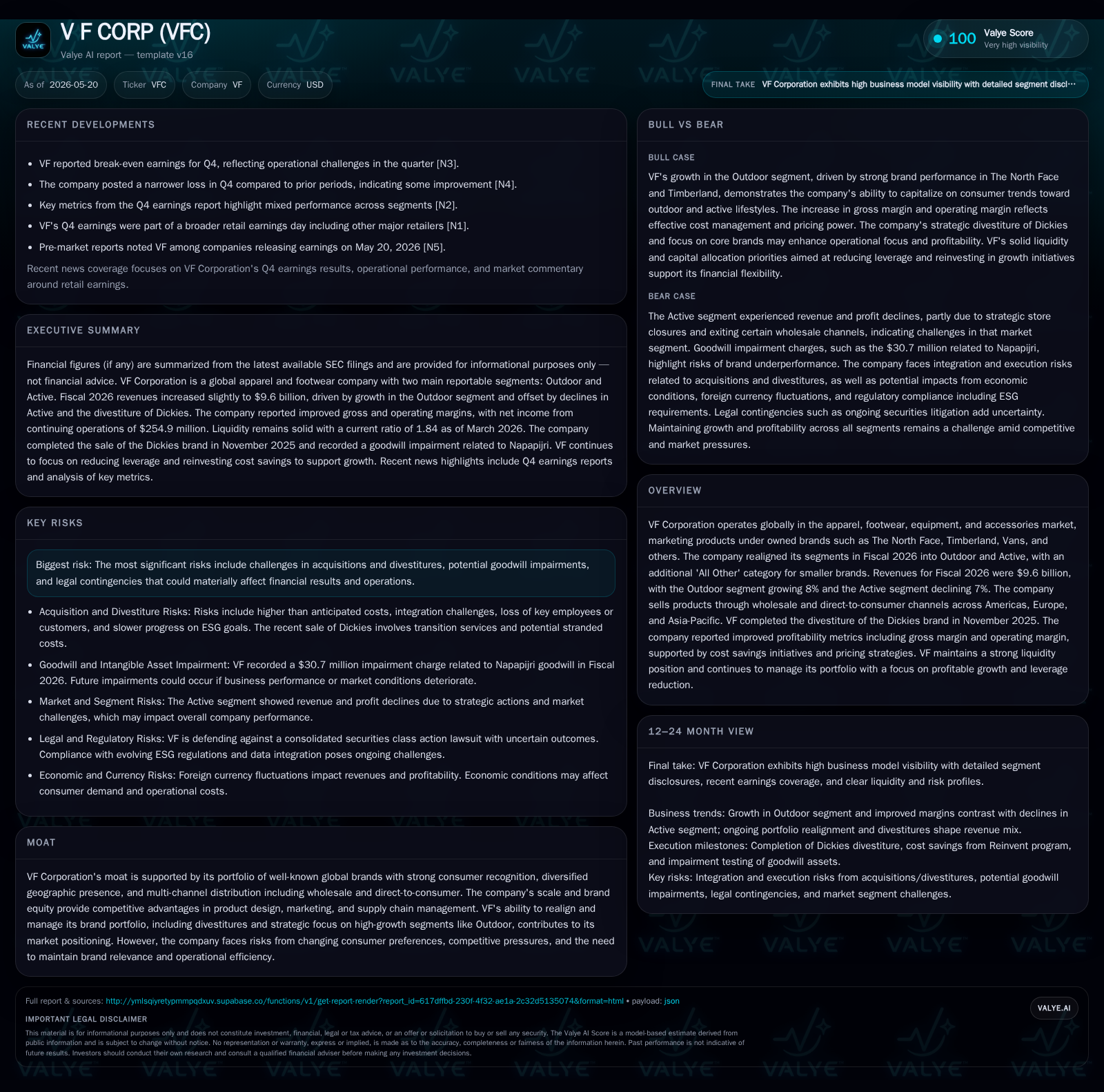
In its latest quarterly filing, VF Corporation reported a 1% revenue increase for fiscal 2026 driven primarily by an 8% growth in its Outdoor segment, offsetting declines in the Active segment and the divestiture impact from Dickies. The company enhanced profitability through improved gross margins and cost savings while maintaining a strong liquidity position. VF’s strategic realignment toward Outdoor and Active segments and multi-channel distribution supports its competitive positioning in the global apparel market, though risks from portfolio management execution and intangible asset impairments persist. Monitoring upcoming financial results and operational milestones will be key to assessing continued growth trajectory.
Latest Quarterly Operating Trends Highlighting Growth Dynamics
VF Corporation’s latest fiscal 2026 third-quarter filing dated January 28, 2026, details a revenue increase of approximately 1% over the prior fiscal year to $9.6 billion, inclusive of a favorable 3% foreign currency impact. The uplift was predominantly driven by an 8% growth in the Outdoor segment which contributed roughly $5.7 billion of revenue [S2], [S25]. Concurrently, the Active segment saw a contraction of about 7%, resulting from deliberate portfolio realignments including exiting certain lower-margin wholesale accounts and closing unprofitable retail franchises notably within Vans [S23].
Gross margin expansion was notable at a 130 basis point increase to nearly 54.8%, propelled by a synergy of higher-quality inventory procurement, reduced product costs owing to supply chain efficiencies, increased pricing power, and currency effects [S25]. Selling and administrative expenses declined as a percentage of sales due to ongoing cost savings initiatives known as 'Reinvent', which included trimming IT expenses despite incrementally higher marketing spend aimed at brand reinforcement [S25]. These metrics combined to elevate operating margins substantially compared with the prior year.
This operating performance demonstrates that VF is successfully navigating complexity from portfolio changes like the Dickies divestiture completed in November 2025 while capitalizing on strength in key outdoor lifestyle categories. The selective pruning of underperforming store footprints within certain segments underscores a disciplined approach to margin management even as overall revenue improvements are measured [S2], [N1].
Business Model and Product Portfolio Quality: Brand Equity in Action
VF Corporation operates through a multi-brand model specializing globally in apparel, footwear, equipment, and accessories with flagship brands such as The North Face, Timberland (now integrated within Outdoor), Vans (Active), along with Kipling, Eastpak, and JanSport comprising the Active segment [S1], [S23]. This segmentation reflects its strategic focus on lifestyle outdoor performance wear juxtaposed against active casual brands.
Revenue streams are bifurcated primarily into wholesale channels—selling products through third-party retailers—and direct-to-consumer (DTC) channels via VF-owned stores and e-commerce platforms [S25]. VF’s latest disclosures report wholesale revenue up slightly (1%), reflecting cautious recovery post-pandemic retail dynamics while DTC channels showed incremental strength with a +2% lift fueled by omnichannel investments including enhanced digital storefronts
The November 2025 divestiture of Dickies for $600 million cash marked a key portfolio realignment maneuver allowing VF to concentrate resources on higher-growth margin categories in Outdoor. While this led to an immediate reduction in revenues associated with Dickies (~$217 million impact), it improved overall brand clarity and resource allocation toward marquee outdoor performance brands driving top-line growth [S2], [S22].
Consumer loyalty remains anchored in VF’s ability to innovate products that blend technical performance with appealing style attributes catering to evolving user preferences—a core moat supported through consistent marketing investment and advanced supply chain control.
Market Structure and Competitive Positioning Within Apparel Industry
VF sits within the global branded apparel industry which is characterized by intense competition from both specialized outdoor companies (e.g., Columbia Sportswear) and broad lifestyle activewear brands (e.g., Nike, Adidas). VF differentiates itself through scale—the breadth of global brand equity—and geographically diversified presence spanning Americas, Europe, and Asia-Pacific markets [S1].
Supply chain efficiency is critical given elevated material costs globally. VF's demonstrated capability to lower product costs while enhancing inventory quality supports sustainable margin expansion amidst inflationary pressures [S25]. However, competitive pressures remain palpable especially in activewear categories where rivals are aggressively investing in direct-to-consumer channels.
The recent goodwill impairment charge related to Napapijri emphasizes the intangible asset sensitivity inherent in fashion-related business units exposed to fluctuating consumer tastes or regional market challenges [S21]. Maintaining brand relevance amid fast-moving industry trends demands agile innovation alongside prudent financial discipline.
Growth Drivers: Segment Realignments and Channel Mix Optimization
VF’s focus on expanding the Outdoor segment—now encompassing The North Face and Timberland—is bearing fruit with an organic revenue increase evidencing strong market adoption. This pivot reflects a broader secular trend favoring athleisure and outdoor lifestyles accentuated by health-conscious consumer behavior [S25], [N12].
Simultaneously, tactical channel optimization is underway as VF balances channel profitability; notably shedding lower-margin value-channel wholesale accounts especially within Vans’ footprint explains part of Active’s revenue decline but enhances overall margin profile [S23]. The dual-pronged approach involves growing direct-to-consumer sales (+2%) which typically command higher margins due to elimination of intermediaries coupled with streamlining wholesale distribution for efficiency.
Cost savings programs branded as Reinvent contribute further by optimizing operations including IT infrastructure rationalization leading to overhead reductions while enabling reinvestment into brand marketing essential for sustaining consumer engagement [S25]. Regionally, Europe shows promising growth supported partly by currency tailwinds whereas Asia-Pacific remains challenged amid macroeconomic headwinds—a factor requiring strategic focus moving forward [S25].
Collectively these elements represent measurable levers driving incremental top-line lift balanced with profitability improvements fundamental for sustained value creation.
Risks and Challenges: Acquisition, Divestiture, and ESG Integration Risks
The complexities surrounding acquisitions and divestitures pose material risks for VF beyond straightforward transaction costs—integration issues relating to systems separation post-Dickies sale risk stranded costs or operational disruptions if not managed meticulously [S2]. Such transitions also command senior management attention potentially diverting from organic growth initiatives.
Goodwill impairment risk remains salient given reliance on intangible assets tied closely to brand valuations; misjudgment of market conditions or consumer trends could precipitate further write-downs negatively impacting earnings quality [S21]
Additionally, growing regulatory demands on environmental, social & governance data collection place operational burdens on VF’s geographically diverse supply chains complicating compliance efforts globally. Difficulty accessing reliable ESG metrics may slow progress on sustainability commitments thus attracting reputational risks or limiting access to certain investor pools focused increasingly on ESG credentials.
Key Milestones Ahead: Monitoring Guidance, Brand Performance, and Cost Initiatives
Investors should prioritize monitoring full-year fiscal results following Q3 disclosure already signaling steady operating momentum but tempered by Active segment softness. Important markers will include:
- Revenue progression specifically within Outdoor versus Active segments reflecting effectiveness of portfolio strategic shifts,
- Gross margin trajectory sustaining recent expansions,
- Pace of direct-to-consumer revenue growth supporting margin enhancement,
- Execution efficiency around cost-saving programs maintaining balance between expense discipline and necessary investment,
- Further updates on divestiture-related transition costs or stranded expenses,
- Any additional goodwill impairment developments tied to specific units,
- Progress on ESG integration benchmarks aligning with regulatory expectations.
The May 20 release corresponding to full-year fiscal results provided some initial updates affirming these themes but detailed forward guidance remains cautious reflective of prevailing macro uncertainties [S3], [N1], [N14].
This analysis leverages recent quarterly filings anchored around operational shifts underpinning VF’s evolving business model emphasizing Outdoor-led growth alongside careful portfolio pruning post-Dickies sale. The narrative is calibrated without extrapolating unsupported financial forecasts or making investment research views.
Disclaimer: This is research-only, informational analysis and not investment advice. It may include AI-generated interpretation and general industry context. Always verify important details using primary sources.

Comments