
Via Transportation 2026: Technology Ambition, Cyber Risk, and the Economics of Platform-Driven Mobility
Via Transportation's platform fuses advanced AI, real-time data, and public sector integration to optimize shared transit—but persistent net losses, cybersecurity threats, and reliance on external platforms underscore both the scale and fragility of its ambitions.
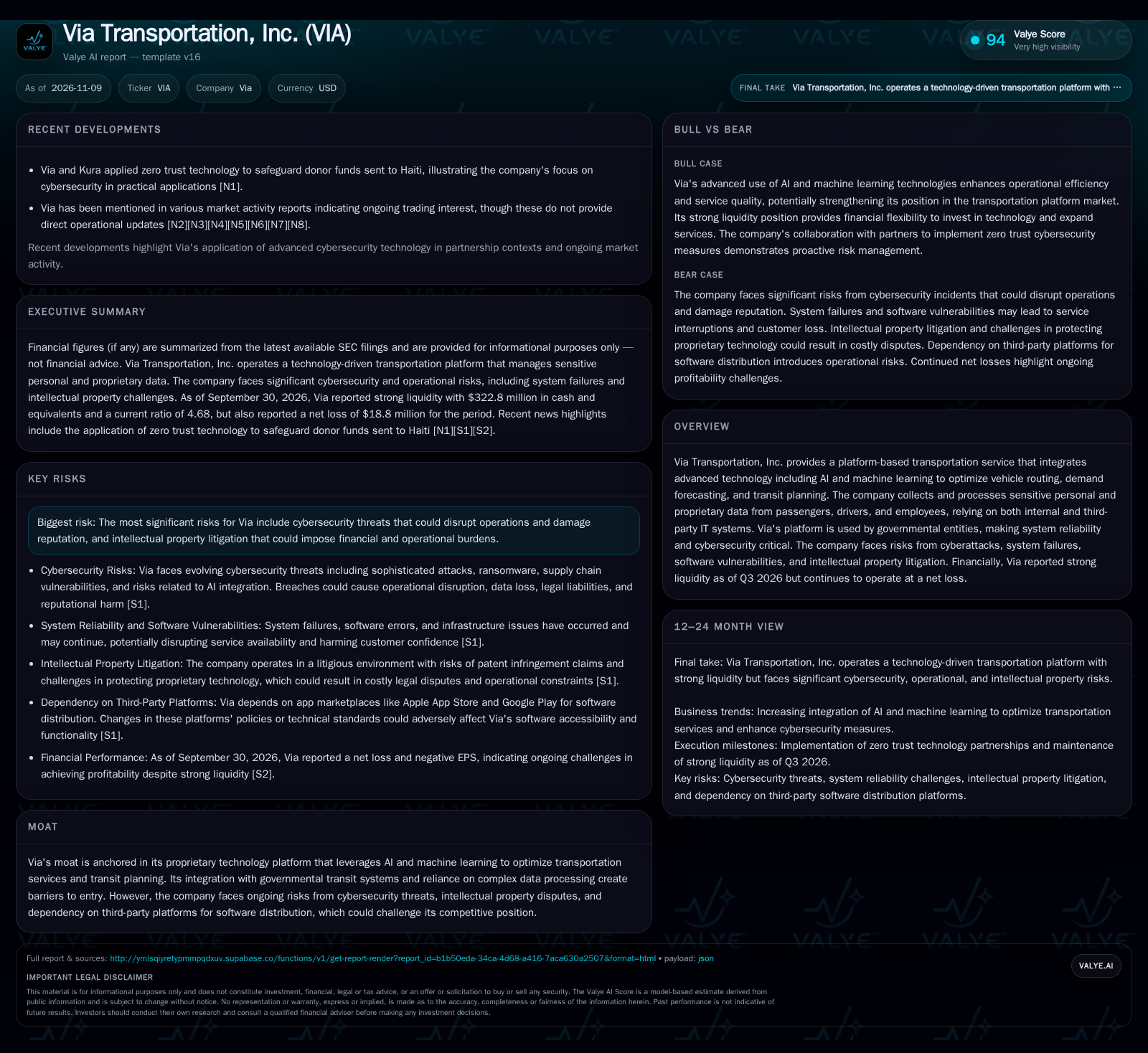
Via Transportation, Inc. operates a data-driven transit platform with advanced AI and machine learning capabilities, supporting critical public and private mobility operations. As of Q3 2026, the company reported $322.8 million in cash and a current ratio of 4.68, but continues to operate at a net loss of $18.8 million. Strategic focus on cybersecurity—including real-world applications of zero trust—reflects both core differentiators and existential risks, with system reliability, IP litigation, and third-party platform dependencies shaping the path to sustainable economics. [S2] [N1]
Via Transportation, Inc. operates at the intersection of AI-powered mobility optimization and real-world transit delivery, building a platform that serves not only private riders but also public agencies with complex, high-stakes requirements. As of September 30, 2026, the company maintains a substantial liquidity cushion and continues to invest in advanced cyber protections, such as zero trust applications. Yet persistent net losses, acute cybersecurity risks, and dependence on external technology ecosystems highlight the tension between growth ambition and the operational, legal, and economic hurdles that could define Via’s next phase.
Liquidity, Losses, and Cybersecurity: The Most Pressing Realities for Via
However, the company continues to operate at a net loss, with a reported negative net income of $18.8 million and basic and diluted EPS of -$0.23 for the same period. [S2]
The company’s platform is deeply integrated with both public and private transit operations, making system reliability and cybersecurity foundational to its business model. A recent collaboration with Kura to apply zero trust technology in safeguarding donor funds for Haiti demonstrates Via’s proactive approach to cyber risk management and its ability to translate advanced security measures into real-world deployments. [N1]
These facts underscore a dual imperative: Via must sustain investment in technology and risk management to maintain platform credibility, even as ongoing losses highlight the urgency of achieving scalable, profitable economics.
How Via’s Platform Could Unlock Operating Leverage—or Perpetuate Losses
Via’s economic model is built on the orchestration of transportation supply and demand, using proprietary AI and machine learning to optimize vehicle routing, fleet allocation, and capacity planning. Revenue streams likely include SaaS-style platform licensing to municipalities and transit agencies, transaction or usage fees from private mobility partners, and potentially direct-to-consumer ride services in select markets. If the company can scale its core platform across multiple geographies and customer segments, incremental software and data analytics revenue could deliver high gross margins due to low variable costs per additional user.
However, significant fixed costs are inherent in the continuous development of proprietary algorithms, ongoing cybersecurity investment, and system uptime guarantees—costs that do not scale down easily even if growth slows. The need to maintain and upgrade both internally managed and third-party IT infrastructure, combined with legal and compliance expenditures related to data protection and intellectual property, can constrain operating leverage in the near to medium term.
Achieving profitability likely depends on expanding contracted public transit deployments, increasing per-customer revenue, or finding new high-margin use cases for its routing and data analytics IP.
Barriers, Substitutes, and the Realities of Defensible Mobility Platforms
Via’s competitive edge rests on its proprietary AI-driven platform, deep integration with governmental transit systems, and ability to process and optimize complex mobility data. These factors could increase switching friction for large public-sector clients, as transitioning transit planning and routing to a new provider can involve high operational risk and integration costs.
However, the platform’s reliance on third-party app marketplaces (Apple App Store, Google Play) introduces vulnerability to policy or technical changes outside Via’s control. The risk of system failures or software vulnerabilities is amplified by the mission-critical nature of public transit, where even short outages can lead to reputational damage and client attrition.
Competitors include legacy public transit software vendors, specialized mobility SaaS providers, and global mobility tech giants with broader ecosystems. Substitution risk is significant if a municipality opts to bring routing optimization in-house or adopt a rival’s platform, particularly if Via cannot maintain a clear lead in routing efficiency, reliability, or cybersecurity. Intellectual property litigation adds another layer of competitive pressure, as legal disputes can distract management and divert resources.
Unlocking Scalable Profitability Through Public Sector Expansion and Security Leadership
A favorable outcome for Via involves leveraging its AI and zero trust cyber capabilities to become the default platform for dynamic transit planning among municipalities and large transit agencies. If the company can demonstrate superior uptime, data security, and measurable cost savings for public partners, it could accelerate multi-year contract wins, increase customer retention, and drive higher-margin software revenue.
Confirmation of this scenario would come from disclosures of expanded multi-city deployments, growing contracted backlog, and evidence of successful renewals or upsells to existing governmental customers. Sustained reduction in net losses, particularly through margin expansion rather than cost-cutting, would signal that fixed cost absorption and operating leverage are taking hold.
Falsification would be indicated by stalled or declining public sector wins, persistent or widening losses despite revenue growth, or publicized cybersecurity incidents undermining Via’s credibility as a secure mobility platform.
Economic Reality: Growth Offset by Margin Pressure and Persistent Cyber Demands
The most plausible trajectory for Via is moderate revenue growth from ongoing public and private sector platform adoption, offset by continued investment in cybersecurity, system reliability, and legal defense.
In this scenario, Via maintains or slightly expands its governmental customer base, but faces pricing pressure from budget-constrained municipalities and increasing competition from both established and emerging rivals. Margins remain under pressure due to the need for continuous innovation and risk management spend.
Key confirming evidence would be stable or improving operating loss trends, steady liquidity, and regular announcements of new or renewed public sector partnerships. Falsification would be signaled by material deterioration in liquidity, abrupt customer churn, or a major cyber incident impacting operations.
Vulnerability to Cyber Breaches and Platform Disruptions Could Accelerate Losses
The adverse scenario centers on a major cybersecurity incident or high-profile system failure that disrupts service for governmental clients, triggering contract losses, reputational damage, and potentially costly litigation or regulatory penalties. Such an event could erode trust in Via’s platform, especially among risk-averse public sector customers for whom reliability and data protection are paramount.
A prolonged inability to achieve profitability, particularly if liquidity erodes faster than expected due to unforeseen legal or remediation costs, could force Via to curtail R&D, delay platform upgrades, or seek dilutive external financing. Dependency on third-party app marketplaces could be exposed if technical or policy changes disrupt software distribution.
Confirmation of this downside would come from announcements of major client losses, public disclosure of a severe data breach, or rapid decline in reported cash and equivalents not matched by revenue growth.
Testing the Thesis: Metrics and Milestones That Will Shape Via’s Next Chapter
Disclosure of new or expanded multi-year contracts with governmental transit agencies, particularly outside current geographies, would help confirm platform scaling.
Trends in net loss and operating margin—especially whether losses narrow as revenue grows—will signal if operating leverage is achievable.
Announcements or disclosures of cybersecurity incidents, including severity and business impact, will directly test the company’s risk management claims.
Reported backlog, renewal rates, or customer churn (if disclosed) would provide insight into stickiness and recurring revenue dynamics.
Evidence of material IP litigation costs or settlements could signal increasing legal risk and margin pressure.
Disclosures about changes in third-party app marketplace policies, or disruptions in software distribution, would highlight operational dependencies.
Updates on platform reliability metrics (e.g., uptime, service disruptions) would help test claims of mission-critical performance.
Disclaimer: This is research-only, informational analysis and not investment advice. It may include AI-generated interpretation and general industry context. Always verify important details using primary sources.

Comments