
Apple’s Earnings Surge, Ecosystem Leverage, and the Stakes of Platform-Driven Expansion
Apple’s Q4 2026 performance—highlighted by a 12% sales jump and tariff refunds benefiting EPS—reaffirms the company’s profitability, but the durability of its platform economics, margin resilience, and capacity for services-led growth remain under scrutiny as competitive and regulatory crosswinds intensify.
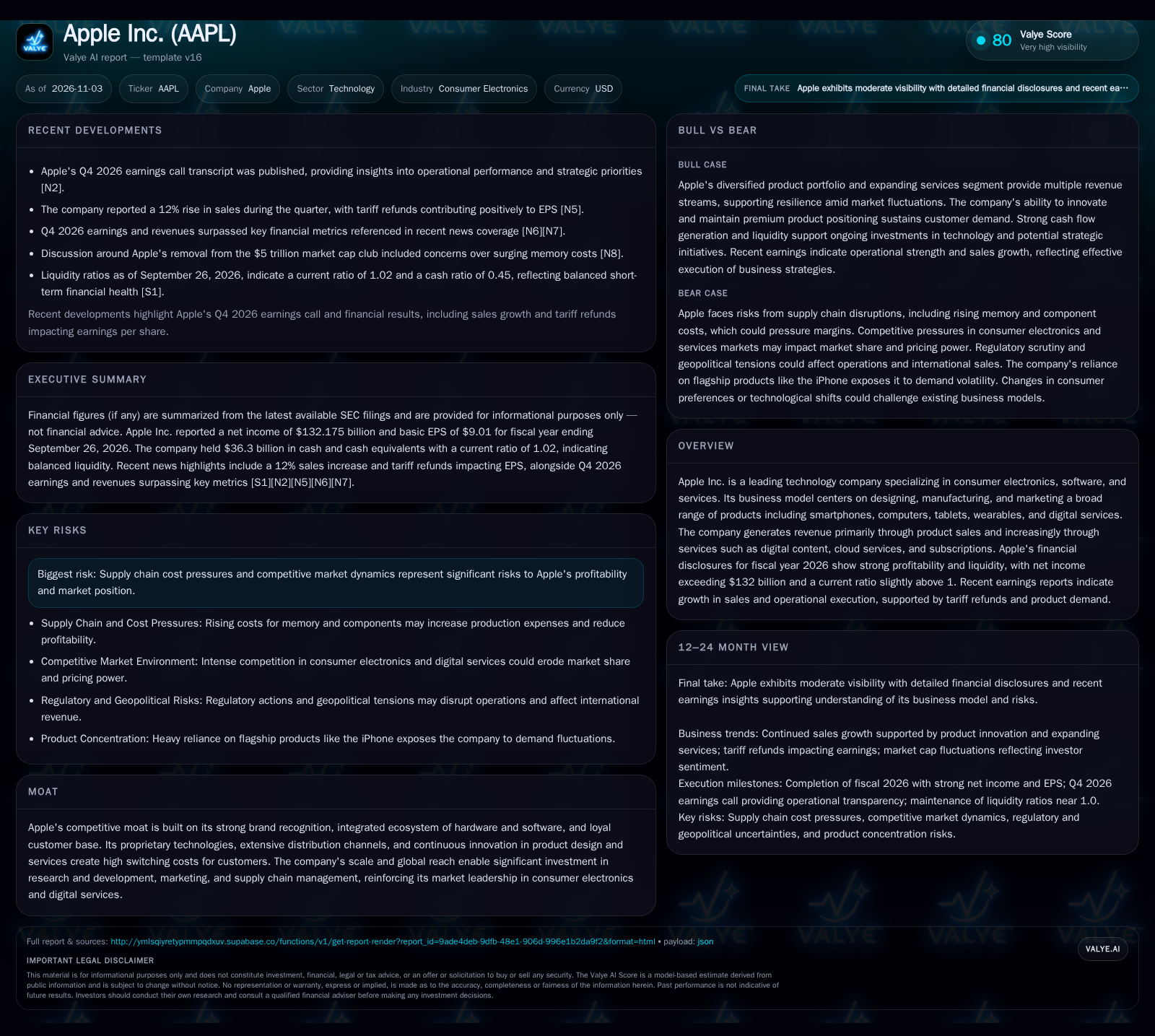
Apple posted strong Q4 2026 results, with net income at $132.175 billion and a 12% sales increase aided by tariff refunds [S1] [N5]. While the company’s diversified hardware and services model supports robust earnings, the sustainability of growth hinges on margin management, ecosystem lock-in, and the ability to balance innovation with mounting external risks.
Apple’s latest financial disclosures reveal a company delivering on both profitability and sales momentum, with net income exceeding $132 billion and a notable 12% quarterly sales rise, partly attributed to tariff refunds [S1] [N5]. These headline figures mask a deeper tension: while Apple’s integrated ecosystem and expanding services arm continue to underpin earnings, the company faces intensifying pressure to defend margins, sustain innovation, and navigate a shifting regulatory and competitive landscape. The coming quarters will test whether Apple’s platform advantages can offset rising costs and external headwinds—or if market leadership will be challenged by structural shifts in the consumer electronics and digital services arenas.
2026 Earnings Beat, Sales Growth, and Tariff Effects Define Recent Momentum
Apple reported net income of $132.175 billion for fiscal year 2026, with basic earnings per share of $9.01 and diluted EPS of $8.98 [S1]. This result was achieved alongside a 12% increase in quarterly sales, which recent coverage attributes partly to tariff refunds that provided a lift to reported EPS [N5]. [S1] These facts frame a business still generating substantial profits and cash flow, but with margin support in the latest quarter boosted by non-operational factors. The operational context includes both strong sales execution and the benefit of one-time items, raising questions about the repeatability of such elevated profitability.
Platform Economics, Margin Leverage, and the Dynamics of Multi-Stream Revenue
Apple’s core economics are driven by a blend of high-margin hardware sales and an expanding services segment, which includes digital content, cloud storage, and subscription offerings. Hardware such as the iPhone, Mac, iPad, and wearables typically command premium pricing, with gross margins historically higher than industry averages. The services business, while not explicitly broken out in current disclosures, is widely understood to offer even higher incremental margins due to software scalability and recurring revenue potential.
Operating leverage is significant: fixed costs related to R&D, design, and marketing are amortized over massive global sales volumes, while variable costs are influenced by supply chain dynamics and component pricing. In the most recent period, tariff refunds positively affected margins, but rising memory and component costs—if persistent—could compress gross profitability. Apple’s capital needs are moderate relative to its cash flow, with investment focused on product development, ecosystem expansion, and selective infrastructure. The business model’s ability to shift mix toward services with higher margin potential is a key lever for future profitability, but also exposes the company to platform regulation and changing digital revenue share models.
Ecosystem Lock-In and Competitive Pressures: How Sustainable Is Apple’s Moat?
Apple’s competitive advantages stem from a tightly integrated hardware-software ecosystem, strong brand loyalty, and proprietary technologies that could increase switching costs for consumers. The seamless integration of devices, operating systems, and cloud services encourages multi-product adoption and high customer retention. However, these strengths also attract regulatory scrutiny, particularly regarding App Store practices, digital content curation, and default platform settings.
Competitive threats are multifaceted: traditional consumer electronics rivals continue to challenge Apple’s hardware with lower-cost alternatives, while digital services competitors (both large technology platforms and specialized app providers) seek to erode Apple’s share of attention, engagement, and spend. The risk is that regulatory shifts, forced interoperability, or changes in revenue-sharing rules could undermine Apple’s ability to extract platform rents. Meanwhile, persistent innovation and premium product positioning remain essential to defending market share against increasingly sophisticated substitutes.
Services-Led Margin Expansion and Ecosystem Deepening Fuel Outperformance
A favorable scenario sees Apple successfully accelerating its services revenue mix, leveraging its installed base to drive adoption of high-margin subscriptions, digital content, and cloud offerings. This would reinforce operating leverage, as incremental services revenue drops more fully to the bottom line compared to hardware. Continued innovation—such as new device categories, health and wellness features, or AI integration—could stimulate both replacement cycles and ecosystem stickiness, further raising lifetime customer value.
Confirmation of this scenario would come from disclosed growth rates in services revenue outpacing hardware, margin expansion despite component cost pressures, and evidence of high retention or increased average revenue per user (ARPU) if disclosed. Regulatory outcomes that preserve Apple’s control over its platform would also support upside. Falsification would involve stagnating services growth, margin compression, or regulatory mandates that force changes to App Store economics or cross-platform interoperability.
Resilient Earnings with Margin Pressure and Regulatory Uncertainty
The most plausible path forward is one of continued profitability, supported by a diversified revenue base and the ongoing strength of Apple’s ecosystem, but with incrementally rising pressure on margins and platform economics. Hardware sales remain robust—buoyed by brand loyalty and ecosystem effects—but face cyclical demand fluctuations and cost inflation in the supply chain. Services growth supports blended margin stability, but regulatory risks and competitive encroachment limit the pace of further expansion.
This scenario is confirmed by steady, if unspectacular, growth in both hardware and services, stable (but not expanding) margins, and ongoing investments in R&D and new product launches. Evidence against this trajectory would include a significant decline in hardware volumes, abrupt regulatory actions targeting core services revenue, or a material shift in consumer preferences away from Apple’s integrated approach.
Margin Compression and Platform Disruption Challenge Apple’s Profit Engine
In an adverse scenario, Apple faces sustained component and memory cost inflation, driving gross margin contraction on hardware. At the same time, regulatory mandates—such as alternative app store requirements, new digital tax regimes, or forced interoperability—erode the economics of the services platform, reducing take rates and weakening customer lock-in. Competitive threats from both hardware commoditization and the rise of cross-platform digital services further undermine pricing power.
Downside would be confirmed by declining gross and operating margins, revenue growth falling below peers or market expectations, and management guidance reflecting higher cost structures and regulatory compliance burdens. Early warning signs could include increased customer churn (if disclosed), reduced App Store profitability, or evidence that tariff or cost refunds are no longer cushioning earnings.
Metrics and External Forces That Will Test Apple’s Ecosystem Thesis
Disclosure of services revenue growth and its share of total revenue would help test the thesis that Apple’s margin expansion is driven by platform economics.
Updates on gross margin trends, particularly in relation to component and memory cost pressures, will indicate Apple’s pricing power and supply chain resilience.
If disclosed, ARPU and customer retention rates across major product and services categories would provide insight into ecosystem stickiness and monetization depth.
Regulatory developments—such as new digital platform rules or App Store mandates—could materially alter Apple’s ability to extract value from its ecosystem.
Product launch cadence and evidence of cross-category innovation (e.g., new device types, health/AI features) remain key to sustaining demand and ecosystem engagement.
Competitive responses from both hardware peers and digital services platforms could pressure Apple’s market share and force adaptation of platform economics.
Management commentary on supply chain strategy and cost mitigation will be critical for assessing margin protection amid external shocks.
The extent to which non-operational items (such as tariff refunds) continue to influence reported earnings should be monitored to gauge underlying business momentum.
Disclaimer: This is research-only, informational analysis and not investment advice. It may include AI-generated interpretation and general industry context. Always verify important details using primary sources.

Comments