
Abbott Laboratories 2026: Diversification, Diagnostics Innovation, and the Stakes of Competitive Healthcare Scale
Abbott’s 2026 operating snapshot highlights the power—and vulnerability—of broad healthcare diversification. The company’s next-generation oncology diagnostics launch and sustained profitability underscore the payoff of innovation, but margin and growth dynamics hinge on execution in fiercely competitive, rapidly evolving markets.
Abbott Laboratories remains a diversified global healthcare leader as of late 2026, operating across pharmaceuticals, diagnostics, nutritionals, and medical devices. Recent launches like the next-generation Oncodetect test in cancer diagnostics signal ongoing innovation, while Q3 net income of $920 million reflects continued profitability. However, the company faces relentless competition, rapid technology cycles, and regulatory complexity, making sustained growth and margin resilience dependent on execution in diagnostics, diabetes, and heart care segments. Monitoring product uptake, R&D effectiveness, and competitive responses will be central to testing the company’s long-term thesis. [S1] [S2] [N4] [N6] [N7]
Abbott Laboratories enters the final quarter of 2026 as a prime example of diversified healthcare scale, with four major business segments spanning everything from branded generics in emerging markets to cutting-edge diagnostic systems and advanced medical devices. The company’s recent launch of the Oncodetect cancer residual disease test signals a continued commitment to innovation, while robust Q3 earnings reinforce operational execution. Yet, Abbott’s broad market exposure also brings heightened vulnerability to technological disruption, regulatory shifts, and intense competition—especially in high-growth areas like oncology diagnostics and diabetes care. The next phase for Abbott will be defined by its ability to leverage innovation into durable growth while defending margins against a dynamic and unforgiving healthcare landscape.
Recent Earnings, Product Launches, and the Innovation-Execution Balance
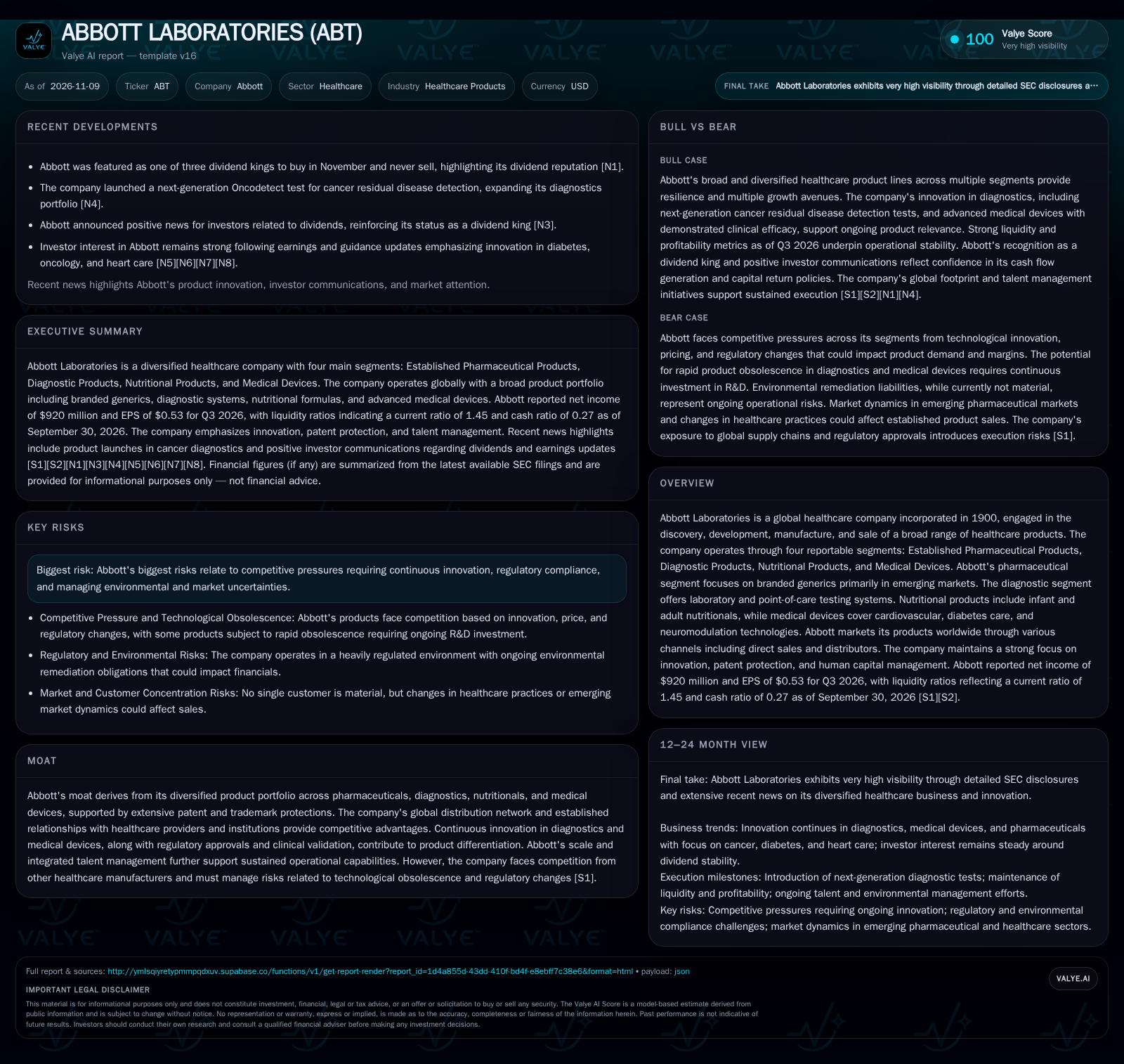
Abbott Laboratories reported net income of $920 million and an EPS of $0.53 for Q3 2026, with a current ratio of 1.45 and a cash ratio of 0.27 as of September 30, 2026. These figures underscore ongoing profitability and a balance sheet positioned for continued operations, though not an excess of liquidity. The launch of the next-generation Oncodetect test for cancer residual disease detection expands Abbott’s diagnostics offerings into a high-growth, high-value segment, reflecting a continued emphasis on innovation as a lever for both growth and competitive differentiation. Investor interest remains elevated, with recent news cycles focusing on earnings updates and innovation momentum in key therapeutic areas—namely diabetes, oncology, and heart care. [S2] [N4] [N6] [N7]
How Diversified Healthcare Segments Shape Abbott’s Profit Model
Abbott’s business model is built on the interplay of four distinct segments, each with different economics and risk profiles. The Established Pharmaceutical Products segment focuses on branded generics in emerging markets, where volume growth is attainable but pricing is often constrained by local regulations and competition. Margins in this segment are typically lower than in advanced markets but offset by scale and portfolio breadth.
Diagnostics, particularly with innovations like the new Oncodetect test, offer higher-margin potential due to the value placed on accuracy, speed, and clinical utility in disease detection and management. This segment benefits from recurring demand (e.g., routine and advanced testing), but also requires ongoing investment in R&D and regulatory navigation. Volume growth can be substantial if new tests gain clinical guideline endorsement or payer reimbursement.
Nutritional Products—spanning infant to adult nutrition—tend to generate stable, cash-generative revenue streams, though they are exposed to commodity costs and competitive pricing pressures. Medical Devices, including diabetes care and cardiovascular technologies, can drive margin expansion if Abbott leverages scale, achieves high utilization, or secures premium pricing for innovative, clinically differentiated devices. However, these categories are capital-intensive, requiring significant investment in product development, manufacturing, and post-market surveillance. Across all segments, the mix of direct sales and distributor channels influences margin realization and working capital needs.
Where Abbott Stands in a Crowded, Fast-Moving Healthcare Arena
Abbott’s competitive position is anchored in its breadth—few peers match its combination of pharmaceuticals, diagnostics, nutrition, and devices at global scale. This diversification reduces dependence on any single product or geography and allows cross-segment synergies, such as leveraging diagnostics to drive device adoption or vice versa. However, with such scope comes exposure to a wide array of competitors: multinational pharmaceutical firms, specialized diagnostics companies, consumer nutrition brands, and medical device innovators.
The diagnostics segment, especially with next-generation tests like Oncodetect, faces intense competition from both established incumbents and nimble startups focused on molecular diagnostics and liquid biopsy. In diabetes care, Abbott’s continuous glucose monitoring products compete with other major device manufacturers and new entrants pursuing digital health integration. The company’s moat is supported by patent protections and broad regulatory approvals, but these are time-limited and require constant replenishment through innovation and clinical validation. Pricing, convenience, service, and product performance remain critical competitive levers.
Innovation-Driven Adoption Unlocks Margin and Growth Expansion
A favorable scenario for Abbott would see its recent and upcoming product launches—such as the Oncodetect cancer test—gain rapid adoption in clinical settings, supported by strong clinical data, physician buy-in, and reimbursement approvals. If Abbott’s diagnostics and medical device innovations achieve guideline endorsements or become standard-of-care, the company could capture outsized share in high-value markets, driving both revenue growth and margin expansion.
This scenario would be confirmed by accelerating revenue growth in the diagnostics and devices segments, above-market volume gains, and evidence of premium pricing or improved mix. Margin improvement would be visible in segment disclosures if disclosed, and external validation might come from major contracts with health systems or insurers. Falsification would occur if new products fail to achieve meaningful uptake, face regulatory hurdles, or trigger aggressive price competition that erodes profitability.
Sustained but Uneven Growth Amid Competitive and Regulatory Pressures
The most plausible trajectory for Abbott is continued growth across its diversified portfolio, but with segment-level volatility as competitive intensity and regulatory demands fluctuate. Diagnostics and medical devices may deliver incremental share gains and margin resilience, especially if innovation efforts sustain their clinical and commercial relevance. Pharmaceuticals and nutritionals likely provide steady, if unspectacular, contributions, subject to price and policy headwinds in key markets.
This scenario would be confirmed by stable or modestly growing company-wide revenue and net income, ongoing product launches, and regular updates on regulatory approvals and clinical milestones. Falsification would arise from stagnating top-line growth, margin compression in diagnostics or devices, or evidence that new product launches are not offsetting legacy declines.
Margin Compression and Share Loss from Rapid Disruption and Regulatory Shocks
In a negative scenario, Abbott could face accelerated margin pressure and share loss if competitors outpace its innovation cycle—particularly in diagnostics and devices—or if regulatory bodies introduce new hurdles that delay product launches or limit reimbursement. Rapid technology shifts (such as new diagnostic platforms or digital health ecosystems) could erode the value proposition of Abbott’s current offerings before the company can refresh its pipeline.
This outcome would manifest through declining segment revenues, lower gross or operating margins, and possible impairment charges on underperforming product lines. Early warning signs include regulatory setbacks, negative clinical data, or loss of major distribution relationships. Falsification would require evidence of ongoing share gains, stable or improving margins, and successful navigation of regulatory requirements.
Testing Abbott’s Thesis: What Will Separate Durable Growth from Erosion?
Revenue growth rate in diagnostics and medical devices—especially attributable to new product launches such as Oncodetect—would help gauge innovation payoff if disclosed.
Gross and segment-level operating margins, particularly in diagnostics and devices, would clarify whether innovation is translating into better economics if disclosed.
Adoption rates and market share gains for major diagnostic and diabetes care platforms, as reported in segment or channel updates, would signal competitive traction if disclosed.
Progress toward regulatory approvals and clinical guideline endorsements for new tests and devices would validate Abbott’s innovation-to-commercialization pipeline.
Updates on R&D spending as a percentage of sales, and the pipeline of next-generation products, would help assess sustainability of innovation.
Major contracts, partnership announcements, or payer reimbursement agreements for new diagnostics or devices would indicate commercial momentum.
Evidence of margin resilience or compression in the face of new competitive entrants—especially in diagnostics and diabetes care—would help test the durability of Abbott’s moat.
Any disclosed changes in working capital requirements or cash conversion cycles could signal operational stress or improvements, particularly as new products scale.
Disclaimer: This is research-only, informational analysis and not investment advice. It may include AI-generated interpretation and general industry context. Always verify important details using primary sources.

Comments