
Alliance Entertainment: Physical Media Powerhouse Reinvents Its Niche with Collectibles, Tech, and Exclusive Distribution
Alliance Entertainment’s push into collectibles, exclusive studio deals, and warehouse automation has driven a recent sales surge. The company’s ability to offset secular headwinds in physical media hinges on integrating acquisitions, expanding authenticated merchandise, and leveraging its logistics network for both B2B and DTC channels.
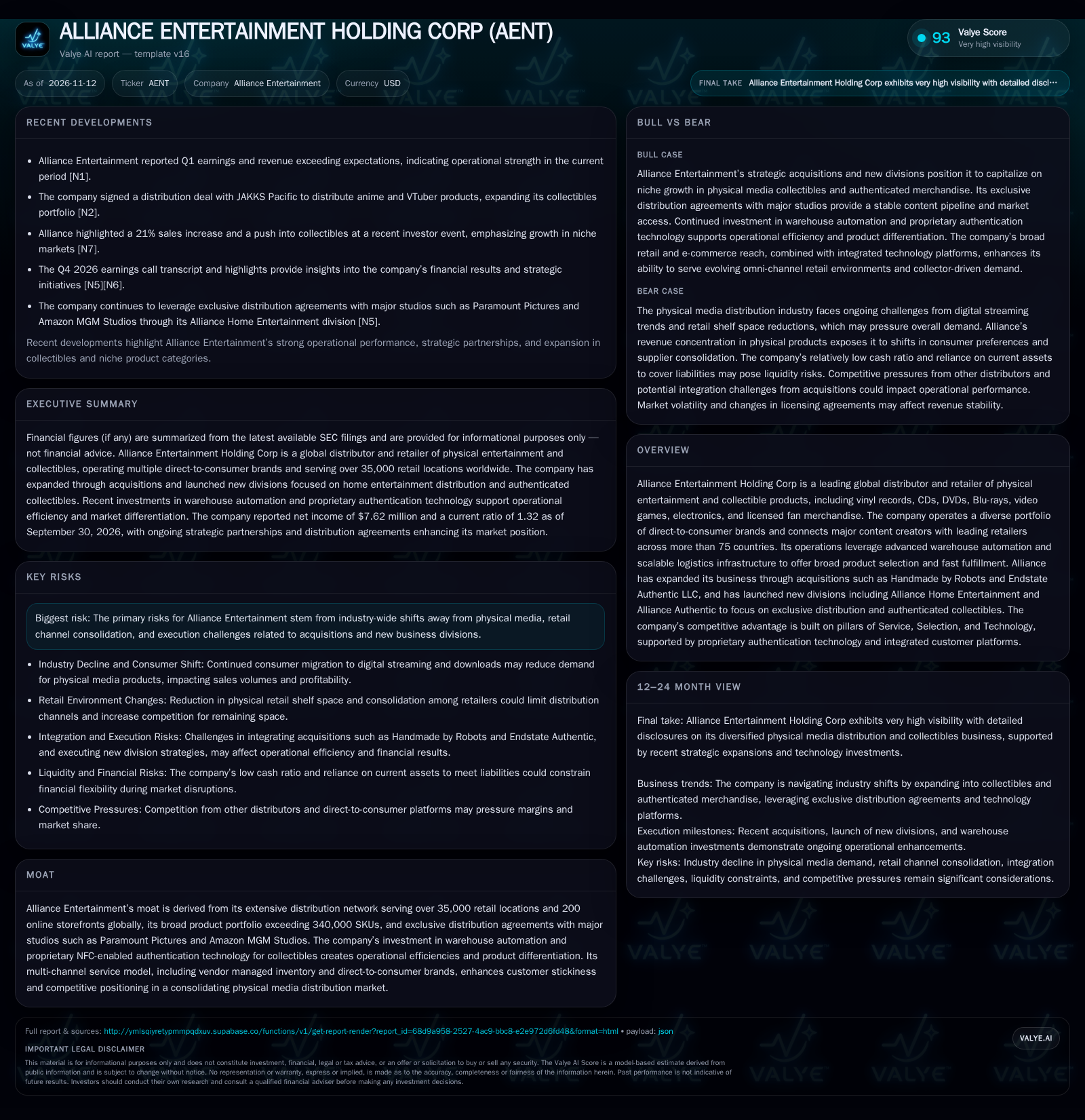
Alliance Entertainment recently posted strong earnings, a 21% sales jump, and new distribution deals—driven by growth in collectibles and exclusive rights with major studios. The company’s scalable logistics, technology investments, and new divisions in authenticated merchandise aim to counteract the long-term decline in physical media. Execution on integration, liquidity management, and adaptation to changing retail and consumer landscapes are critical to sustaining momentum.[N1] [N2] [N7]
Alliance Entertainment, once a pure-play physical media distributor, is rewriting its playbook as demand for DVDs and CDs slides industry-wide. Recent results show the company’s bid to outpace secular decline with a surge in collectibles, exclusive studio partnerships, and investments in fulfillment technology. The next chapters for Alliance will be written by its ability to turn niche growth and operational efficiency into a durable, defensible business model.
Recent Sales Surge, Collectibles Momentum, and Studio Exclusives Reshape the Growth Narrative
Alliance Entertainment reported Q1 earnings and revenue exceeding expectations, underpinned by a 21% sales increase and a pronounced push into collectibles, as highlighted at a recent investor event.[N1] [N7] The company also signed a notable distribution deal with JAKKS Pacific to expand its anime and VTuber product offerings—further strengthening its collectibles footprint.[N2] Meanwhile, exclusive distribution agreements with Paramount Pictures and Amazon MGM Studios via Alliance Home Entertainment have cemented its role as a key conduit for physical media in the US and Canada. These developments mark a strategic pivot from traditional physical media toward higher-margin, niche categories and value-added services, while leveraging exclusive content partnerships to sustain relevance amid digital disruption.
How Alliance Makes Money: The Economics of Diversified Distribution and Collectibles
Alliance’s revenue model is built on high-volume, low-margin distribution of physical entertainment products—vinyl records (33% of revenues), DVDs/Blu-rays/UltraHD (30%), video games (16%), and CDs (14%)—serving over 35,000 retail outlets and 200 online storefronts in 75+ countries.[S2] The addition of collectibles and exclusive distribution agreements introduces higher-margin, lower-volume segments that can offset some of the margin erosion from commoditized physical media. The company’s investments in warehouse automation (AutoStore, OPEX Sure Sort X®) and logistics infrastructure are designed to drive operational leverage: reducing per-unit labor costs and supporting a broad, in-stock SKU offering (over 340,000).
The expansion into authenticated collectibles (Handmade by Robots, Alliance Authentic, Endstate Authentic) could further shift the mix toward premium products with pricing power and greater differentiation. However, capital intensity remains high given inventory requirements and ongoing tech investments. The company reported cash and liquidity metrics for the period; these figures do not by themselves establish operating runway, investment capacity, financial flexibility, or financing capacity. [S2]
Moreover, the shift toward authenticated collectibles introduces a different set of economic dynamics. These products often command higher margins but also demand investments in technology for verification and anti-counterfeiting measures, which can increase fixed costs. The scalability of these offerings depends on the company’s ability to establish trust and brand recognition within collector communities, which may require targeted marketing and partnership strategies. If successful, this could create a defensible niche less susceptible to digital substitution, but the risk remains that consumer preferences evolve or that competitors develop superior authentication technologies.
Defensibility in a Shrinking Market: Scale, Service, and Tech-Driven Differentiation
Alliance’s moat is built on three pillars: a vast distribution network, exclusive content rights, and operational technology. Serving a fragmented but loyal base of specialty retailers and collectors, the company’s SKU breadth and fulfillment capabilities provide strong service levels that are difficult for smaller rivals to match. Exclusive distribution deals with major studios (Paramount, Amazon MGM Studios) create a defensible position—at least for the duration of the agreements—by ensuring content pipelines competitors cannot replicate easily.
However, competition remains fierce, not just from other physical distributors but also from direct-to-consumer platforms, digital streaming, and online marketplaces that erode the market for physical media. The collectibles push is a partial hedge: these products appeal to a different, more engaged customer segment, but success hinges on brand partnerships, licensing, and authenticity—areas where Alliance’s proprietary NFC-enabled verification technology (from Endstate Authentic) could provide an edge if widely adopted.
If Collectibles Scale and Studio Exclusives Hold, Margin Expansion and Growth Could Outpace Secular Decline
A favorable scenario would see Alliance’s collectibles business—bolstered by new licensing deals (e.g., JAKKS Pacific) and proprietary authentication—scaling rapidly, capturing share from competitors and attracting new collector demographics. Exclusive studio distribution could sustain a stable revenue base even as mainstream physical media declines, while operational efficiency gains from automation drive margin expansion.
Evidence for this scenario would include continued double-digit sales growth in collectibles, new exclusive licensing announcements, and visible margin improvement in segment reporting. Adoption of the company’s authentication technology by third-party brands or retailers, and positive renewal outcomes for studio distribution agreements, would further validate the bull case.
Physical Media Erosion Offset by Niche Growth and Efficiency Gains—But Execution Risks Remain
The most plausible trajectory is a balancing act: Alliance’s core physical media revenues gradually shrink in line with industry trends, but are partly offset by growth in collectibles, authenticated merchandise, and exclusive distribution. Operational improvements from warehouse automation mitigate cost pressures, maintaining profitability even as top-line growth slows.
This scenario will be confirmed if the company sustains stable net income despite flat or declining physical media sales, and if collectibles and new divisions contribute a growing share of total revenue. Falsifying evidence would include failed integration of recent acquisitions, loss of key distribution agreements, or margin compression from rising logistics or inventory costs.
Liquidity Constraints and Failed Integration Could Accelerate Decline Amid Industry Headwinds
A negative outcome could materialize if Alliance faces sharper-than-expected declines in physical media, while collectibles growth fails to scale or is outcompeted by digital-native and DTC brands. Integration missteps with Handmade by Robots or Endstate Authentic might lead to operational disruptions, write-downs, or lost momentum in new business lines.
Early warning signs would be negative working capital trends, missed payments to suppliers, or abrupt changes in reported segment performance.
What Will Determine Whether Alliance’s Strategic Pivot Succeeds or Stalls?
Sustained sales growth and margin expansion in the collectibles and authenticated merchandise segments—if disclosed—would help validate the shift toward niche markets.
Renewal, extension, or loss of exclusive distribution agreements with major studios (Paramount, Amazon MGM Studios) will directly affect revenue visibility and competitive position.
Adoption rates and third-party licensing of Endstate Authentic’s NFC-enabled authentication technology would signal traction in product differentiation and new revenue streams.
Successful integration and performance of recent acquisitions (Handmade by Robots, Endstate Authentic) can be monitored via segment disclosures and qualitative management commentary.
The proportion of revenues from direct-to-consumer channels versus wholesale/retail will indicate progress in capturing higher-margin sales and reducing reliance on consolidating retail partners.
Any new major licensing or distribution deals (such as with JAKKS Pacific) that materially shift the product mix or open new collector demographics should be tracked for incremental growth impact.
Disclaimer: This is research-only, informational analysis and not investment advice. It may include AI-generated interpretation and general industry context. Always verify important details using primary sources.

Comments