
Atlantica Inc: The Shell Company Equation—Liquidity Risks, Reverse Merger Potential, and the Road to Relevance
With zero cash, material liabilities, and no operations since 1997, Atlantica Inc’s only path forward is to serve as a shell for a private company seeking a public listing.
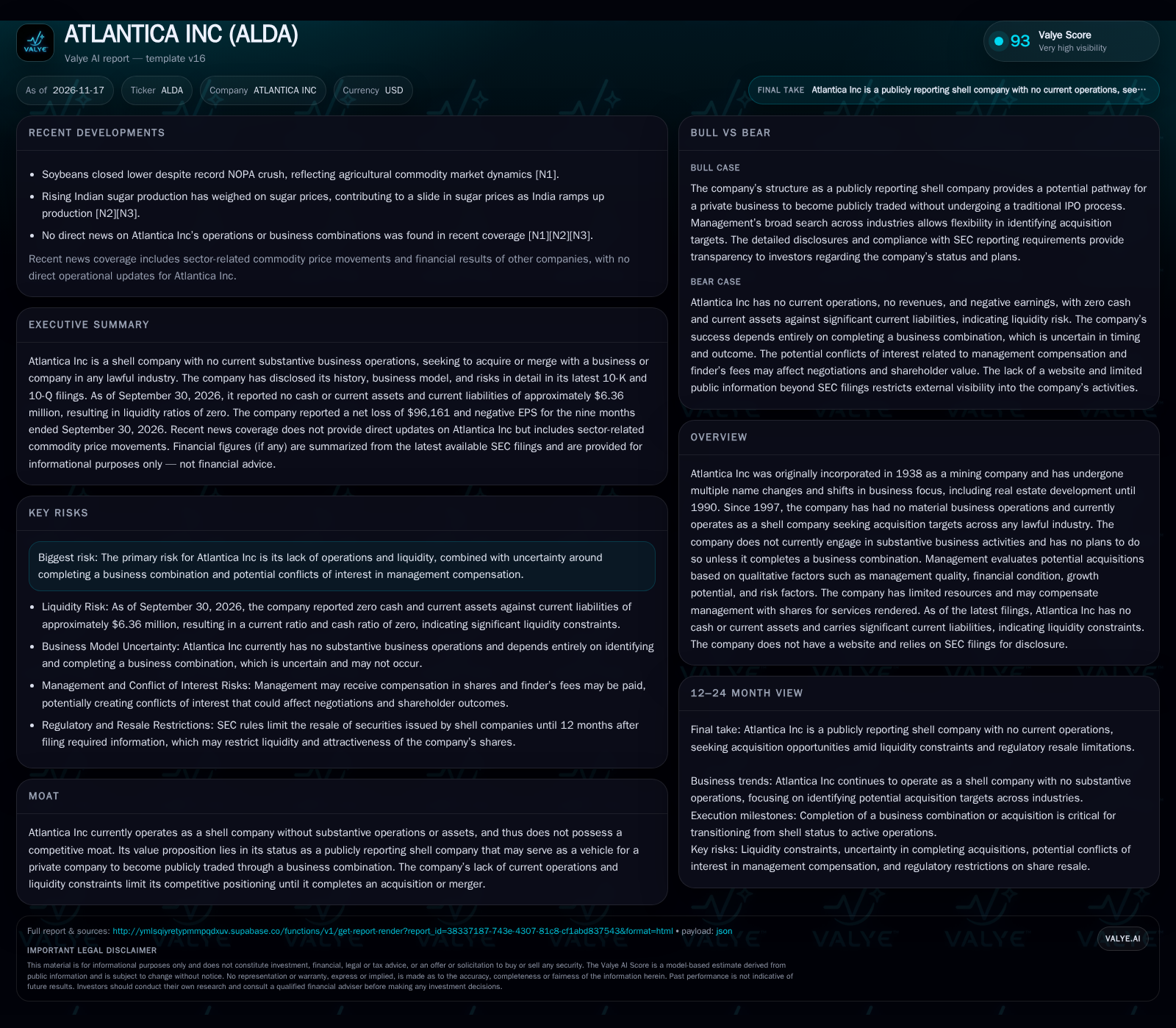
Atlantica Inc is currently a public shell company with no operations, no cash, and material current liabilities. Its only business plan is to acquire or merge with a private entity, providing a backdoor route to public markets. Investors face significant uncertainty, as management compensation may create conflicts of interest and the timing or success of any deal is unknown. [S2]
Atlantica Inc stands at a crossroads familiar to many publicly listed shell companies: devoid of operations, assets, or revenue, but offering a compliant, SEC-reporting corporate structure that could serve as a shortcut for a private company to access public markets. As of September 30, 2026, Atlantica has no cash, no current assets, and $6.36 million in current liabilities, underscoring a precarious financial position. With no business activity since 1997 and no sector focus, its only lever is to consummate a business combination—yet that path is fraught with execution, regulatory, and incentive risks that will determine whether Atlantica can reinvent itself or simply wither under mounting obligations. [S2]
Zero Cash, Material Liabilities: The Current Reality
As of September 30, 2026, Atlantica Inc reported zero cash and current assets, facing $6.36 million in current liabilities. The company has not generated any revenue for the fiscal year ended December 31, 2025, and posted a net loss of $96,161 for the nine months ended September 30, 2026. With no substantive operations since 1997, Atlantica exists solely as a shell entity, seeking to acquire or merge with a business across any industry. The absence of a website and reliance on SEC filings for communication further highlight its dormant operational state. These facts underscore a business with no self-sustaining capacity, exposed to mounting liabilities and reliant on a transformational transaction for survival. [S2]
How Value Could Be Created: Shell Economics and the Reverse Merger Playbook
Atlantica Inc’s only plausible economic engine is to facilitate a reverse merger, enabling a private company to go public by merging into or being acquired by the shell. In such transactions, the shell’s public listing and SEC compliance are the primary assets. The economics typically involve the private company’s shareholders gaining control, while the shell’s legacy shareholders may receive a minority stake or cash consideration if available. Overhead costs are minimal, as there are no ongoing operations, but legal, accounting, and compliance expenses persist. The company’s current liabilities may have to be settled or restructured as part of a deal, potentially diluting existing shareholders further or requiring new capital. Compensation for management or finders’ fees, if paid in shares, can further dilute value. Absent a transaction, liabilities grow and the shell’s value erodes—there is no path to organic revenue or operational margin expansion without a business combination.
The Shell Company Landscape: Substitutes, Constraints, and the Value of Compliance
Atlantica competes with a broad universe of other public shell companies, many of which also offer clean corporate histories and SEC compliance as selling points for reverse merger candidates. Its lack of sector focus gives it theoretical flexibility, but its acute liquidity constraints and material liabilities are significant negatives compared to shells with cleaner balance sheets or cash reserves. SEC resale restrictions on securities issued by shell companies further limit its attractiveness, as target companies may prefer shells not subject to these restrictions or may seek direct listings or SPACs as alternatives. The absence of substantive operations means Atlantica offers no proprietary assets, customer base, or brand value—its only differentiator is its reporting status and readiness for a transaction. In this crowded field, shells with fewer liabilities, more transparent shareholder structures, or cash for transaction expenses are likely to be preferred by potential merger targets.
A Successful Reverse Merger: What Would Need to Happen
The most favorable outcome is that Atlantica identifies a credible private company seeking a public listing and successfully executes a reverse merger. For this scenario to materialize, the target must accept the shell’s liabilities and regulatory baggage, and either provide or raise capital to settle those obligations. The merged entity could then leverage its public status to access additional financing and pursue operational growth. Confirming evidence would include an announced letter of intent or definitive agreement with a private target, disclosure of committed capital to address liabilities, and regulatory filings outlining the terms of the business combination. A successful transaction could result in value creation for legacy shareholders, but the degree of dilution and terms of liability settlement would determine how much, if any, value accrues to them. The scenario would be falsified if no such negotiations are disclosed or if regulatory or financial constraints prevent the completion of a deal.
Prolonged Dormancy and Mounting Liabilities: The Likely Course Absent a Deal
The most probable near-term trajectory is continued dormancy: Atlantica remains a reporting shell with no operations, no revenues, and mounting liabilities. Without cash, the company cannot pay ongoing compliance costs, creditors, or management, and may need to issue additional shares to settle obligations if it can find willing recipients. The risk of creditor action, regulatory non-compliance, or involuntary dissolution increases over time. This scenario is confirmed by ongoing net losses, lack of announced deal activity, and continued zero cash balances in filings. It would be falsified only by credible evidence of active merger negotiations or an executed business combination.
Insolvency or Regulatory Delisting: Risks of Inaction and Eroding Value
If Atlantica is unable to consummate a business combination or otherwise address its liabilities, the company faces the risk of insolvency, creditor actions, or regulatory delisting. The absence of cash makes it difficult to satisfy even basic reporting or legal requirements, heightening the risk of losing reporting status or being administratively dissolved. If the company fails to maintain compliance with SEC or exchange requirements, its shares could be suspended or delisted, effectively destroying any residual value for shareholders. This outcome would be confirmed by regulatory action, creditor lawsuits, or public notice of dissolution proceedings. It would be partially falsified by evidence of successful liability settlement or new capital infusion.
Milestones That Will Determine Atlantica’s Future Relevance
Any disclosure of a signed letter of intent or definitive agreement to merge with or acquire a private company would be a critical inflection point.
Filing of a proxy statement or registration statement detailing the terms of a proposed business combination would test whether liabilities and dilution are being addressed.
Evidence of new capital raised—via private placement, debt, or other means—to settle existing liabilities would materially reduce insolvency risk.
Updates on creditor negotiations or settlements, if disclosed, would clarify the feasibility of a clean transaction.
Announcements regarding changes to management compensation structures or finder’s fees, especially if they reduce dilution risk, would be instructive.
SEC filings indicating the company has regained or maintained compliance with all reporting requirements would reduce regulatory risk.
Disclosure of any regulatory or exchange notices regarding potential delisting or suspension would signal increasing downside risk.
A useful metric would be the number and nature of inquiries or negotiations with potential business combination targets, if disclosed.
Disclaimer: This is research-only, informational analysis and not investment advice. It may include AI-generated interpretation and general industry context. Always verify important details using primary sources.

Comments