
Aon’s Strategic Growth: Analytics, AI, and the USI Integration Journey
Aon’s Q3 2026 results highlight organic growth and margin expansion, but the road ahead hinges on the successful integration of USI and the ability to sustain differentiation in a fiercely competitive insurance and risk advisory market.
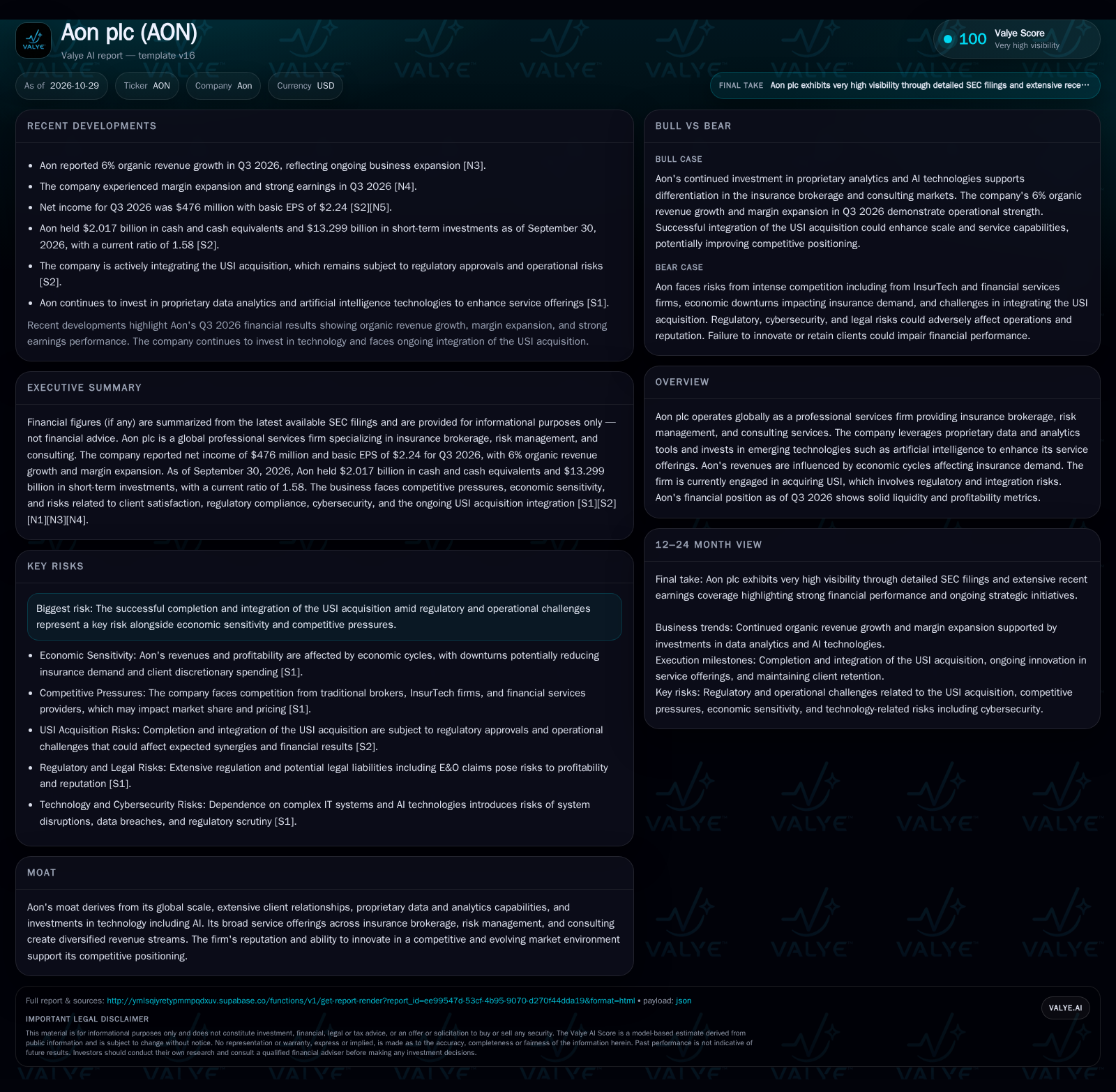
Aon posted 6% organic revenue growth and margin expansion in Q3 2026, reflecting operational strength and ongoing investment in analytics and AI. The pending acquisition of USI introduces integration and regulatory risk, while competitive pressures from InsurTech and traditional rivals remain intense. The company’s ability to leverage scale, technology, and broadened service offerings will shape its future trajectory. [S2] [N3] [N4]
Aon’s latest quarter underscores the firm’s resilience and operational discipline, with 6% organic revenue growth and margin gains standing out in a sector buffeted by economic and competitive headwinds. However, the outcome of its pending USI acquisition, ongoing technology investments, and the ability to fend off both traditional and digital-first competitors will be decisive. As Aon seeks to deepen its moat through analytics and AI, the integration and execution risks mount—making the coming quarters pivotal for its long-term trajectory. [S2] [N3] [N4]
Recent Performance and Strategic Milestones Inform Aon’s Outlook
Aon reported net income of $476 million for Q3 2026, with basic earnings per share of $2.24 and diluted EPS of $2.23. Organic revenue growth was 6% for the quarter, continuing the company’s recent expansion trend. Margin expansion accompanied this topline growth, signaling operational efficiency gains. As of September 30, 2026, Aon held $2.017 billion in cash and $13.299 billion in short-term investments, with a current ratio of 1.58. The company is also navigating the pending acquisition of USI, which remains subject to regulatory clearance and integration challenges. These developments collectively underscore both Aon's growth momentum and the complexity of its current strategic agenda. [S2] [N3] [N4]
Aon’s Profit Model: Leveraging Scale and Advanced Analytics
Aon’s economic engine is built on fee-based insurance brokerage, risk management, and consulting services. Revenue is primarily driven by commissions and fees rather than underwriting risk, which helps insulate the business from direct claims volatility but links it tightly to client activity levels and economic cycles. The company’s proprietary data and analytics platforms may enable differentiated pricing, targeted customer solutions, and improved retention—potentially supporting higher margins relative to undifferentiated brokers if successfully executed.
Fixed costs include technology investment, personnel, and compliance infrastructure; variable costs are largely client-service and transaction-related. As such, Aon’s model offers operating leverage: incremental revenue growth—especially if tech-enabled—can translate into outsized margin gains. The ongoing investment in artificial intelligence could further automate risk assessment and client advisory, compressing costs while expanding advisory reach. The capital needs are moderate, as the business is not capital-intensive by insurance carrier standards, but acquisitions like USI can temporarily elevate funding requirements and integration expenses.
Client retention and cross-sell rates are pivotal, as high switching costs and embedded data can create recurring, sticky revenue streams. However, the commercial structure of new tech-enabled services—whether subscription, usage-based, or bespoke consulting—will influence the mix and predictability of future cash flows.
Maintaining Competitive Edge Through Data and AI Innovations
Aon’s competitive position is rooted in global scale, longstanding client relationships, and proprietary analytics. The company faces intense pressure from three fronts: traditional global brokers, regional specialists, and a new wave of InsurTech entrants leveraging automation, digital distribution, and alternative data sources. InsurTech firms, in particular, are attacking friction points in the brokerage model—offering digital onboarding, rapid quoting, and sometimes lower fees—which could erode market share or compress margins in commoditized lines.
Aon’s response centers on capitalizing on its vast risk datasets and investing in AI-driven tools to deliver more tailored, higher-value advice. If these capabilities deepen client integration and lower client churn, they could reinforce switching frictions and pricing power. Conversely, if InsurTechs achieve scale or if clients become more price-sensitive in an economic downturn, Aon’s differentiation could narrow. The pending USI acquisition, if successful, may add scale and new capabilities but also introduces integration risk; failure to harmonize systems or cultures could blunt the intended competitive benefits. Other large financial services providers are also expanding advisory and risk services, further intensifying the battle for client wallet share.
Potential for Accelerated Growth from Successful Integration and AI Deployment
The most favorable scenario is one in which Aon seamlessly integrates USI, extracting targeted synergies in cross-selling, technology, and procurement. Combined with accelerated adoption of proprietary analytics and AI tools, Aon could drive step-function improvements in client retention, pricing discipline, and product innovation. This would likely manifest as sustained organic revenue growth above industry averages, continued margin expansion, and improved returns on invested capital.
Evidence that would confirm this scenario includes: rapid realization of cost and revenue synergies post-USI close, client wins or renewals attributed to advanced analytics, and a demonstrable uptick in tech-enabled service revenues. Clear signs of rising client stickiness—such as multi-year contract renewals if disclosed or increased share of wallet—would reinforce the thesis. This path could also see Aon capturing market share from both smaller brokers and less nimble incumbents, as well as weathering economic downturns with greater resilience.
Balancing Growth Ambitions with Integration Execution and Market Dynamics
The most plausible near-term outcome is continued modest organic revenue growth, with margin improvement pacing technology adoption and cost discipline. USI integration proceeds, but synergies accrue gradually rather than immediately, and some operational friction persists. Aon’s investments in analytics and AI help retain key clients and defend pricing, but competitive encroachment—especially from InsurTechs—increases in select segments, leading to heightened client churn or pricing concessions where services are commoditized.
This scenario would be confirmed by ongoing single-digit organic revenue growth, stable or modestly expanding margins, and periodic disclosures of integration progress and technology-driven wins. Evidence that would falsify it includes meaningful delays or cost overruns in the USI integration, or a sudden drop-off in client retention or new business wins.
Risks to Aon’s Position from Integration Challenges and Technological Shifts
In a less favorable scenario, the USI acquisition faces protracted regulatory hurdles or post-close integration challenges, leading to higher costs, cultural clashes, or client attrition. At the same time, InsurTech competitors accelerate share gains in key markets, commoditizing core brokerage services and driving fee compression. Economic headwinds—such as a downturn reducing insured asset values or corporate activity—further suppress client demand and discretionary consulting spend.
This scenario would be evidenced by stalled or negative organic growth, margin contraction, and management commentary highlighting integration setbacks or unexpected competitive losses. Signs such as increased client churn, missed synergy targets, or a rising portion of revenue from lower-margin segments would reinforce the downside case. Regulatory or legal issues stemming from the acquisition or technology adoption could compound these risks.
Critical Developments Shaping Aon’s Future Direction
Progress and timeline of USI acquisition regulatory approvals, as further delays or unexpected conditions would increase integration risk.
Pace and magnitude of realized cost and revenue synergies from the USI integration, if disclosed—especially in the first 12-18 months post-close.
Organic revenue growth rates by segment and geography, to assess whether Aon is outpacing the broader brokerage and consulting sector.
Client retention and churn rates, if disclosed, particularly in segments targeted by InsurTech disruption.
Adoption rates and contribution of proprietary analytics and AI-driven services to total revenue, as evidence of technology-driven differentiation.
Margin trends relative to both historical Aon averages and leading competitors, indicating the effectiveness of operating leverage and cost control.
Any material regulatory, legal, or cybersecurity events—especially those tied to new technology implementations or the USI transaction.
Disclaimer: This is research-only, informational analysis and not investment advice. It may include AI-generated interpretation and general industry context. Always verify important details using primary sources.

Comments