
Anterix’s Spectrum Strategy: From Asset Monetization to Critical Infrastructure Ecosystem
Anterix, the largest U.S. holder of licensed 900 MHz spectrum, is pivoting from pure spectrum leasing to an integrated model combining spectrum sales, value-added services, and ecosystem partnerships. The company’s execution hinges on regulatory alignment, utility adoption, and its ability to turn spectrum into recurring revenue as private broadband networks reshape the utility landscape.
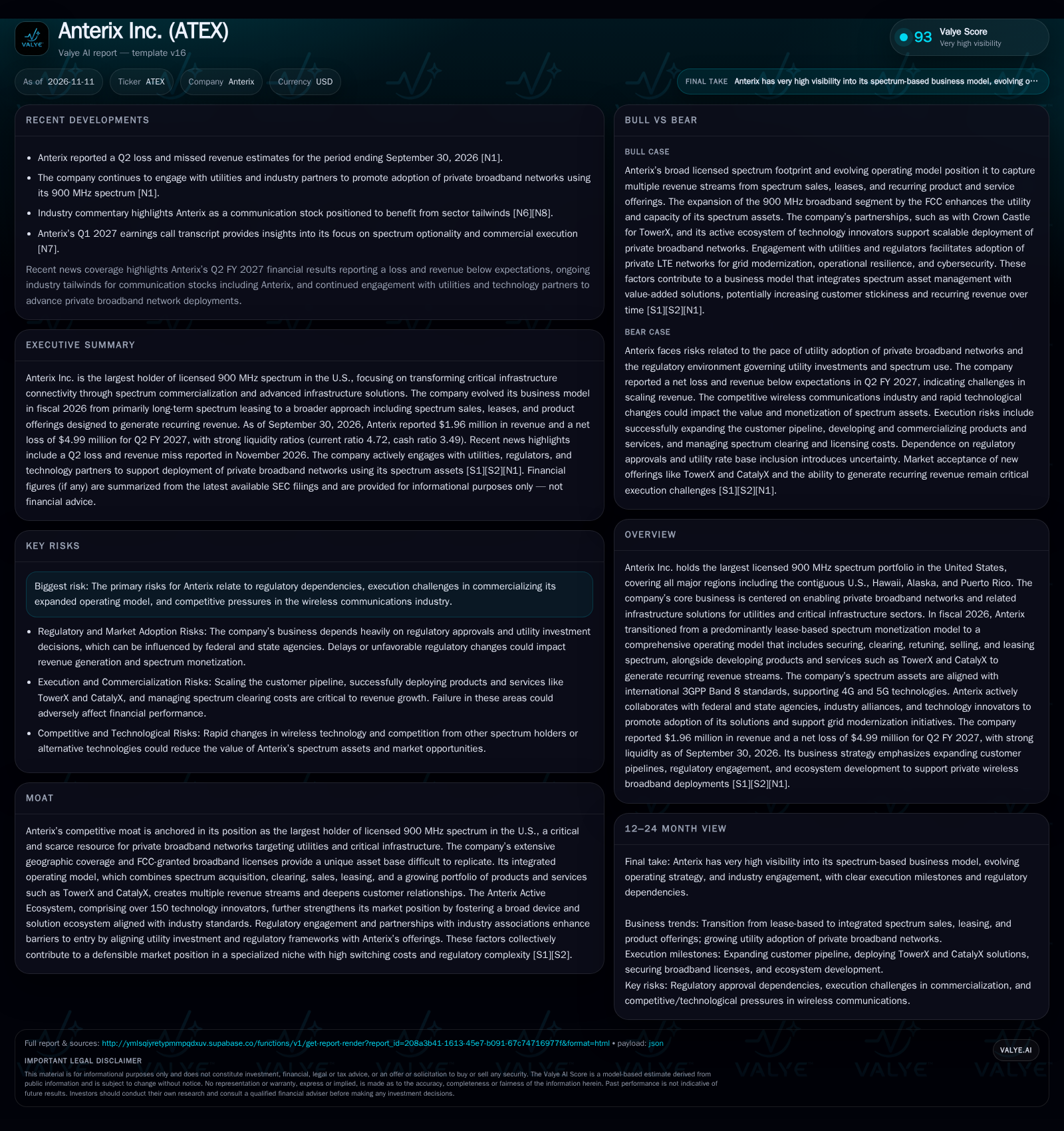
Anterix is leveraging its unique spectrum position to target utilities and critical infrastructure with private broadband solutions. The FCC’s expansion of the 900 MHz band increases the value of Anterix’s assets, but utility adoption and regulatory decisions remain pace-determining. The next 12-24 months will test whether Anterix can turn regulatory progress and ecosystem development into commercial traction and sustainable profitability. [S1] [S2] [N1]
Anterix stands at the intersection of spectrum asset management and the digital transformation of U.S. critical infrastructure. With the FCC expanding the 900 MHz band, Anterix’s spectrum is newly positioned to underpin private wireless broadband networks for utilities—a sector hungry for grid modernization, cybersecurity, and resilience. However, despite a reported liquidity position and new service launches, the company’s Q2 revenue and net loss reflect the slow, complex process of converting regulatory and ecosystem progress into recurring commercial success. The coming quarters will reveal whether Anterix’s integrated strategy can turn spectrum dominance into a durable, high-margin business.
FCC Band Expansion and Anterix’s Business Model Evolution
Anterix’s most material recent developments are the FCC’s 2026 decision to expand the 900 MHz broadband segment from 6 MHz to 10 MHz, and the company’s strategic shift from primarily leasing spectrum to a multi-pronged model that now includes spectrum sales, clearing, retuning, and value-added services. This regulatory change enhances the capacity and flexibility of Anterix’s spectrum, making it more attractive for utilities seeking private LTE or 5G networks. The company launched TowerX (a tower site access service) and CatalyX (a turnkey connectivity management solution), aiming to create recurring revenue streams alongside traditional spectrum monetization. Despite these strategic moves, Anterix’s Q2 FY 2027 results showed $1.96 million in revenue and a net loss of $4.99 million, missing market expectations and emphasizing the challenge of translating regulatory and strategic progress into near-term financial performance. The company reported cash and liquidity metrics for the period; these figures do not by themselves establish operating runway, investment capacity, financial flexibility, or financing capacity. [S1] [S2] [N1]
How Spectrum Becomes Revenue: Anterix’s Monetization Levers and Cost Structure
Anterix’s economics are fundamentally shaped by the rarity and regulatory value of its 900 MHz spectrum. The company’s historical model focused on long-term leases to utilities and critical infrastructure, yielding lumpy, high-margin but slow-to-scale revenue. The new model introduces additional levers: spectrum sales (potentially generating upfront cash), ongoing leases (providing stable income), and recurring revenue from new services like TowerX (site access) and CatalyX (connectivity management). The mix of upfront versus recurring revenue will impact cash flow predictability and margin structure.
Fixed costs include spectrum clearing (removing legacy users), regulatory compliance, and ecosystem development. Variable costs likely relate to service delivery, customer support, and potentially revenue-sharing with partners like Crown Castle on tower access. As network deployments scale, operating leverage should improve—if recurring services gain traction. However, the transition phase may be margin-dilutive, especially as the company invests in product development, sales, and regulatory engagement ahead of widespread utility adoption. Capital needs are moderate in the absence of major network build-outs, but meaningful customer uptake could require additional investments in support and integration.
Spectrum Scarcity and the Utility Connectivity Battleground
Anterix’s core competitive advantage is its control of licensed 900 MHz spectrum—a scarce asset uniquely positioned for private broadband networks in the utility sector. This spectrum is attractive because it is harmonized with 3GPP Band 8, enabling compatibility with global 4G/5G device ecosystems and reducing integration friction for utilities. The company’s FCC-granted licenses across 419 counties, with broadband conversion in 219, provide a footprint that is difficult to replicate.
Counterforces include competition from other spectrum holders (e.g., CBRS, other mid-band players), incumbent public carriers offering managed private network solutions, and alternative connectivity technologies such as fiber or satellite. Utilities may also weigh the cost and risk of private deployments against managed service offerings from established telecoms. Anterix’s partnership with Crown Castle for TowerX and its ecosystem of 150+ technology partners strengthen its position, but customer commitment and network adoption remain the ultimate test of defensibility.
Unlocking Recurring Revenue as Utilities Commit to Private Broadband
The most favorable path for Anterix is a scenario in which utilities, spurred by regulatory support and grid modernization imperatives, accelerate adoption of private wireless broadband using Anterix’s spectrum. FCC expansion of the broadband segment increases spectrum value, while regulatory frameworks allow utilities to recover network investments through the rate base. Successful commercialization of TowerX and CatalyX would generate high-margin, recurring service revenue, supplementing lease and sales income. Ecosystem partners deliver applications and devices that make Anterix’s offering a potentially leading standard for utility connectivity.
Evidence confirming this scenario would include multi-year contracts with major utilities, visible ramp in recurring service revenue, and public endorsements or case studies from grid operators. A growing backlog of deployments and regulatory rulings supporting utility-owned broadband networks would further validate the bull case.
Incremental Progress: Steady Ecosystem Growth, Lumpy Monetization
The most plausible scenario is one of gradual ecosystem and customer pipeline expansion, punctuated by episodic spectrum sales or lease deals. Utilities continue to evaluate private broadband options but adoption remains measured due to regulatory, budgetary, and operational inertia. Recurring revenue from TowerX and CatalyX grows slowly as deployments accumulate, but does not yet offset the slow pace of major utility commitments.
Confirmation would come from a modest but steady increase in reported service revenue, additional counties converted to broadband licenses, and periodic announcements of new utility customers or expanded partnerships. Falsification would be a stagnating or declining revenue base, persistent net losses without signs of leverage, or regulatory setbacks delaying utility investment.
Regulatory Delays and Utility Reluctance Stall the Recurring Revenue Engine
A downside scenario could materialize if regulatory approvals for utility-owned private broadband networks stall, or if utilities opt for alternative solutions such as managed services from public carriers or other spectrum bands. This would leave Anterix with ongoing costs for spectrum management and ecosystem development, but insufficient customer uptake to drive recurring revenue.
Signs confirming this scenario would include a lack of new customer announcements, shrinking pipeline visibility, regulatory roadblocks, or market signals that utilities are adopting other connectivity models. Persistent revenue misses, widening losses, or the need for additional capital without clear payback would further reinforce the bear case.
Milestones That Will Define Anterix’s Transition from Spectrum Holder to Infrastructure Partner
The number and scale of new utility contracts for private broadband deployments using Anterix’s spectrum—especially multi-year or multi-site deals—would provide tangible evidence of commercial traction.
Growth in recurring service revenue from TowerX and CatalyX, if disclosed, would demonstrate the success of the value-added services strategy.
Progress in converting narrowband licenses to broadband in additional counties would indicate regulatory and operational execution.
Updates on the active customer pipeline, including utility pilots, RFPs, or near-term deployment commitments, would help track momentum.
Any regulatory rulings or state PUC decisions that enable or restrict utility rate base recovery for private broadband investments would be critical external catalysts.
Partnership expansions—either with technology providers in the Anterix Active Ecosystem or infrastructure partners like Crown Castle—could signal ecosystem depth and solution completeness.
Trends in operating expenses and cash burn relative to revenue growth would clarify the sustainability of the current investment phase.
Disclaimer: This is research-only, informational analysis and not investment advice. It may include AI-generated interpretation and general industry context. Always verify important details using primary sources.

Comments