
LivaNova in 2026: Segment Strength, Liability Overhangs, and the Stakes of Medical Innovation
LivaNova’s 2025–2026 performance underscores robust growth in both Cardiopulmonary and Neuromodulation, but the company’s trajectory hinges on navigating environmental liabilities, R&D execution, and the evolving economics of medtech adoption.
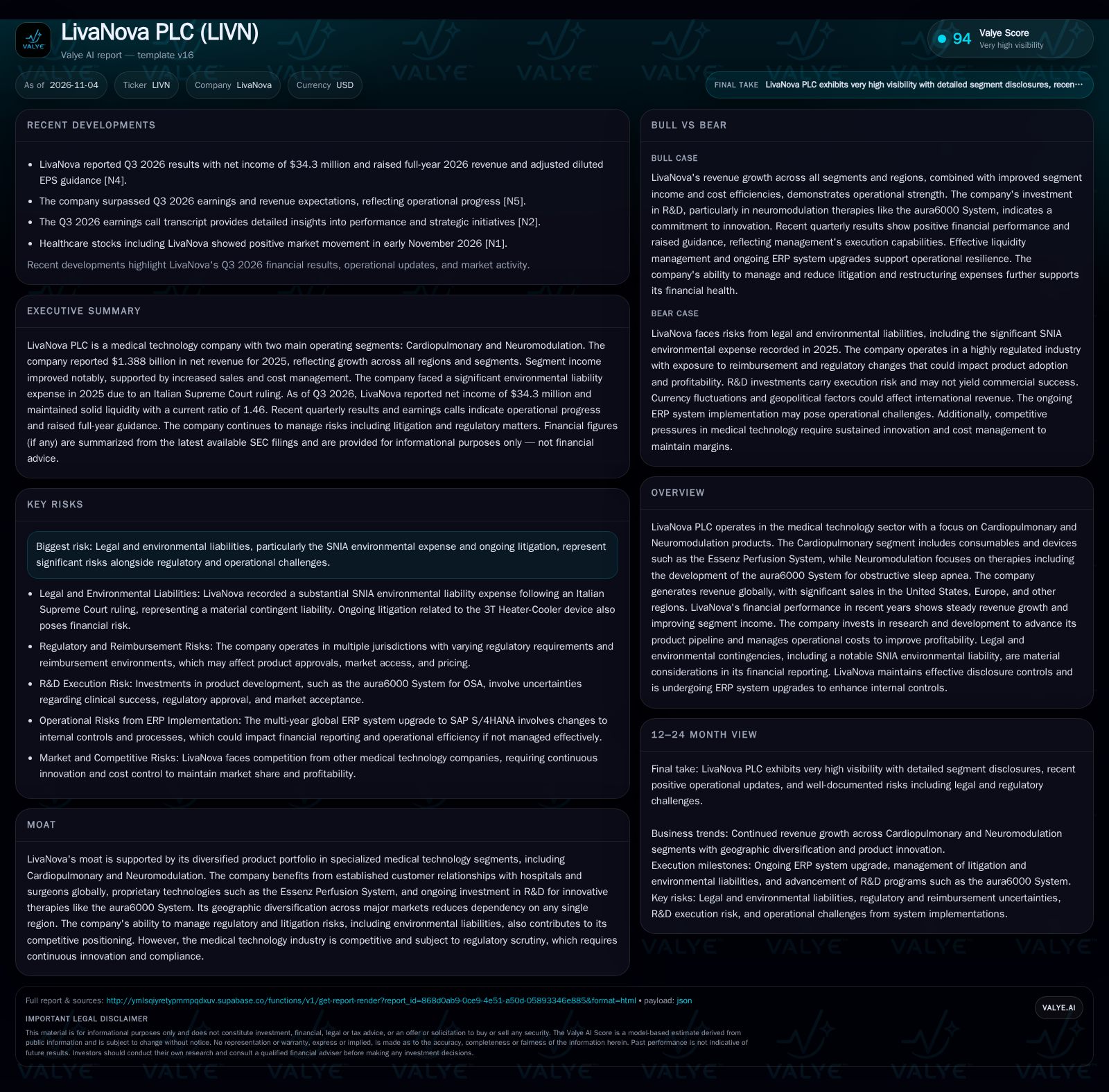
LivaNova delivered double-digit revenue growth in 2025, led by Cardiopulmonary demand and global Neuromodulation expansion. However, a major environmental liability and ongoing litigation remain material risks. Cost discipline and R&D reprioritization have driven margin improvements, but future upside depends on successful commercialization of new therapies and the ability to contain legal and operational headwinds. Monitoring product adoption, pipeline progress, and liability management will be critical over the next 12–24 months. [S1] [S2]
LivaNova enters late 2026 with clear operational momentum yet faces a multi-front battle to sustain it. The company’s 2025 revenue jumped over 10%, buoyed by strong Cardiopulmonary sales and steady Neuromodulation growth. Cost control and R&D reprioritization have improved segment income, but a major environmental liability and ongoing litigation cloud the outlook. The key test for LivaNova is whether its innovation engine—evident in new therapies like the aura6000 System—can deliver durable commercial returns and offset the drag from legal and regulatory risks. The next phase will reveal whether recent margin gains are sustainable or if external shocks will force a strategic rethink. [S1] [S2]
Recent Performance: Growth, Margin Shifts, and Liability Recognition
LivaNova reported 2025 net revenue of $1.388 billion, a 10.7% increase from the prior year, with both Cardiopulmonary ($785.4 million, up 14.9%) and Neuromodulation ($592.8 million, up 7.0%) segments contributing to this expansion. Segment income improved in both divisions, bolstered by revenue growth, cost leverage, and R&D reprioritization. However, the company recorded a significant SNIA environmental liability expense following an Italian Supreme Court decision, introducing a substantial contingent liability to the balance sheet. As of Q3 2026, LivaNova posted net income of $34.3 million and reported liquidity-ratio trends of 1.46 with $563 million in cash and equivalents. These facts highlight a business with top-line strength and operational improvement, but with a material legal overhang that may influence future capital allocation and risk appetite. [S1] [S2]
How LivaNova’s Segment Structure Shapes Its Profit Model
LivaNova’s economics are anchored in two distinct but complementary segments: Cardiopulmonary and Neuromodulation. Cardiopulmonary generates revenue through a mix of capital equipment (e.g., Essenz Perfusion System) and recurring sales of consumables, creating a blend of upfront and ongoing revenue streams. Consumables tend to drive higher-margin recurring revenue, while system sales are more cyclical and capital-intensive. Neuromodulation, focused on implantable devices and therapies for conditions like epilepsy and, potentially, obstructive sleep apnea (OSA), typically operates on a model of device sales and ongoing therapy management.
The company’s 2025 cost structure shows cost of sales at 32.3% of net revenue, a slight increase attributed to product mix, while SG&A expenses decreased as a percentage of revenue thanks to favorable fixed cost leverage. R&D spending was 13.4% of revenue in 2025—down from 14.6%—reflecting a shift from legacy programs (e.g., reduced DTD spend) toward newer opportunities like the aura6000 System. This suggests some operating leverage, but also a dependence on successful new product commercialization to maintain growth. Capital needs are significant due to ongoing R&D and periodic system upgrades (such as the ERP implementation), while the legal and environmental liability exposures may periodically require cash outlays or reserve build-ups.
Defensive Moats and the Realities of Medtech Competition
LivaNova’s competitive position benefits from a diversified product portfolio, proprietary technologies (e.g., Essenz Perfusion System), and established relationships with hospitals and surgeons globally. In Cardiopulmonary, the company competes with other specialized medtech firms offering perfusion systems and consumables, where switching costs can be moderate due to integration with hospital workflows and the regulatory burden of equipment changes. In Neuromodulation, LivaNova’s therapies face competition from device manufacturers targeting epilepsy, depression, and sleep apnea, including both traditional implantable devices and emerging non-invasive or digital solutions.
Barriers to entry in these segments include regulatory requirements, clinical validation, and the need for ongoing product innovation. However, rapid advancements in alternative therapies and the increasing role of digital health could pressure pricing and erode share if LivaNova fails to keep pace. Legal and regulatory scrutiny—exemplified by the SNIA environmental liability and prior device litigation—further underscore the need for robust compliance and risk management to preserve market standing.
Pipeline Execution and Liability Containment Drive Sustainable Upside
The most bullish scenario for LivaNova involves successful commercialization of pipeline assets—especially the aura6000 System for OSA—alongside continued global expansion of core Cardiopulmonary and Neuromodulation revenue. If the aura6000 System achieves regulatory approval and rapid adoption, it could open a large new addressable market, diversify revenue, and improve operating leverage as fixed costs are absorbed over a broader base.
Margin expansion could be sustained if the company continues to realize fixed cost leverage in SG&A and maintains disciplined R&D allocation. The scenario is further strengthened if LivaNova can contain or resolve major legal and environmental liabilities without large unplanned cash outflows, freeing up capital for growth initiatives or shareholder return. Confirmation would come from regulatory approvals and early adoption metrics for new devices, declining litigation reserves, and continued improvement in segment income and margin percent.
Incremental Growth Amid Legal and Regulatory Drag
The most plausible trajectory for LivaNova is one of steady—but not spectacular—growth in both core segments, tempered by ongoing legal and regulatory costs. Cardiopulmonary and Neuromodulation are likely to maintain mid-single-digit revenue growth rates, supported by existing products and gradual geographic expansion. R&D will remain focused on advancing late-stage programs, but commercialization timelines and uptake may be slower than hoped, particularly in the face of payer scrutiny and clinical adoption hurdles.
Legal and environmental liabilities—while managed—will periodically weigh on reported earnings and cash flow, constraining capital allocation flexibility. Operating leverage from SG&A and R&D efficiencies may partially offset these headwinds, but margin expansion will be incremental. This scenario would be confirmed by continued modest revenue growth, stable or slightly improving margins, and periodic but manageable legal or regulatory expense items.
Legal Shocks and Pipeline Disappointments Erode Value Creation
A negative scenario could unfold if LivaNova faces additional material legal or environmental liabilities—such as escalations in the SNIA case or new product-related litigation—resulting in significant unplanned cash outflows and financial strain. Concurrently, if R&D investments (notably the aura6000 System) fail to achieve regulatory approval or commercial acceptance, the company could see growth stall and margins compress as fixed costs become harder to leverage.
Competitive encroachment, especially from disruptive digital or non-invasive therapies, could accelerate share loss or force price concessions in both segments. In this scenario, potential financial flexibility would be reduced, potentially triggering restructuring or asset divestitures. Confirmation would come from adverse legal judgments, rising litigation reserves, delayed or failed regulatory submissions, and stagnating or declining segment revenues.
Milestones and Metrics That Will Shape LivaNova’s Next Chapter
Adoption rates and regulatory milestones for the aura6000 System; early sales and clinical feedback would help test the commercial potential of this pipeline asset.
Trends in litigation reserves and new legal or environmental disclosures; sustained or increasing reserves would signal ongoing risk.
Cardiopulmonary consumables and Essenz Perfusion System sales mix; changes here could impact recurring revenue quality and gross margin.
R&D expense allocation by program (if disclosed); shifts could indicate evolving pipeline priorities or response to regulatory feedback.
Operating margin trends and SG&A leverage; sustained improvement would validate cost discipline.
Cash flow from operations, especially in quarters with large legal or environmental payments.
ERP system implementation progress and any related disruptions to internal controls or reporting.
Disclaimer: This is research-only, informational analysis and not investment advice. It may include AI-generated interpretation and general industry context. Always verify important details using primary sources.

Comments