
Mereo BioPharma 2026: Clinical Setbacks, Licensing Leverage, and the Stakes of Rare Disease Drug Development
Mereo BioPharma enters late 2026 with a fortified cash position, active licensing activity, and continued R&D investment—but faces the fallout from a failed Phase 3 study in brittle bone disease. The company’s future hinges on partnership economics, regulatory progress, and the ability to convert pipeline assets into sustainable revenue streams.
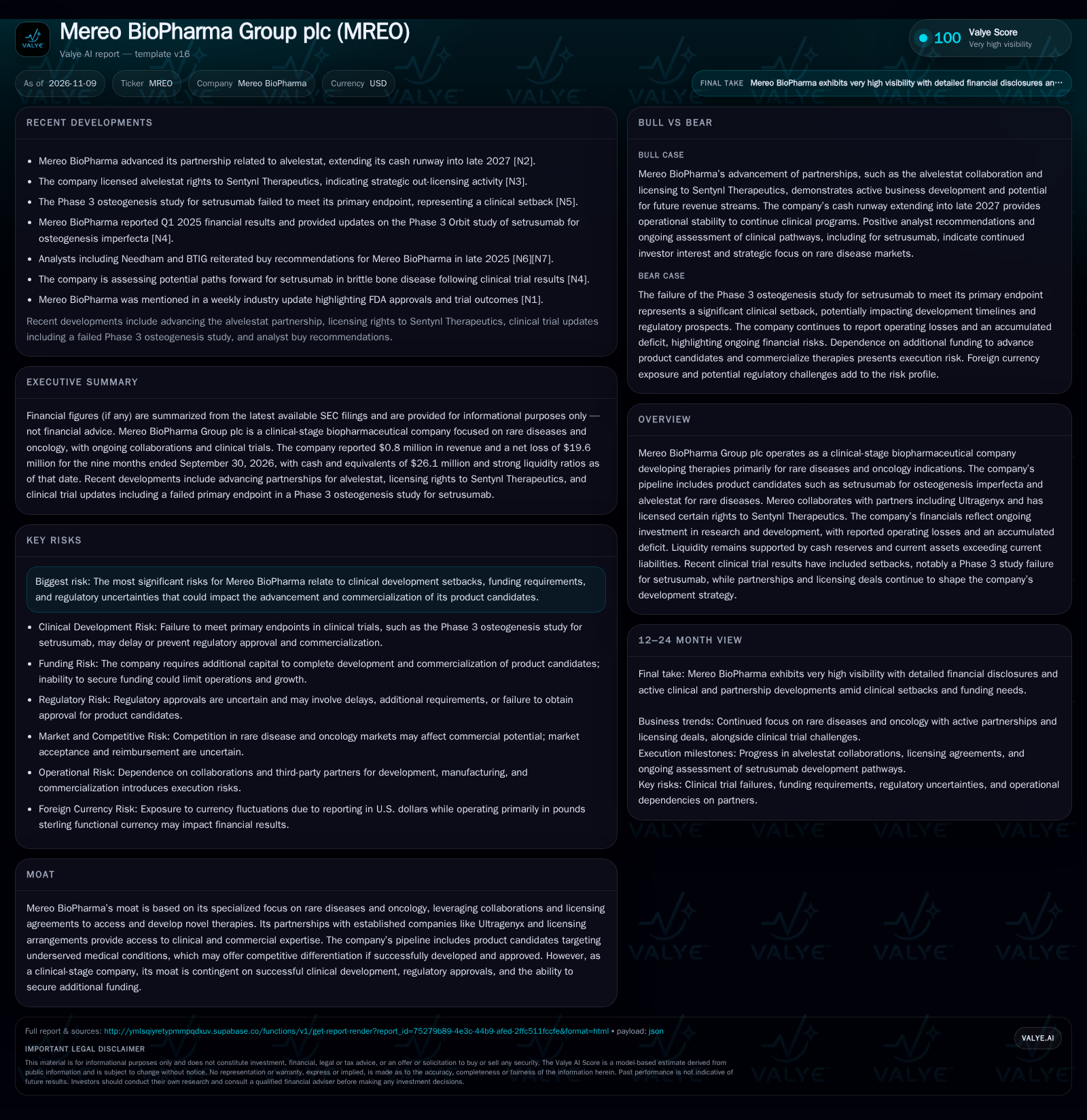
Mereo BioPharma’s clinical-stage pipeline for rare diseases and oncology is shaped by a recent licensing deal for alvelestat, a failed Phase 3 trial for setrusumab in osteogenesis imperfecta, and a cash runway into late 2027. The company’s next phase will test whether partnership revenues and new clinical strategies can offset persistent operating losses and regulatory risks. [S2] [N2] [N3] [N5]
Mereo BioPharma, a clinical-stage biotech focused on rare diseases and oncology, stands at a crossroads as 2026 closes. The company’s substantial liquidity and recent licensing activity contrast sharply with a pivotal clinical setback: the failure of its lead candidate, setrusumab, to meet its Phase 3 primary endpoint in brittle bone disease. As Mereo pivots toward partnership economics and reassesses development strategy, the next 12-24 months will be defined by its ability to extract value from its pipeline and weather the inherent volatility of drug development.
Recent Cash Extension, Partnership Moves, and Clinical Trial Fallout
As of September 30, 2026, Mereo BioPharma reported $26.1 million in cash and a current ratio of 5.22, extending its operational runway into late 2027—a material buffer for a clinical-stage company with ongoing losses. [S2] [N2] This liquidity is partly underpinned by the licensing of alvelestat rights to Sentynl Therapeutics, marking a strategic move to monetize assets and reduce direct development risk. [N3] However, the company suffered a significant setback when its Phase 3 osteogenesis imperfecta study for setrusumab failed to meet the primary endpoint, clouding prospects for its most advanced rare disease program. [N5] For the nine months ended September 30, 2026, Mereo generated only $0.8 million in revenue and posted a net loss of $19.6 million, underscoring the continued capital intensity and pre-commercial nature of its business. [S2]
How Mereo Could Translate Pipeline and Partnerships Into Economic Value
Mereo’s business model is driven by the development and out-licensing of novel therapies for rare diseases and oncology, with economics anchored in milestone payments, royalties, and potential revenue sharing from partners. The recent alvelestat licensing deal exemplifies this approach: by transferring commercial rights to Sentynl Therapeutics, Mereo may secure near-term cash inflows and downstream royalties if the asset advances or commercializes. However, the absence of disclosed milestone or royalty terms means the magnitude and timing of these economics remain speculative. The failed Phase 3 trial for setrusumab highlights the binary risk inherent in asset development, with sunk R&D costs yielding no immediate return and forcing a strategic pivot or reassessment of clinical path forward. [N5]
Operating leverage is limited at this stage: fixed G&A and R&D expenses ($14.2M and $8.6M, respectively, for the first nine months of 2026) [S2] dominate, while revenues from licensing or milestone events are lumpy and unpredictable. Until a pipeline asset achieves late-stage approval or generates substantial royalties, persistent net losses are likely. The company’s capital needs are thus closely linked to its ability to structure advantageous partnering deals, manage R&D burn, and access capital markets if required.
Positioning in Rare Disease and Oncology: Differentiation Through Partnership, But Moat Remains Contingent
Mereo operates in highly specialized markets for rare diseases and oncology, where competition comes from both large pharmaceutical players and focused biotechs. Its partnership with Ultragenyx for setrusumab and the licensing of alvelestat to Sentynl Therapeutics suggest a strategy of leveraging external clinical, regulatory, and commercial expertise to advance pipeline assets. This model can accelerate development and reduce direct capital requirements, but also cedes some control and economic upside to partners.
The company’s moat is currently theoretical—based on clinical differentiation (novel mechanisms or indications), the potential for orphan drug exclusivity, and the ability to attract high-quality collaborators. However, the failure of setrusumab’s pivotal study increases competitive vulnerability, as rival programs in osteogenesis imperfecta or alternative rare bone disorders may now gain an edge. Long-term defensibility will depend on Mereo’s ability to advance new candidates, secure additional partnerships, and demonstrate clinical success in carefully selected niches.
A Partnership-Driven Recovery: What Could Unlock Shareholder Value
The most plausible upside scenario involves successful advancement of partnered programs—particularly alvelestat with Sentynl Therapeutics—leading to meaningful milestone payments and future royalties. If Sentynl progresses alvelestat through regulatory approval and into commercialization, Mereo could benefit from non-dilutive income streams and improved financial stability. Additionally, if the company identifies a viable path forward for setrusumab (e.g., through a new clinical endpoint, subpopulation, or combination strategy), it may re-engage investor enthusiasm and restore value to its rare disease pipeline.
Evidence that would confirm this scenario includes: public disclosure of substantial milestone payments or royalty terms from Sentynl; regulatory progress or positive clinical data from partnered programs; new licensing or collaboration agreements for other pipeline assets; and an observable reduction in net losses driven by partnership economics rather than further cost cuts.
Stabilization Through Cost Discipline and Selective Asset Monetization
The most likely near-term outcome is that Mereo maintains operational stability via disciplined R&D spending, selective out-licensing, and ongoing reliance on its existing cash runway. Revenue will remain modest and lumpy, tied to licensing milestones rather than product sales, and the company will continue to report net losses absent a breakthrough in clinical or commercial progress. The focus will be on extending the runway, reassessing clinical development for setrusumab (potentially in new indications or with regulatory input), and seeking additional partnership opportunities for other assets.
Confirmation of this scenario would be continued modest R&D and G&A spend, no material increase in headcount or fixed costs, and periodic announcements of small licensing or collaboration deals without transformative financial impact. Falsification would come from either a dramatic reduction in workforce/spending (indicating distress), or a major new clinical success or acquisition that redefines the company’s trajectory.
Clinical Failures and Partnership Shortfalls Accelerate Funding Risk
The adverse scenario involves further clinical setbacks, failure to secure meaningful partnership economics, and an inability to raise additional capital before late 2027. If Sentynl or other partners discontinue development, or if regulatory agencies impose additional hurdles, Mereo’s revenue sources could dry up, accelerating cash burn. In this scenario, the company may be forced to halt development, pursue asset sales at distressed valuations, or undertake highly dilutive financings.
Evidence supporting this downside would include the absence of new or expanded partnerships, negative regulatory or clinical updates from partnered programs, significant increases in cash burn, or management disclosures warning of going-concern risks prior to the end of the current runway.
Milestones That Will Determine Mereo BioPharma’s Strategic Trajectory
Disclosure of milestone payments, royalty rates, or commercial economics from the Sentynl Therapeutics alvelestat deal—if detailed, would clarify revenue potential.
Any regulatory or clinical progress updates on alvelestat, including trial initiations, data readouts, or FDA/EMA feedback.
Formal company decisions or updates on the path forward for setrusumab in osteogenesis imperfecta—especially regarding new trial designs, endpoints, or partnership interest.
Quarterly R&D and G&A expense trends, as persistent increases could signal loss of cost discipline or new development initiatives.
Announcements of new licensing, collaboration, or out-licensing agreements for other pipeline assets.
Material changes in cash burn rate or runway estimates, especially if negative, would pressure the timeline for additional funding.
Auditor or management disclosures about going-concern risk, which would indicate heightened financial stress.
If disclosed, pipeline attrition rates or terminated programs, as these would affect future revenue prospects and strategic options.
Disclaimer: This is research-only, informational analysis and not investment advice. It may include AI-generated interpretation and general industry context. Always verify important details using primary sources.

Comments