
Passage BIO’s Merger with Remix Therapeutics: Strategic Reset or Endgame for a Standalone Gene Therapy Platform?
Passage BIO faces a decisive transition as it merges with Remix Therapeutics, with cash constraints, operational restrictions, and stockholder dilution setting the stakes for the future of its gene therapy ambitions.
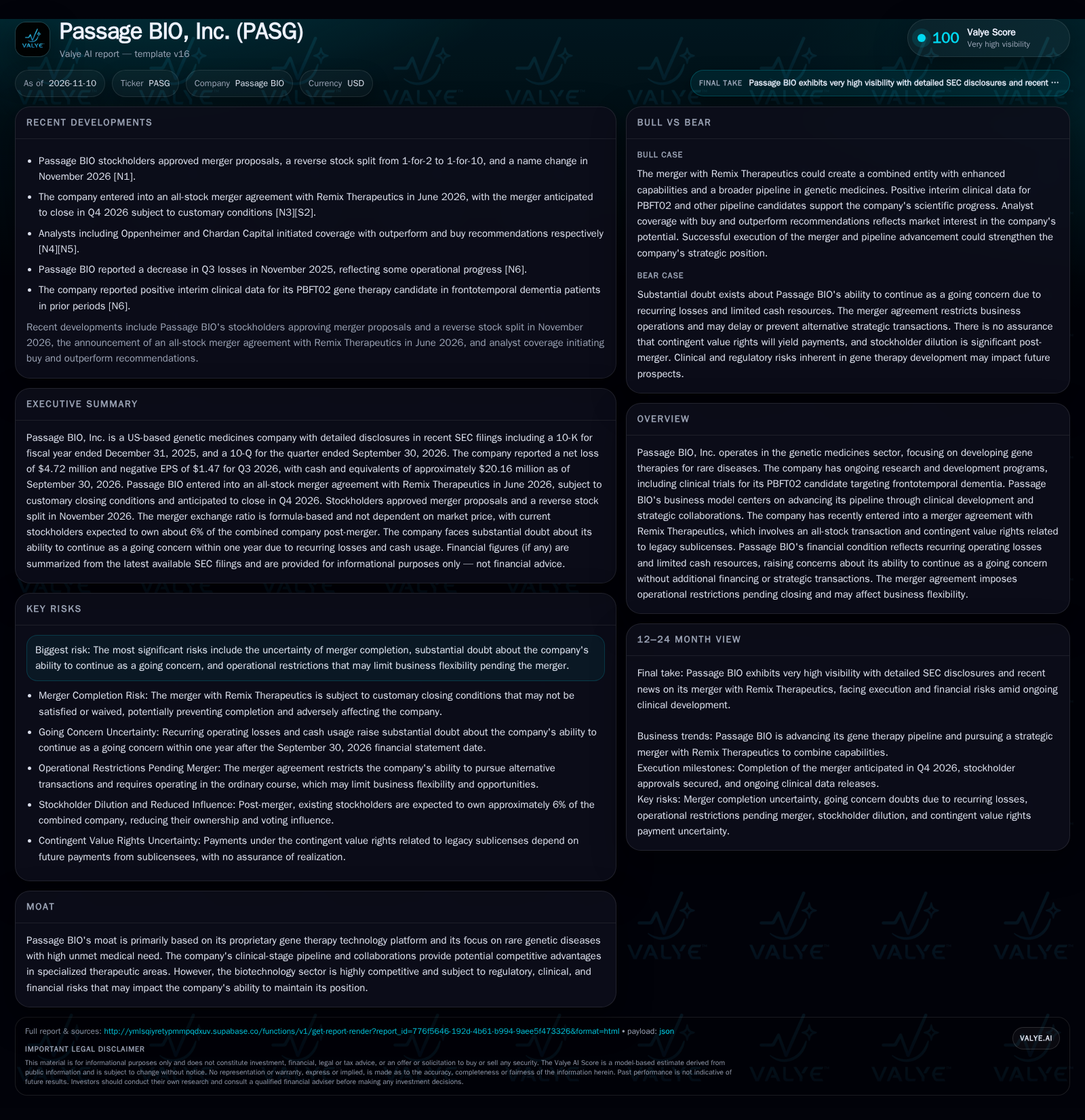
Passage BIO is executing an all-stock merger with Remix Therapeutics after recurring losses, a workforce reduction, and the loss of a major collaboration. Cash balances are tight, and there is substantial doubt about its ability to continue as a going concern absent the merger. The deal will leave current Passage BIO shareholders with just 6% of the combined entity, with potential upside tied to contingent value rights from legacy sublicenses. The outcome will depend on merger completion, pipeline progress, and the combined company’s ability to secure new funding and clinical milestones.
Passage BIO, a gene therapy developer targeting rare diseases, stands at a critical crossroads as it merges with Remix Therapeutics. With just $20 million in cash and a shrinking operational footprint after a major workforce cut and the end of a key collaboration, the company’s future as an independent entity is effectively over. The merger, if completed, will leave existing shareholders with only a small stake in the combined company, and the path to future value hinges on the successful integration, realization of pipeline potential, and the uncertain value of contingent rights tied to legacy sublicenses.
Merger, Financial Strain, and Strategic Retrenchment Define the Present
As of September 30, 2026, Passage BIO held approximately $20.16 million in cash and equivalents, with current assets and liabilities nearly matched, resulting in a current ratio of 1.0 and a cash ratio of 0.97 [S2]. The company reported a net loss of $4.72 million for the quarter and an accumulated deficit of nearly $725 million, continuing a pattern of recurring operating losses [S2]. Facing substantial doubt about its ability to continue as a going concern, Passage BIO enacted a 75% workforce reduction in the second quarter of 2026 and terminated its key collaboration with Gemma, narrowing its pipeline and operational scope [S2]. In June 2026, Passage BIO entered into an all-stock merger agreement with Remix Therapeutics, with current shareholders expected to own around 6% of the combined entity post-merger [S2]. The transaction is structured to be tax-free and includes contingent value rights (CVRs) that may yield future payments from sublicenses, although realization is not assured [S2].
Gene Therapy Economics: Capital Intensity, Pipeline Risk, and the Mechanics of Value Creation
Gene therapy development is characterized by high upfront R&D expenses, unpredictable timelines, and lumpy value realization tied to clinical milestones or strategic transactions. Passage BIO’s historic business model relied on advancing gene therapy candidates like PBFT02 for frontotemporal dementia through early clinical development, aiming to create value through out-licensing, partnerships, or eventual commercialization. The fixed cost base—especially personnel and R&D infrastructure—was significant, as evidenced by the need for a severe workforce reduction when funding became constrained [S2].
With no current revenue streams and no credit facility or committed capital, Passage BIO’s economics depended on periodic equity raises and potential milestone payments from collaborations. The loss of the Gemma collaboration eliminated near-term external funding and future option value from additional CNS programs. The merger with Remix Therapeutics restructures the economics entirely: Passage BIO shareholders become minority stakeholders in the new entity and retain exposure to potential CVR payouts from legacy sublicenses, a structure that essentially transforms their position from active operators to passive claimants on uncertain future cash flows [S2].
Competitive Dynamics: From Platform Aspirant to Minority Stakeholder in a Consolidation Play
The competitive landscape for genetic medicines is intense, with numerous well-funded players, rapid technological shifts, and high regulatory hurdles. Passage BIO previously competed by focusing on rare CNS disorders with significant unmet need, leveraging a proprietary gene therapy platform and clinical-stage assets. However, the company’s loss of its principal collaboration and the scale-back of its workforce diminished its ability to independently compete for pipeline advancement, partnerships, or capital.
Post-merger, Passage BIO’s competitive relevance will hinge on the combined pipeline and capabilities with Remix Therapeutics. The merger could unlock synergies if Remix’s assets complement Passage BIO’s scientific expertise or clinical infrastructure. However, with only 6% post-merger ownership, existing shareholders will have limited influence over strategic direction or capital allocation. The sector’s broader competitive forces—ranging from clinical trial setbacks, regulatory changes, to the entrance of larger pharmaceutical companies—remain potent counterforces that could further dilute or delay value realization for legacy Passage BIO stakeholders.
A Successful Merger Unlocks Pipeline Synergies and CVR Value
The most favorable scenario for legacy Passage BIO shareholders involves the successful closing of the Remix merger, smooth integration of pipelines and teams, and renewed access to capital markets or strategic partners. If the combined company can advance high-potential assets—such as PBFT02 or Remix’s own programs—through key clinical milestones, it could attract new funding, partnerships, or acquisition interest, thereby driving up the value of the combined equity.
Additionally, if CVRs attached to legacy sublicenses yield meaningful payments, this could provide non-dilutive upside to Passage BIO’s pre-merger shareholders. Evidence supporting this scenario would include timely merger completion, positive clinical data releases from the combined pipeline, new partnership announcements, successful capital raises, and actual cash flows from CVRs. Falsification would occur if the merger is delayed or terminated, clinical programs stall, or no CVR payments are realized.
Integration and Capital Constraints Shape the Post-Merger Reality
The most plausible path is that the merger closes as planned, with Passage BIO shareholders holding a small minority stake in the newly combined company. Operational focus likely consolidates around the most advanced or promising assets from both sides, but capital scarcity persists, limiting the pace of development. The combined entity may need to pursue further cost reductions, seek additional equity or strategic funding, or divest non-core assets.
For legacy Passage BIO stakeholders, value realization depends on the execution of the merged company’s strategic plan and the possibility—rather than the probability—of significant CVR payouts. Confirmation of this scenario would include merger closure, post-merger restructuring announcements, and updates on pipeline prioritization. Falsification would be a failed merger, unexpected litigation, or an inability to secure further funding.
Merger Failure or Strategic Drift Exposes Shareholders to Residual Value Risk
The adverse scenario is defined by the failure of the Remix merger—either due to unmet closing conditions, regulatory issues, or strategic reconsideration. In this outcome, Passage BIO would likely exhaust its remaining cash within months, given its lack of revenue, credit facilities, or alternative funding sources. The company would be forced to pursue a distressed asset sale, liquidation, or bankruptcy, with minimal recovery for equity holders.
Even if the merger closes, the combined company could struggle to integrate operations, secure new funding, or achieve clinical milestones, eroding the value of both the equity and the CVRs. Evidence confirming this downside would include merger termination, failure to secure new capital, or negative clinical/regulatory developments. Falsification would require clear evidence of merger completion, new funding, and clinical progress.
Milestones That Will Determine Whether Passage BIO’s Legacy Holds Value
Merger closing timeline and satisfaction of all conditions, including regulatory and shareholder approvals.
Disclosure and progress of the combined company’s clinical pipeline, including updates on PBFT02 and Remix’s lead programs.
Cash position, reported liquidity position, and ability to secure new funding or strategic partnerships post-merger.
Actual realization of CVR payments from legacy sublicenses—if disclosed, timing and quantum of any distributions.
Restructuring or cost reduction initiatives announced by the combined company after merger completion.
Any new collaborations, licensing deals, or acquisition interest in the merged entity’s pipeline.
Retention and integration of key scientific and management personnel from both companies.
Disclaimer: This is research-only, informational analysis and not investment advice. It may include AI-generated interpretation and general industry context. Always verify important details using primary sources.

Comments