
SciSparc Advances Cannabinoid Therapeutics with Strategic NeuroThera Integration
Recent clinical and corporate developments around NeuroThera Labs expand SciSparc’s IP portfolio and operational reach in CNS drug development.
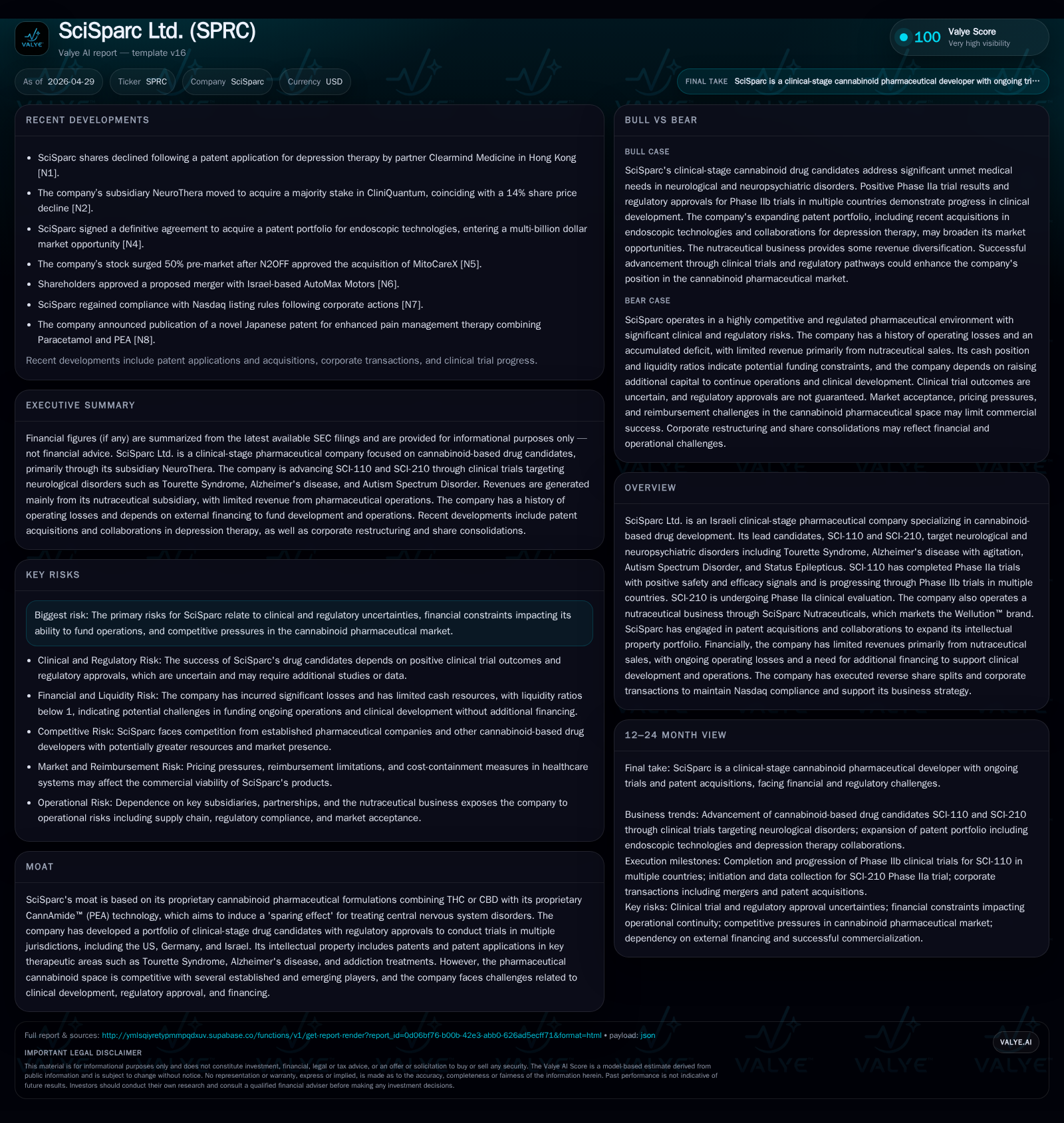
In its latest quarterly disclosures, SciSparc Ltd. highlighted a significant collaboration between its majority-owned subsidiary NeuroThera Labs and Clearmind Medicine, resulting in a new patent application targeting depression therapy. Additionally, NeuroThera is acquiring a controlling stake in CliniQuantum Ltd., broadening SciSparc’s exposure to quantum-driven clinical trial technologies. These strategic moves reinforce SciSparc’s position in the cannabinoid pharmaceutical space focused on neurological and neuropsychiatric disorders. However, liquidity constraints and operating losses remain key challenges as SciSparc advances multiple clinical-stage programs alongside its nutraceutical business.
Latest Operating Developments Amplify Innovation Pipeline
SciSparc's most recent interim disclosure on March 16, 2026 [S2] emphasized a key collaborative innovation milestone: NeuroThera Labs—its majority-owned subsidiary holding approximately 75%—joined forces with Clearmind Medicine to file a patent application for a depression therapy involving novel combinations of MEAI and N-Acylethanolamines including PEA. This patent follows their strategic cooperation agreement initiated in 2022 aiming at psychedelic-centric drug candidates targeting mental health [S1][S15]. The specific focus on neuropsychiatric applications complements SciSparc's clinical pipeline centered on cannabinoid formulations enhanced by proprietary CannAmide™ technology.
Additionally, on March 10, 2026 [S3], NeuroThera entered an agreement to acquire a controlling interest (54%) in CliniQuantum Ltd., an innovator deploying quantum computing algorithms—specifically quantum Monte-Carlo methods—to revolutionize clinical trial design and data analysis. The consideration includes approximately $9.46 million worth of NeuroThera shares plus up to $2.5 million in earn-out payments based on patent filings and fundraising achievements over a three-year earn-out period post-closing [S3][S15]. This acquisition extends SciSparc's scientific footprint beyond classic cannabinoid pharmacology into advanced trial-enabling platforms, potentially accelerating clinical development cycles.
The issuance of nearly 2.83 million common shares as finder’s fees around this transaction signals active engagement with capital markets and external advisors to facilitate inorganic growth [S3]. Both developments reflect deliberate execution to bolster the intellectual property estate and operational control via NeuroThera Labs, reinforcing it as the cornerstone of SciSparc's drug development strategy.
SciSparc’s Business Model: From Clinical Trials to Nutraceutical Revenues
SciSparc operates primarily through its controlled subsidiary NeuroThera Labs driving cannabinoid-based pharmaceutical development targeting central nervous system (CNS) disorders such as Tourette Syndrome (TS), Alzheimer’s disease-related agitation, Autism Spectrum Disorder (ASD), Status Epilepticus (SE), and now expanding towards depression therapy [S1]. Its formulation approach merges THC or CBD with CannAmide™ (palmitoylethanolamide/PEA), an endogenous fatty acid amide believed to induce a 'sparing effect' — presumed beneficial modulation of signaling pathways implicated in CNS pathologies [S1].
Clinical stage assets SCI-110 (THC + PEA) has completed Phase IIa trials successfully demonstrating safety and efficacy signals; current Phase IIb trials are underway across multiple countries with indications relevant to TS and Alzheimer's agitation [S1]. SCI-210 targets ASD and SE and is progressing through Phase IIa evaluation.
Revenues are predominantly derived from its nutraceutical segment via SciSparc Nutraceuticals marketing the Wellution™ brand comprising hemp seed oil-based consumer products sold mainly through online retail channels such as Amazon [S1]. Year-end 2025 revenues were modest at $856 thousand with corresponding cost of goods sold noted at $225 thousand [S14]. The nutraceutical business provides some revenue diversification but remains small relative to investment outlays in pharma R&D.
Operating losses persist given lack of pharmaceutical product commercialization to date resulting in an accumulated deficit near $87 million as of late 2025 [S14]. Research & Development expenses totaled approximately $2.1 million in 2025 driven by personnel costs, preclinical studies, regulatory activities, clinical trials management, and chemistry/formulation work [S10]. Sales & marketing expenses approximated $0.9 million focusing on advertising fees linked chiefly to e-commerce distribution logistics [S10].
SciSparc foresees building or partnering for commercial infrastructure once leading drug candidates advance closer to regulatory approval stages; this step implies significant future capital commitments ahead of commercial launches [S1].
Competitive Landscape in Cannabinoid Pharmaceuticals
The cannabinoid pharma industry is characterized by rapid innovation but also volatile regulatory landscapes globally. With SciSparc positioning itself within therapies for complex CNS diseases using cannabinoid receptor modulators integrated with proprietary compounds like PEA, it faces competition from both established specialty pharma firms and emerging biotech startups pursuing similar therapeutic domains.
Regulatory approval hurdles are pronounced due to use of psychoactive ingredients such as THC involving multiple levels of controlled substance legislation varying significantly between jurisdictions like the U.S., Europe, Canada, and Israel where trials are under way or planned – necessitating robust compliance capabilities [S1]. Moreover, intellectual property control is contested terrain; while SciSparc maintains patents across key indications like TS and Alzheimer’s-related agitation complemented by newly filed patent families via NeuroThera collaborations (depression therapy patents included) [S2][S15], market differentiation will depend on demonstrating superior clinical outcomes combined with defensible IP.
Pricing pressure risks intensify given increasing legislative scrutiny around specialty drug pricing in the U.S., including proposed reforms aiming at Medicare reimbursement reductions that could compress margins even if products achieve approval [S1]. This environment incentivizes strategic collaborations alongside potential outlicensing deals – approaches sci-spanning small firms often employ due to resource constraints.
Growth Drivers: Pipeline Expansion and Strategic Collaborations
SciSparc’s near-term growth is anchored on advancing its pipeline through pivotal Phase II trials — notably SCI-110 is entering later stages expecting efficacy readouts that could underpin licensing or partnership discussions given positive data trends seen in Phase IIa [S1]. Concurrently SCI-210 progresses through earlier phase evaluations expanding therapeutic reach.
Concomitant IP buildup via the March 2026 NeuroThera-Clearmind collaboration broadens coverage into mental health areas like depression employing novel cannabinoid-psychedelic combinations harnessing PEA analogs that may confer unique mechanistic advantages [S2].
The CliniQuantum acquisition injects cutting-edge quantum computing platforms aiming to accelerate trial design optimization – an increasingly sought-after capability in biotech R&D efficiency enhancement — potentially lowering time-to-market barriers when integrated carefully into SciSparc/NeuroThera trial operations [S3]. Earn-out payment structures tied to patent filing milestones ($1.5M) plus fundraising triggers ($1M) align incentives fostering additional R&D rigor as well as capital infusion opportunities.
Nutraceutical revenues contribute only marginally but offer a steady albeit limited cash flow complement while supporting broader brand recognition around hemp-based consumer offerings under the Wellution™ umbrella sold globally mainly online [S1].
Commercialization plans remain nascent but explicit discussions indicate potential utilization of strategic partners or contract sales organizations instead of solely relying on internal build-outs given cost considerations linked with early-stage specialty pharma launches [S1].
Risks and Constraints: Clinical, Regulatory, and Financial Challenges
Execution risks stem foremost from typical biopharma uncertainties around translating clinical stage promise into approved products—especially bearing high stakes in neuropsychiatric domains where placebo effects can be pronounced and endpoints difficult to standardize. Regulatory delays or unexpected adverse safety findings could thwart timeline expectations despite initial positive data signals.
Corporate governance concerns arose following non-consummation of a merger with AutoMax amid investigations involving AutoMax leadership culminating in insolvency proceedings—SciSparc holds debt claims therein but recovery prospects seem uncertain introducing reputational risk layers and distraction for management focus [S1].
Furthermore, broader sector risks include shifting regulatory policies on cannabinoids domestically within the U.S., changes from federal/state health authorities regarding legal classification affecting study approvals or market access timelines; concurrent legislative efforts addressing specialty drug pricing reform may drag down expected reimbursement rates posing profitability headwinds even if product approvals are secured [S13].
Catalysts Ahead: Upcoming Milestones and Market Signals
Key upcoming inflection points include anticipated readouts from SCI-110 Phase IIb trials being conducted internationally—the timing of these results could trigger licensing interest or partnership expansion if efficacy replicates earlier positive signals.[S1]
Patent grant status updates will be critical markers of sustained innovation momentum particularly concerning the newly filed depression therapy patent family arising from the NeuroThera-Clearmind collaboration; progress here will strengthen IP moat protecting differentiated formulations [S2].
The closing of the CliniQuantum acquisition anticipated around mid-May 2026 along with subsequent earn-out milestone achievements will provide important evidence of inorganic expansion capability along with financial inflows tied directly to innovation performance indicators such as patent filings or fundraising success by NeuroThera Labs itself [S3].
Finally, public disclosures or management commentary concerning scaled commercialization infrastructure preparations either internally developed or through external partners would signal growing readiness for broader product launch phases beyond clinical validation stages as on-drug approvals approach nearer-term possibility windows [S1].
Financial Summary: Liquidity Position and Funding Outlook
Recent balance sheet snapshots underscore material liquidity constraints: cash plus equivalents stood at approximately $1.545 million at June 30, 2025 against more than threefold higher current liabilities tallying about $5.038 million yielding a concerning current ratio near 0.55 signaling imminent refinancing needs unless offset by cash inflows from financing rounds or milestone payments linked with asset monetization efforts like the CliniQuantum deal or exercisable warrants held in related entities like Nexentis/NeuroThera Labs' stock positions [F1][S1].[
In fiscal year 2025 operating losses widened due to increased research & development spending reaching over $2 million compared to prior periods who reflected slower activity levels; these elevated costs reflect necessary investment for advancing pipeline candidates through costly mid-phase trials while sales & marketing expenses declined slightly aligning more closely with nutraceutical business scale rather than pharmaceutical commercialization yet-to-launch stage dynamics [S10][F1].[
Financing activities recently provided critical liquidity injections exemplified by registered direct offerings raising over $3 million during late 2025 events alongside convertible note agreements facilitating flexible capital availability into mid-2027 periods but still leaving runway questions open absent operational cash flow generation expected not before several years out pending FDA approvals or licensing events relevant milestones achieved simultaneously elevating dependency risks on external capital markets conditions continuing favorably into next phases.[S4][F1]
This analysis synthesizes publicly disclosed SEC filings up to April 29, 2026 focusing on core operating developments anchoring growth ambition alongside identified constraints within SciSparc Ltd.'s evolving cannabinoid pharmaceutical strategy. It aims solely at factual assessment without expressing investment advice or forward-looking recommendations.
Disclaimer: This is research-only, informational analysis and not investment advice. It may include AI-generated interpretation and general industry context. Always verify important details using primary sources.

Comments