
Target in 2026: Digital Expansion, Omnichannel Leverage, and the Reality of Retail Liquidity
Target’s recent quarter highlights robust earnings and digital momentum, but a near-parity current ratio underscores the importance of execution in a hyper-competitive, margin-sensitive retail landscape. The company’s omnichannel strategy and dividend legacy offer upside, yet persistent liquidity tightness and sectoral headwinds demand careful scrutiny.
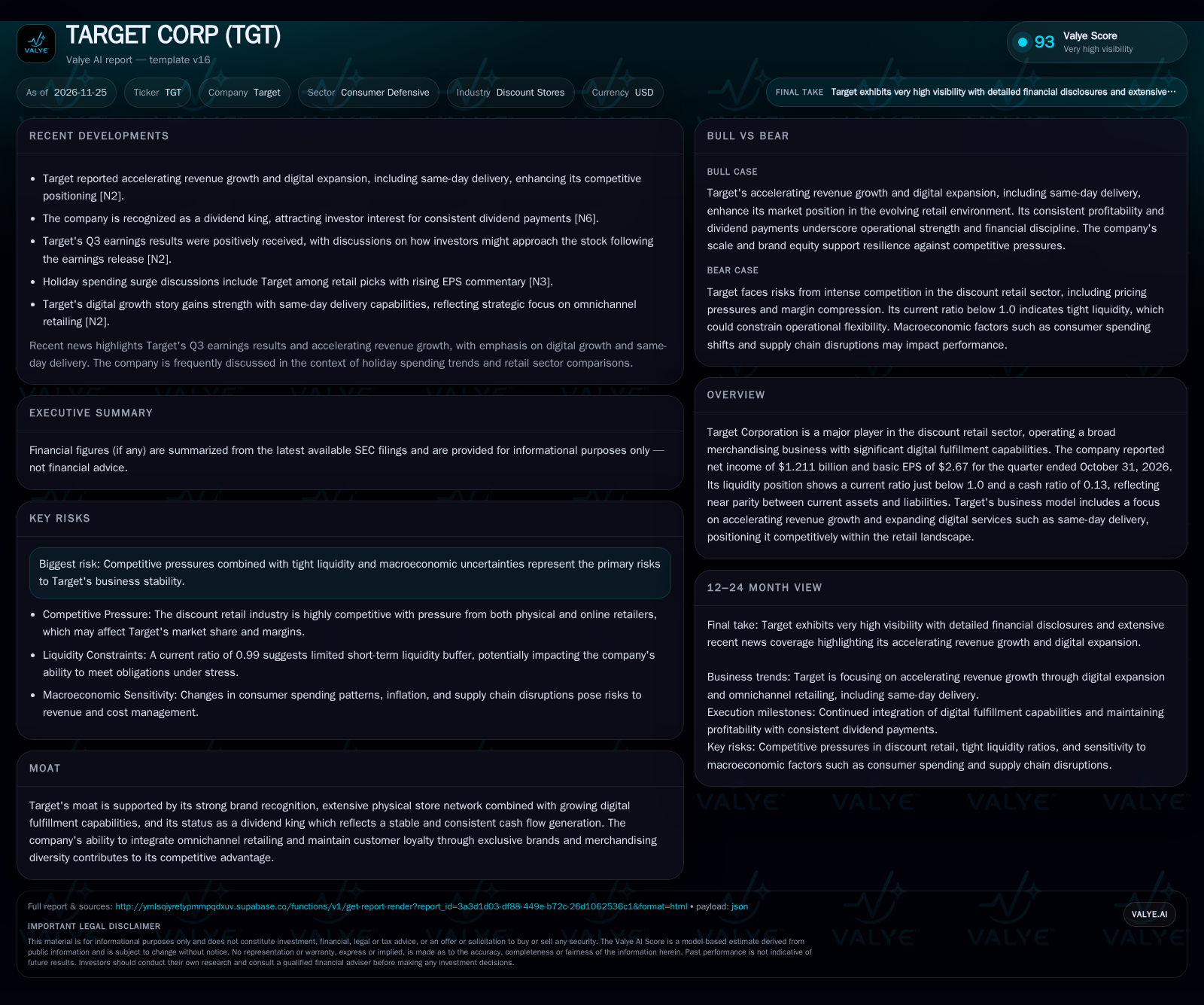
Target reported net income of $1.211 billion and EPS of $2.67 in the quarter ended October 31, 2026. The company continues to accelerate digital growth—including same-day delivery—but its current ratio of 0.99 signals tight liquidity. [S2] [N2]
While strong net income and digital expansion—including same-day delivery—demonstrate Target’s adaptability in a rapidly evolving sector, the company’s current ratio of 0.99 signals little margin for error. As Target leans further into its hybrid physical-digital model, its ability to balance capital needs, cost discipline, and customer experience will likely determine whether it can sustain its leadership in the discount retail space. [S2] [N2]
Financial Results Signal Profitability Amid Tight Liquidity
Target’s Q3 2026 results show robust net income of $1.211 billion and diluted EPS of $2.65, underlining the company’s continued ability to generate profit in a competitive environment. This near-parity between current assets and liabilities limits the company’s buffer for operational disruptions, unexpected expenses, or macroeconomic shocks. [S2]
The quarter also saw Target accelerating revenue growth and expanding its digital footprint, particularly through investments in same-day delivery. This digital momentum is highlighted in recent news and positions Target to compete more effectively with both traditional and online retailers. [N2]
How Target’s Revenue Model and Cost Structure Shape Its Economic Resilience
Target’s business model blends high-volume discount merchandise sales with a growing suite of digital fulfillment and omnichannel services. Revenue is generated primarily through in-store and online retail sales, with digital channels—such as same-day delivery and order pickup—becoming increasingly material to the topline. The company’s ability to drive higher average basket sizes and customer frequency through exclusive brands and curated assortments is a critical lever.
The fixed-cost base, anchored by an extensive physical store network and supply chain infrastructure, creates operating leverage: higher sales volumes can translate into margin gains if costs are contained. However, the variable costs associated with fulfillment, logistics, and promotional activity can compress margins, especially as digital sales rise (where last-mile delivery is often more expensive than traditional retail).
On the capital side, Target’s need for ongoing investment in technology, store refreshes, and supply chain modernization competes for cash flow with shareholder returns such as dividends. The company’s status as a ‘dividend king’ signals a longstanding commitment to returning capital, but this also limits the potential financial flexibility available for aggressive reinvestment or shock absorption during downturns.
Target’s Place in the Retail Ecosystem: Advantages and Vulnerabilities
Target’s main competitive strengths are its strong brand, broad merchandise mix, and the integration of physical and digital retail experiences. The scale of its store network enables nationwide reach and supports omnichannel initiatives such as same-day delivery and in-store pickup, which are increasingly table stakes in retail.
The company faces direct competition from discount peers (notably Walmart and Dollar Tree) and from pure-play online retailers. While Target’s curated product offerings and exclusive brands help differentiate it, pricing pressure is relentless, and consumer loyalty is often contingent on value and convenience. The rise of alternative digital platforms and rapid fulfillment providers continues to erode traditional advantages.
Switching costs for customers remain low—if Target fails to deliver on price, selection, or convenience, shoppers can easily migrate to competitors. The challenge is to leverage omnichannel investments to create a stickier ecosystem (e.g., through loyalty programs or unique digital services), but true network effects are difficult to achieve in discount retail absent a proprietary platform or irreplaceable product.
Digital-First Execution Unlocks Margin Expansion and Loyalty Gains
If Target can successfully scale its digital fulfillment services, particularly same-day delivery and integrated online/offline experiences, the company could see improved customer retention and higher lifetime value. As digital sales become a larger share of the mix, operational efficiencies in logistics and supply chain automation may translate into better margins despite higher fulfillment costs.
A favorable scenario would involve Target leveraging data analytics to optimize inventory and personalize promotions, deepening customer engagement. Successful execution could allow Target to grow share in key categories, defend pricing, and even modestly expand gross margin.
Evidence for this scenario would include sustained digital sales growth above sector averages, rising customer satisfaction and loyalty metrics, and improvement in gross and operating margin trends despite competitive or macro headwinds. Announcements of successful tech integrations or expanded proprietary brands would further support the case.
Sustained Profitability with Margin Pressures and Capital Discipline
The most plausible path forward is that Target maintains its position as a top-tier discount retailer by balancing modest revenue growth with disciplined cost management. Digital expansion continues, but incremental margin improvements are offset by ongoing investments and competitive pricing pressures.
Occasional promotional intensity or supply chain disruptions may weigh on near-term results, but Target’s brand strength and operational scale enable it to weather typical retail cycles.
This scenario would be confirmed by continued positive net income, stable (if narrow) liquidity ratios, and evidence that digital investments are at least maintaining, if not modestly growing, market share. Margin trends that remain flat or improve only incrementally would also validate this middle path.
Liquidity Constraints Amplify Risk in an Intensifying Retail Environment
If competitive pressures intensify—through aggressive discounting by peers, shifts in consumer spending, or further digital disruption—Target’s thin liquidity buffer could become a material risk.
This would threaten not only near-term profitability but also long-term brand equity and market share.
Confirmation of this downside would include a deterioration in liquidity ratios, negative free cash flow, missed earnings targets, or management signaling the need for balance sheet actions. Evidence of sustained market share loss or customer churn would further validate the adverse case.
Evidence That Will Clarify Target’s Digital and Financial Trajectory
Quarterly trends in digital sales growth and penetration—particularly the mix of same-day fulfillment—would help assess whether Target’s digital strategy is driving sustained engagement and share gains.
Gross and operating margin progression, especially in the face of rising fulfillment and promotional costs, will indicate whether digital expansion is accretive or dilutive to overall profitability.
Customer loyalty and retention metrics—such as repeat purchase rates or active loyalty program participation—would help validate the stickiness of Target’s omnichannel ecosystem.
Comparative market share data versus core discount and online peers would provide context on competitive positioning and the effectiveness of Target’s digital investments.
Capex allocation and management commentary on investment priorities (technology, stores, supply chain) would clarify the balance between growth initiatives and financial discipline.
Updates on supply chain efficiency programs or technology integrations would help test the thesis that Target can extract operating leverage from digital transformation.
Disclaimer: This is research-only, informational analysis and not investment advice. It may include AI-generated interpretation and general industry context. Always verify important details using primary sources.

Comments