
vTv Therapeutics: Clinical Pipeline Advances, Liquidity Strength, and the Stakes of Orphan Drug Strategy
As Phase III programs progress and orphan drug designations accumulate, market optimism grows—but regulatory, clinical, and funding risks remain central to the company’s long-term outcome.
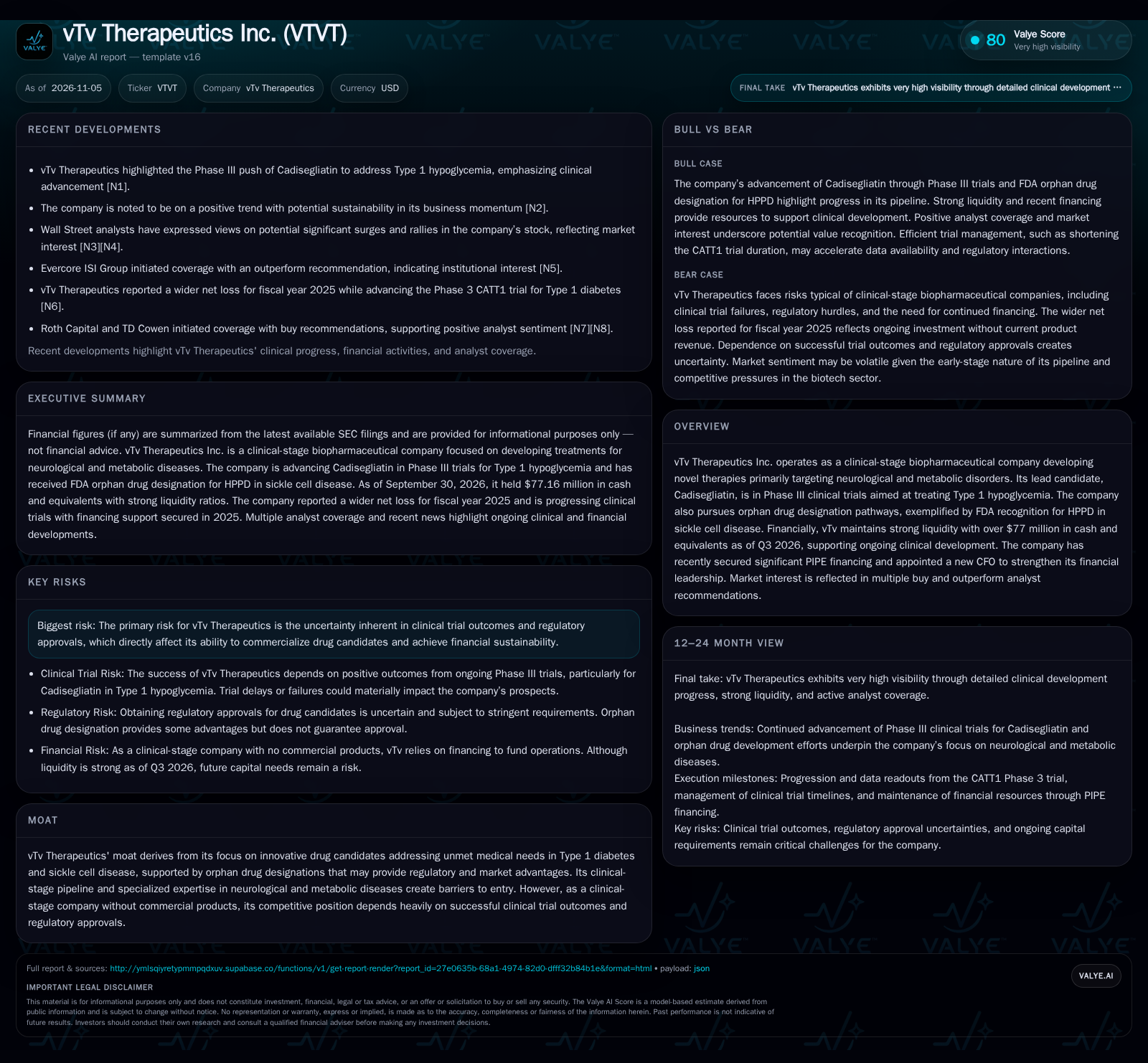
vTv Therapeutics, a clinical-stage biopharma innovator, leverages reported liquidity position and orphan drug designations to advance late-stage programs in Type 1 diabetes and sickle cell disease. [S2] [N1] [N6]
vTv Therapeutics stands out in the clinical-stage biotech landscape by combining a reported liquidity position with a focused pipeline targeting high-need indications in metabolic and neurological disease. With Cadisegliatin progressing through Phase III trials for Type 1 diabetes and orphan drug status secured for HPPD in sickle cell disease, the company is positioned at a critical inflection point. [S2] [N1] [N6]
Liquidity, Pipeline Milestones, and Analyst Optimism Define the Present Landscape
As of September 30, 2026, vTv Therapeutics reported $77.16 million in cash and equivalents, supported by an $80 million PIPE financing completed in 2025. The company reported a current ratio of 11.19 for the period. [S2] Cadisegliatin has reached Phase III trials to address hypoglycemia in Type 1 diabetes, marking a significant clinical milestone. [N1] [N6] Additionally, vTv has received FDA orphan drug designation for HPPD in sickle cell disease, which may confer regulatory and commercial advantages. [S2] Multiple buy and outperform analyst recommendations—such as those from Evercore ISI Group, Roth Capital, and TD Cowen—reflect heightened market interest and confidence in the company’s clinical trajectory. [N3] [N4] [N5] [N7] [N8]
Clinical milestones often trigger inflection points in capital requirements, with Phase III trials representing a particularly resource-intensive phase due to larger patient cohorts, extended monitoring periods, and complex data collection protocols. The timing of subsequent financing events or partnerships will be critical to maintaining operational continuity, especially if trial outcomes extend beyond initial projections. Additionally, market optimism reflected in analyst ratings may hinge on near-term data readouts, potentially leading to increased volatility in valuation and funding access if expectations are not met.
How vTv’s Capital-Intensive R&D Model Shapes Economic Outcomes
vTv Therapeutics operates a classic clinical-stage biopharma model, with no product revenue and all value contingent on successful R&D execution and eventual drug commercialization. [S2] [N6] If Cadisegliatin or HPPD therapies reach approval, the economics could shift dramatically: orphan drug exclusivity may grant up to seven years of market protection in the U.S., supporting premium pricing and limited competition. However, until commercialization, capital is consumed by trial costs, regulatory filings, and overhead. Operating leverage is negative at this stage, but could turn sharply positive if a drug is approved and sales ramp. Future capital needs remain a risk if development timelines extend or if outcomes falter.
The capital-intensive nature of vTv’s R&D model also implies a high degree of operational leverage, where fixed costs remain substantial regardless of trial progress, thereby amplifying financial risk if development timelines slip or additional studies are mandated. Conversely, successful progression through regulatory milestones could unlock non-dilutive funding opportunities such as milestone-based grants or government incentives, which would alleviate some funding pressure. The orphan drug designations, while potentially lucrative, also come with the conditionality that market exclusivity is not guaranteed if competitors develop similar therapies or if regulatory authorities impose restrictions. Therefore, the company’s economic outcomes will depend not only on clinical success but also on strategic management of regulatory pathways and capital structure optimization.
Orphan Drug Strategy and Specialization: Barriers and Exposures in a Crowded Field
vTv’s pursuit of orphan drug designations in high-need indications like sickle cell disease offers potential regulatory and market exclusivity advantages, including reduced competition, expedited review, and potential tax credits. The clinical focus on metabolic and neurological diseases addresses areas with significant unmet need, but these spaces also attract substantial investment and innovation from larger pharmaceutical players and other biotechs. For Type 1 diabetes, the competitive landscape includes established therapies and multiple late-stage pipeline candidates from both incumbents and emerging biotechs. Success will depend on demonstrating superior efficacy, safety, or convenience. Barriers to entry are raised by specialized expertise and regulatory progress, but vTv’s position remains highly contingent on clinical trial success and is vulnerable to competing breakthroughs, shifting standards of care, or regulatory setbacks.
The competitive dynamics in orphan and specialty indications often involve a delicate balance between innovation and market access challenges. While orphan drug status can confer exclusivity, payers increasingly scrutinize pricing strategies, especially for high-cost therapies targeting rare diseases. vTv’s ability to demonstrate clear clinical differentiation and real-world value will be crucial in negotiating reimbursement and formulary placement. Moreover, the presence of larger pharmaceutical companies with established commercial infrastructure could pressure vTv to seek strategic partnerships or licensing arrangements to effectively scale commercialization. The company’s specialization in metabolic and neurological diseases may provide scientific advantages, but it also necessitates continuous investment in intellectual property protection and adaptive clinical development strategies to maintain competitive barriers.
Accelerated Data Readouts and Regulatory Success Could Unlock Outsized Value
If vTv’s Phase III Cadisegliatin program delivers positive efficacy and safety data on an expedited timeline, the company could rapidly advance toward regulatory filings for Type 1 diabetes—potentially capturing first-mover advantage in a large and underserved market. Orphan drug exclusivity for HPPD in sickle cell disease may bolster the company’s ability to command premium pricing and negotiate favorable reimbursement. Confirmation would come from successful top-line trial results, FDA acceptance of regulatory submissions, and early partnership or licensing activity. Analyst upgrades, non-dilutive funding (such as grants), and pre-commercialization collaborations would further validate this scenario. The key falsification would be a failure to achieve primary endpoints or significant delays in regulatory milestones.
Clinical Progress Continues, but Commercialization Remains Several Years Away
Analyst sentiment remains positive as long as development milestones are met without major setbacks. Partial data releases, incremental regulatory progress, and continued presence in investor/analyst coverage cycles would confirm this scenario. The thesis would be challenged by material trial delays, cost overruns, or negative safety/efficacy signals.
Clinical or Regulatory Setbacks Could Trigger Funding Stress and Strategic Retrenchment
If Cadisegliatin fails to meet its primary endpoints in Phase III or if safety concerns arise, vTv could face a sharp loss of market confidence, potential downgrades, and an urgent need to reassess its pipeline priorities. Regulatory rejection or requests for additional data could further delay timelines and escalate costs. In such a scenario, the company’s cash reserves would be consumed more rapidly, possibly forcing dilutive financings, asset sales, or pipeline discontinuations. Confirmation would include negative trial readouts, withdrawal of analyst support, or announcements of restructuring.
Milestones and Metrics That Will Determine vTv’s Long-Term Trajectory
Cadisegliatin Phase III clinical outcomes—timing and topline data readouts will be crucial for validating the company’s lead program.
Regulatory milestones for HPPD in sickle cell disease, including further FDA interactions and potential submission acceptance.
Updates on cash burn rate and projected runway, especially if disclosed in future filings.
Announcements of non-dilutive funding (e.g., grants, partnerships) that could extend runway or validate pipeline value.
Changes in analyst coverage, ratings, or target prices—especially following clinical or regulatory updates.
Evidence of partnership or licensing activity with larger pharmaceutical companies.
Any disclosed changes in clinical trial design, duration, or endpoints that could impact timelines or regulatory risk.
If disclosed, early signals of payer or patient advocacy group engagement, which could influence market access and reimbursement prospects.
Disclaimer: This is research-only, informational analysis and not investment advice. It may include AI-generated interpretation and general industry context. Always verify important details using primary sources.

Comments