
Waters Corporation: Proteomics Expansion, Diagnostic Pipeline, and the Economics of Analytical Instrument Leadership
Waters Corporation's recent acquisition of MOBILion Systems and the FDA clearance of BD OneFlow mark a pivotal phase for its proteomics and diagnostics ambitions. The company now faces critical execution tests: integrating new assets, commercializing pipeline innovations, and sustaining its margin profile amid intensifying competition and rapid technological change.
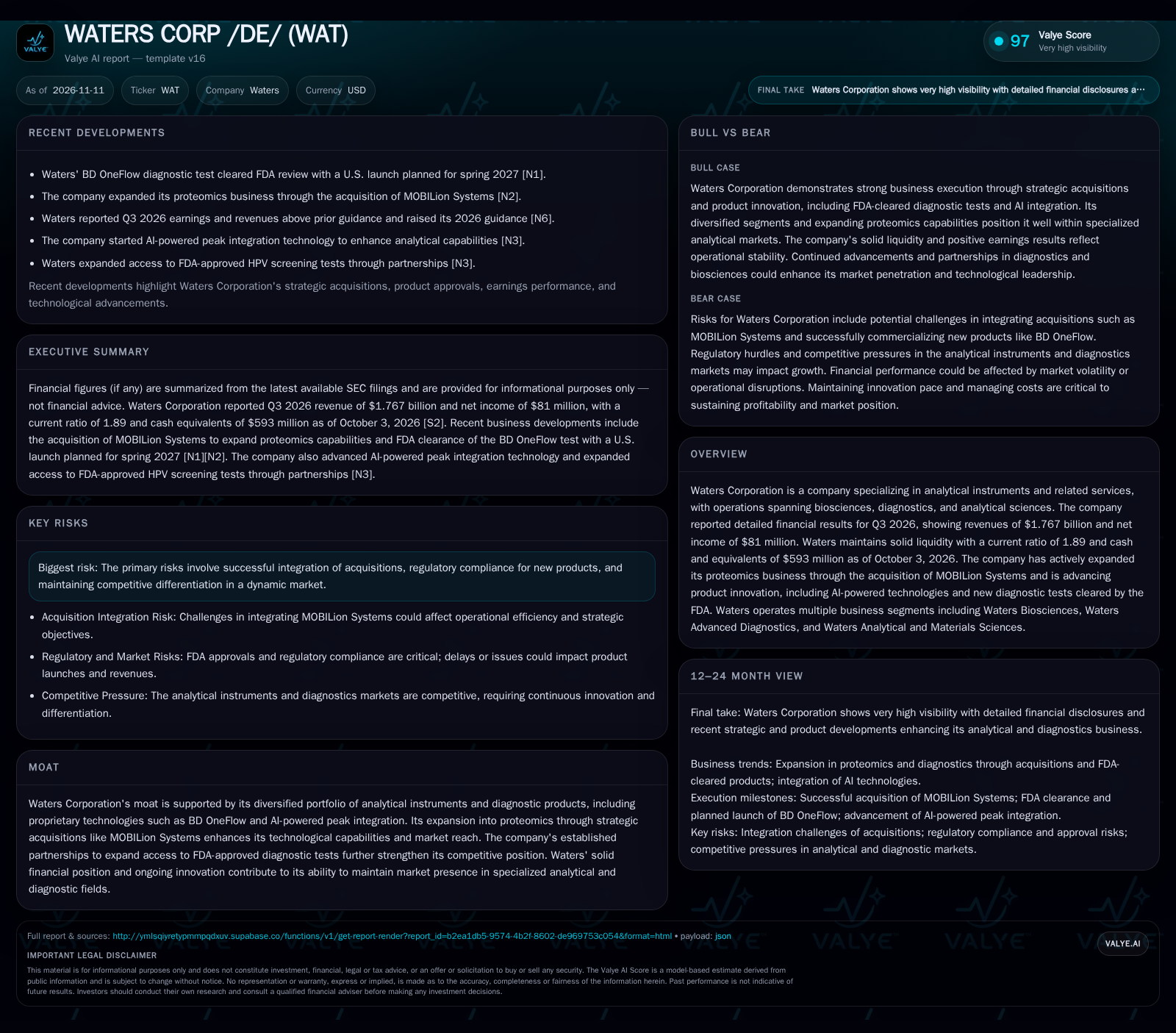
Waters Corporation’s Q3 2026 results show operational momentum and strategic expansion into high-growth proteomics and diagnostics markets. The completion of the MOBILion Systems acquisition and upcoming U.S. launch of BD OneFlow create new revenue opportunities, but success will hinge on integration, commercial execution, and maintaining technological differentiation in a competitive landscape. [S2] [N1] [N2]
Waters Corporation enters late 2026 with momentum on several strategic fronts: robust financial results, an expanded footprint in proteomics via the MOBILion Systems acquisition, and regulatory clearance for BD OneFlow, a diagnostic product targeting the U.S. market in 2027. These developments position Waters at the intersection of advanced instrumentation, clinical diagnostics, and data-driven analytics. Yet, the company’s growth trajectory now depends on its ability to integrate new assets, commercialize pipeline innovations, and defend its competitive position against both established players and emerging disruptors.
Recent Moves Set the Stage for Waters’ Next Growth Phase
Waters reported Q3 2026 revenue of $1.767 billion and net income of $81 million, surpassing prior guidance and prompting an upward revision to its full-year outlook. This performance signals operational strength and market demand across its core segments. [S2] [N6]
The company completed its acquisition of MOBILion Systems, a move designed to bolster its proteomics business—a field central to next-generation research and clinical diagnostics. [N2]
In diagnostics, BD OneFlow cleared FDA review, with a U.S. launch targeted for spring 2027. This product could open new revenue streams in clinical lab testing. [N1]
How Waters Makes Money: Product Mix, Recurring Revenue, and Margin Levers
Waters generates revenue primarily from the sale of analytical instruments, consumables, and related services across biosciences, diagnostics, and analytical sciences. The business model combines high-value, capital-intensive instrument sales with recurring revenue from consumables, reagents, and support contracts. This structure typically results in a mix of upfront and recurring income, with consumables and services providing margin stability even as instrument demand fluctuates.
The economics of analytical instruments are characterized by high gross margins on proprietary platforms, but require sustained investment in R&D, application development, and regulatory compliance—especially in regulated clinical and diagnostic markets. New platforms like BD OneFlow and advanced proteomics tools may command premium pricing and drive higher-margin consumables over time, but require significant up-front commercialization and support investments.
Operating leverage is a key dynamic: as installed base grows, recurring revenue from consumables and service contracts can rise disproportionately, improving profitability if Waters maintains high retention and utilization rates. However, integration of acquisitions like MOBILion may temporarily increase operating expenses and dilute margins if synergies are not quickly realized.
Capital needs are moderate for a company of Waters’ scale, but ongoing innovation, product launches, and integration activities require careful allocation of cash and internal resources.
Technological Breadth and Acquisition Strategy Underpin Waters’ Defenses
Waters’ competitive position rests on a broad portfolio of analytical instruments, strong presence in biosciences and diagnostics, and a history of proprietary technology development. The company faces competition from multinational instrument makers, specialized diagnostics firms, and a growing cohort of data-driven and AI-enabled analytics startups.
The MOBILion Systems acquisition may enhance Waters’ competitive edge in proteomics, a domain with high technical barriers and growing demand from pharmaceutical, biotech, and clinical research customers. Proprietary features such as AI-powered peak integration could also increase switching costs and customer lock-in, particularly if integrated into end-to-end workflows.
However, the analytical instruments and diagnostics landscape is marked by rapid technological change, regulatory hurdles, and pricing pressure—especially as large customers consolidate purchasing power and new entrants push digital and automation-first solutions. Waters’ ability to maintain differentiation will hinge on continuous innovation, successful integration of acquired technologies, and building sticky recurring service relationships.
Integration Success and Diagnostic Adoption Fuel Outsized Growth
In a favorable outcome, Waters rapidly integrates MOBILion Systems, leveraging its proteomics platform to secure new research and clinical customers. Strong customer uptake of BD OneFlow in the U.S. diagnostic market, following its FDA clearance, drives incremental revenues and high-margin consumables growth.
AI-powered enhancements to instrument workflows improve both performance and customer retention, supporting price discipline and upsell opportunities. If Waters can maintain robust recurring revenue growth from its installed base while continuing to launch differentiated products, operating leverage could expand margins meaningfully.
Evidence confirming this scenario would include above-industry growth in proteomics and diagnostics revenues, rapid expansion of the installed base for new platforms, and positive commentary on integration milestones and customer wins in earnings updates.
Execution Delivers Steady Gains Amid Competitive Intensity
A plausible middle path sees Waters achieving moderate revenue growth by capitalizing on its diversified product portfolio and incremental gains from recent acquisitions. The company successfully launches BD OneFlow in the U.S., but adoption is gradual as customers evaluate switching costs and regulatory requirements.
Proteomics expansion via MOBILion adds to the company’s value proposition, but integration and go-to-market synergies take several quarters to materialize. Competitive pressures from both incumbents and new entrants limit pricing power in some segments, but recurring consumables and service revenues provide a buffer to profitability.
Confirmation would come from sustained mid-single-digit revenue growth, stable or modestly improving gross margins, and regular updates on integration progress and new product launches.
Integration Stumbles and Regulatory Delays Erode Momentum
In an adverse scenario, Waters encounters significant challenges integrating MOBILion Systems, resulting in operational disruptions, elevated costs, or loss of key talent. Delays or setbacks in the commercial rollout of BD OneFlow—due to regulatory, reimbursement, or market adoption issues—limit revenue contribution from diagnostics.
Competition intensifies, especially from lower-cost or more automated solutions, pressuring margins and eroding Waters’ share in core instrument markets. If recurring revenue growth stalls and integration synergies are not realized, profitability could deteriorate and investor confidence may weaken.
Evidence would include missed revenue or margin targets, negative surprises on integration expenses, customer attrition in acquired businesses, or guidance reductions tied to commercial execution challenges.
Milestones and Metrics That Will Shape the Waters Thesis
Pace of integration and synergy realization from the MOBILion Systems acquisition, including retention of key personnel and customer accounts (if disclosed).
U.S. adoption rates and revenue contribution from BD OneFlow following its spring 2027 launch, with particular attention to clinical lab uptake and competitive responses.
Growth rate in recurring revenue from consumables and service contracts, especially in the proteomics and diagnostics segments (if disclosed).
Gross margin trends, particularly as new products and acquired businesses scale within the portfolio.
R&D and SG&A expense trajectories, as indicators of both integration costs and ongoing innovation investment.
Any regulatory or reimbursement updates affecting the commercial rollout of new diagnostic products.
Commentary on customer retention and competitive win rates in core and newly entered segments (if disclosed).
Disclaimer: This is research-only, informational analysis and not investment advice. It may include AI-generated interpretation and general industry context. Always verify important details using primary sources.

Comments