
Wynn Resorts: Luxury Brand Strength Tested by Earnings Pressure, Expansion Ambitions, and Market Competition
With its UAE project on the horizon and intensifying competition in Macau, Las Vegas, and Boston, the company’s ability to sustain premium economics while expanding will be shaped by execution, regulatory dynamics, and evolving consumer travel patterns.
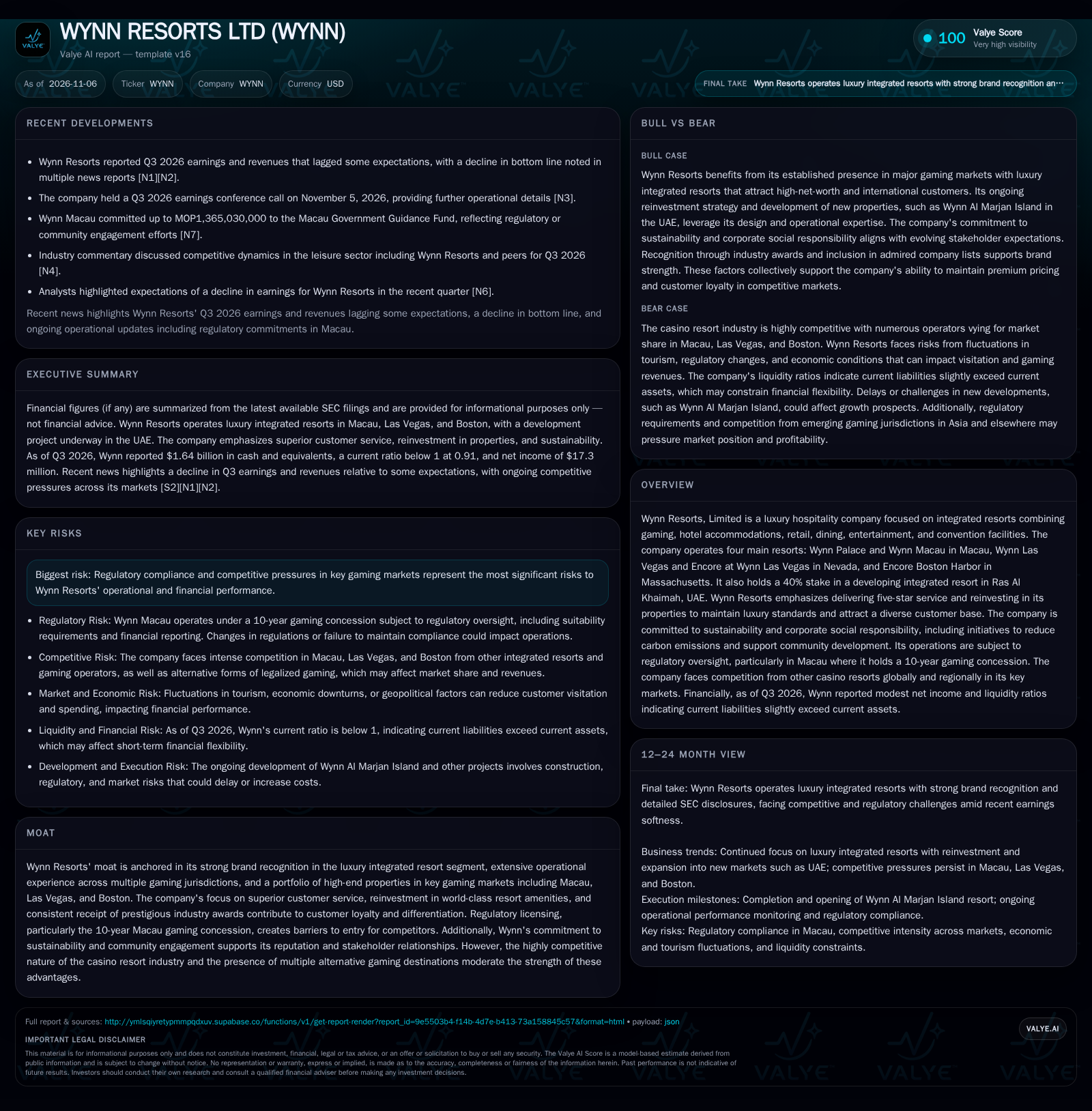
Lagging earnings and revenue versus expectations underscore ongoing competitive and economic pressures across its main markets. The company’s luxury positioning, reinvestment in properties, and upcoming UAE resort remain central to its long-term strategy, but execution risks and regional competition are rising factors shaping future outcomes. [S2] [N1] [N2]
The upcoming opening of Wynn Al Marjan Island in the UAE in 2027 could reshape the company’s growth profile, but execution risks and the evolving competitive landscape in Macau, Las Vegas, and Boston will be decisive in determining whether Wynn can translate its reputation for premium experiences into sustained shareholder value. [S2] [S1]
Recent Earnings and Liquidity: A Snapshot of Pressures and Potential
Wynn Resorts reported net income of $17.3 million for Q3 2026, with basic and diluted EPS of $0.17. Despite remaining profitable, these results lagged some analyst and market expectations, as noted by recent news coverage. These figures highlight the company’s ability to generate profit in a challenging environment, but also reveal sensitivity to competitive and cyclical pressures across its main markets. [S2] [N1] [N2]
Operationally, Wynn’s core assets remain its luxury integrated resorts in Macau, Las Vegas, and Boston, with a 40% stake in the forthcoming Wynn Al Marjan Island in the UAE slated for a 2027 opening. The company’s brand continues to be recognized through industry awards, reinforcing its positioning in the high-end segment. However, competitive intensity and regulatory oversight in its operating regions are rising, as reflected in both industry commentary and Wynn’s own disclosures. [S1] [N4]
How Wynn Resorts’ Integrated Model Drives Revenue—and Where Margin Pressure Emerges
Wynn Resorts’ economics are anchored in its integrated resort model, which blends gaming, luxury hotel accommodations, retail, dining, entertainment, and convention facilities. Historically, the gaming segment—especially VIP and premium mass in Macau—has driven a significant portion of overall revenue and profitability, with non-gaming amenities supporting both guest experience and ancillary revenue streams.
Pricing power is tied to the perceived exclusivity and quality of the Wynn brand, often allowing for premium room rates, minimum gaming thresholds, and strong ancillary spend per visitor. However, much of the cost base is fixed: labor, property maintenance, regulatory fees, and ongoing reinvestment to maintain five-star standards. This structure creates operating leverage in periods of strong demand but exposes the company to margin compression during downturns or when competitive dynamics force promotional activity.
Capital needs remain substantial. Not only does Wynn require ongoing investment in property upgrades to sustain its luxury positioning, but the development of Wynn Al Marjan Island in the UAE will necessitate significant outlays over the next several years. [S2] [S1]
Luxury Brand, Regulatory Complexity, and the Realities of Casino Competition
Wynn’s primary moat is its globally recognized luxury brand, built on decades of operational expertise and a string of industry accolades. This reputation enables the company to target high-net-worth individuals and international travelers, supporting premium pricing and guest loyalty. However, the competitive environment is unforgiving. In Macau, 20 casinos—including several with comparable luxury offerings—compete for a finite pool of gaming customers, subject to regulatory quotas, tax rates, and government oversight. [S1]
Las Vegas remains a dynamic market, with new integrated resorts and entertainment-focused properties regularly raising the bar on guest expectations. In Boston, regulatory differences and the presence of both commercial and Native American casinos complicate the regional landscape. Across all markets, Wynn also faces the threat of new jurisdictions legalizing gaming, as well as the rise of digital and online gaming alternatives that could siphon off discretionary spend.
While Wynn’s sustainability and corporate social responsibility initiatives bolster stakeholder relationships and may help secure government goodwill, they are not in themselves sufficient to guarantee long-term market share. The company’s ability to maintain its differentiation will hinge on continued reinvestment, successful execution of new projects, and navigating a thicket of regulatory requirements that can shift with political and economic winds.
Premium Experience and International Expansion Unlock Margin Growth
The favorable scenario for Wynn Resorts is built on a combination of sustained recovery in global travel, successful execution of the Wynn Al Marjan Island project, and the company’s ability to defend or even enhance its premium positioning in core markets. If Macau visitation and VIP gaming volumes rebound to pre-pandemic levels—or if the company succeeds in capturing a disproportionate share of high-value travelers—operating leverage could drive significant margin expansion.
The UAE project, if delivered on time and on budget, could open a new luxury gaming market with fewer entrenched competitors and high barriers to entry, leveraging Wynn’s brand and operational know-how. Positive signs would include accelerating revenue per available room (RevPAR), strong pre-opening demand indicators for the UAE resort, and evidence of market share gains in key segments. Watch for announcements of successful property launches, favorable regulatory developments, and above-peer growth in non-gaming revenues as confirmation of this scenario.
Falsification would come from persistent delays or cost overruns in the UAE, continued stagnation or decline in Macau gaming volumes, or evidence that competitive pricing pressures are eroding Wynn’s ability to command a premium.
Balancing Operational Execution and Cyclical Headwinds in Core Markets
The most plausible outcome is that Wynn Resorts navigates a mixed environment: moderate growth in visitation and gaming revenues in Macau and Las Vegas, some ramp in non-gaming segments, and measured progress on the UAE development. The company continues to reinvest in property upgrades and service, maintaining its luxury positioning but facing periodic margin pressure as competition intensifies and cost inflation persists.
Financially, Wynn remains profitable but with limited near-term flexibility due to the sub-1 current ratio and ongoing capital commitments. Confirmation of this scenario would be quarterly reports showing stable or gradually improving occupancy, gaming win, and non-gaming spend, alongside manageable changes in debt and capital expenditures.
This scenario would be challenged by sharp declines in visitation, unexpected regulatory changes, or evidence that cost pressures are outpacing revenue growth, leading to sustained margin erosion.
Liquidity Constraints and Regulatory Shocks Disrupt Expansion and Margins
The adverse scenario materializes if Wynn faces a confluence of negative factors: a sharp downturn in Asian or U.S. tourism, regulatory tightening in Macau or other key markets, and execution setbacks at Wynn Al Marjan Island. Should gaming revenues in Macau stagnate or decline while promotional competition intensifies, fixed costs could quickly overwhelm operating profits, particularly if non-gaming segments fail to offset the shortfall.
Liquidity constraints—highlighted by the current ratio below 1—could force Wynn to defer capital projects, seek expensive financing, or even divest assets at suboptimal valuations. Regulatory shocks, such as heightened concession requirements or restrictions on foreign visitation, would further exacerbate downside risk.
Confirmation would appear as multiple quarters of declining EBITDA, negative free cash flow, or announcements of asset sales, equity issuance, or covenant breaches. Falsification would require evidence of resilient visitation and margin stability, even in the face of external shocks.
Testing the Investment Thesis: Execution, Liquidity, and Market Signals to Track
Quarterly trends in Macau and Las Vegas gaming revenues, including VIP and mass market segmentation, to gauge market share and demand elasticity.
Progress milestones, construction updates, and pre-opening sales or partnership announcements for Wynn Al Marjan Island in the UAE.
Changes in regulatory environment or concession terms in Macau, and updates on tax, labor, or licensing requirements in all jurisdictions.
Occupancy rates, average daily rate (ADR), and non-gaming revenue per available room (RevPAR) across resorts to assess the strength of the luxury positioning.
Evidence of refinancing, asset sales, or changes in capital expenditure plans that would indicate responses to liquidity constraints.
Labor cost trends, supply chain disruptions, or other expense line items that could impact margin resilience—if disclosed.
Public disclosures or analyst commentary on customer mix (international vs. domestic, VIP vs. mass) as a leading indicator of revenue quality.
Disclaimer: This is research-only, informational analysis and not investment advice. It may include AI-generated interpretation and general industry context. Always verify important details using primary sources.

Comments