
DENTSPLY SIRONA’s Digital Expansion: New Channels, Portfolio Breadth, and the Challenge of Margin Recovery
DENTSPLY SIRONA’s renewed push into digital dentistry and U.S. distribution comes amid a narrowed Q3 loss, but persistent profitability and margin pressures highlight the stakes of its innovation and channel strategy.
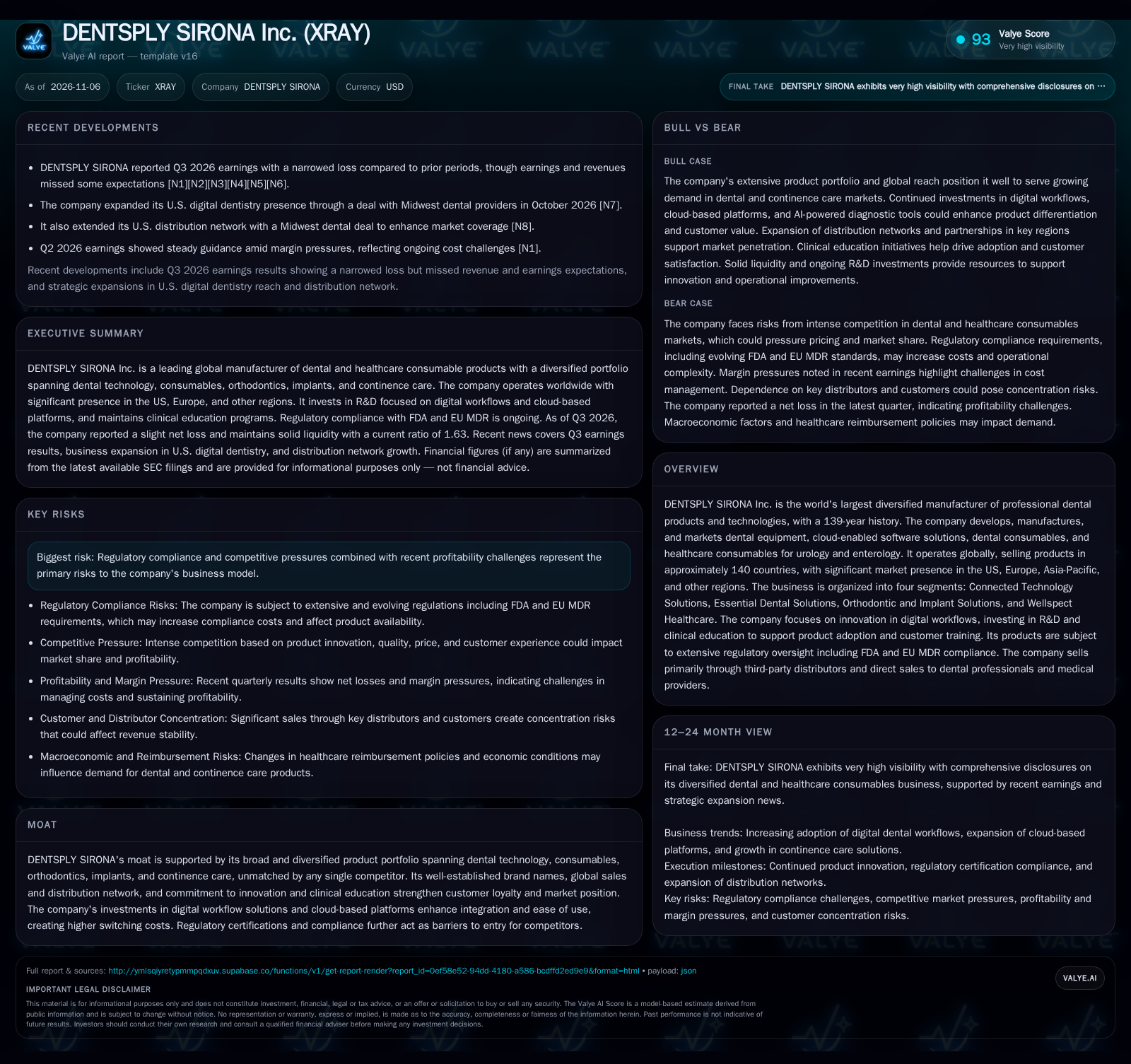
DENTSPLY SIRONA, the world’s largest diversified dental manufacturer, reported a narrowed Q3 2026 loss and expanded its U.S. digital dentistry reach via Midwest partnerships. With a broad global portfolio and increasing R&D in digital workflows, the company is betting on technology and channel expansion. However, persistent margin and profitability challenges, regulatory costs, and distributor concentration remain material risks. The next phase hinges on whether digital and cloud-enabled solutions can drive sustained adoption and margin improvement in a crowded, regulated market. [S1] [S2] [N7] [N8]
DENTSPLY SIRONA enters late 2026 at a strategic crossroads: its Q3 loss has narrowed, and recent deals have broadened its digital dentistry and U.S. distribution reach. Yet the company’s ability to restore consistent profitability and expand margins remains uncertain. As the dental industry pivots toward digital workflows, cloud-based platforms, and AI-driven diagnostics, DENTSPLY SIRONA is investing heavily in innovation and channel partnerships. The question is whether these moves can overcome persistent competitive, regulatory, and margin headwinds—or if the company’s broad portfolio and global scale will be offset by structural pressures in its core markets.
Recent Financials and Market Moves Reshape the Near-Term Outlook
DENTSPLY SIRONA reported a net loss of $2 million for Q3 2026, with basic and diluted EPS at -$0.01. While this represents an improvement from prior periods, it underscores ongoing margin pressures and the challenge of achieving sustained profitability in a competitive environment. [S2]
As of September 30, 2026, the company held $195 million in cash and equivalents, with a current ratio of 1.63 and a cash ratio of 0.16. The company reported cash and liquidity metrics for the period; these figures do not by themselves establish operating runway, investment capacity, financial flexibility, or financing capacity. [S2]
Strategically, DENTSPLY SIRONA expanded its U.S. digital dentistry presence and distribution network through new deals with Midwest dental providers in October 2026, aiming to enhance domestic market coverage and accelerate the adoption of digital solutions. [N7] [N8]
The company plans to increase its R&D investment from approximately 4% to 5% of net sales beginning in 2026, with a focus on digital workflow and cloud-based platform innovation. [S1]
How DENTSPLY SIRONA’s Portfolio and Channel Structure Shape its Profit Model
DENTSPLY SIRONA generates revenue across four main segments: Connected Technology Solutions (digital dental equipment and software), Essential Dental Solutions (consumables), Orthodontic and Implant Solutions, and Wellspect Healthcare (continence care). Each segment features distinct economic drivers, but collectively the business depends on a mix of capital-intensive equipment sales, recurring consumable sales, and service/software offerings. [S1]
Approximately two-thirds of dental equipment and consumables are sold through third-party distributors, exposing the company to channel bargaining power and potentially limiting pricing flexibility. Direct sales to dental labs and professionals offer higher margin potential but may require higher sales and service costs. For Wellspect Healthcare, sales are split between medical supply distributors and direct-to-patient/provider channels, again shaping margin profiles and working capital needs. [S1]
The move toward digital workflows and cloud-enabled platforms (e.g., CEREC, DS Core) could, in theory, shift the revenue mix toward higher-margin software and recurring service streams. However, the capital intensity of equipment manufacturing, along with ongoing R&D and regulatory compliance costs, creates a structurally high fixed-cost base. This means that operating leverage is significant: incremental volume growth in digital or consumable segments could drive margin expansion, but underutilization or weak adoption weighs heavily on profitability.
The planned increase in R&D intensity—from ~4% to ~5% of sales—represents a bet on innovation but also raises the break-even threshold, especially if digital adoption lags expectations. The company’s ability to translate R&D into commercial wins and defend margins will be central to its long-term economics.
Portfolio Breadth, Innovation, and the Battle for Share in Dental and Continence Markets
DENTSPLY SIRONA’s moat rests on its differentiated breadth across dental technology, consumables, implants, orthodontics, and continence care, combined with a global sales and education infrastructure. No single competitor offers a portfolio spanning all these categories, but each segment faces intense competition from specialized manufacturers, digital workflow providers, and lower-cost alternatives. [S1]
Product innovation—particularly in digital dentistry (imaging, CAD/CAM, cloud platforms)—is a major axis of competition. The company’s recent launches (CEREC Primemill Lite, DS Core Diagnose AI, Cercon 4D Zirconia Abutment Block) signal ongoing investment, but rivals in imaging, aligners, and cloud-based dental platforms are also innovating rapidly.
DENTSPLY SIRONA’s broad distribution network and established relationships with key dental distributors (notably Henry Schein and Patterson Companies) support market access, but also create dependency and limit direct customer engagement. Distributor concentration exposes the company to pricing negotiations, shifting purchasing patterns, and potential channel conflict if direct sales expand.
Regulatory compliance (FDA, EU MDR) is both a barrier to entry and a source of cost and complexity. While DENTSPLY SIRONA’s global certifications protect its incumbency, ongoing regulatory changes could disrupt product availability or elevate compliance costs. Customer switching costs are higher for integrated digital platforms, but many consumables remain highly substitutable.
If Digital Workflow Adoption Accelerates, Margin Expansion Could Follow
A favorable scenario would see DENTSPLY SIRONA’s investment in digital workflows and cloud-enabled platforms driving rapid adoption among dentists and labs, particularly in the U.S. and Europe. As more practices embrace chairside CAD/CAM, AI-powered diagnostics, and cloud-based case management, recurring software/service revenue could rise as a share of the mix, supporting higher gross margins and reducing earnings volatility.
The company’s expanded U.S. distribution network and targeted clinical education initiatives could accelerate this transition, especially if the new Midwest partnerships translate into incremental sales of digital equipment and related consumables. Increased R&D spending could yield differentiated products that command price premiums.
Evidence confirming this upside would include: sustained double-digit growth in digital equipment/software sales, rising attach rates for cloud-based services, improved segment-level margins in Connected Technology Solutions, and a return to consistent quarterly profitability despite higher R&D outlays. Announcements of major new platform customers or successful regulatory certifications for next-generation products would further validate this scenario.
Falsification would occur if digital adoption stalls, if margin improvement fails to materialize despite higher R&D, or if new regulatory hurdles delay product launches.
Steady Share but Pressured Margins: Navigating Structural Headwinds
The most plausible trajectory is that DENTSPLY SIRONA maintains its global market presence and broad portfolio but continues to face margin and earnings pressure. Incremental gains from digital workflow adoption are offset by price competition in consumables and distributor-driven margin compression.
R&D investments yield moderate product refreshes and incremental platform improvements, but neither volume growth nor pricing power is sufficient to drive sustained margin expansion. Regulatory compliance costs remain elevated, and while the company meets certification requirements, the process absorbs management and financial resources.
Quarterly results fluctuate between modest profits and occasional losses, reflecting the balance between innovation-driven growth and structural cost pressures.
This scenario is confirmed by continued single-digit revenue growth, flat or modestly improving segment margins, and a persistent but not worsening pattern of quarterly losses or near-break-even results.
When Margin Pressure and Channel Risks Compound: A Turn for the Worse
The most adverse outcome would involve persistent or worsening margin erosion, compounded by distributor concentration risks and regulatory setbacks. If key distributors consolidate or shift purchasing to competing suppliers, DENTSPLY SIRONA could face sudden revenue declines or be forced to offer deeper discounts, further compressing margins.
Regulatory compliance failures or delays—especially under evolving FDA or EU MDR requirements—could disrupt product availability, trigger recalls, or result in elevated remediation costs. If digital workflow adoption underperforms expectations, the company’s increased R&D spending may not translate into sales growth, driving negative operating leverage.
A significant macroeconomic downturn or adverse changes in healthcare reimbursement policies could depress demand for elective dental procedures and continence care products, amplifying fixed-cost absorption issues.
This scenario would be confirmed by a string of quarterly losses, negative free cash flow, declining sales to major distributors, or public disclosures of regulatory non-compliance.
Factors That Will Shape DENTSPLY SIRONA’s Margin Recovery and Digital Trajectory
Quarterly segment-level revenue and margin trends in Connected Technology Solutions—if disclosed—would clarify whether digital workflow adoption is translating into profitable growth.
Updates on the attach rate and recurring revenue from cloud-enabled platforms and software services would help test the shift toward higher-margin digital offerings.
Any disclosed changes in sales concentration or purchasing patterns among major distributors (notably Henry Schein and Patterson Companies) would indicate channel risk or bargaining power shifts.
Progress on regulatory certifications and product registrations, especially under the EU MDR and FDA, would signal the company’s ability to defend its portfolio and avoid compliance disruptions.
R&D expense as a percentage of net sales and the tangible commercial outcomes from these investments (e.g., new product launches, patent filings, platform upgrades) would be crucial for innovation-driven growth.
Quarterly cash flow from operations and changes in working capital would provide early warning of financial stress or operating inefficiencies.
Market adoption rates and customer feedback on recently launched digital products, including CEREC Primemill Lite and DS Core Diagnose AI, would offer external validation of the innovation strategy.
Announcements of new distribution partnerships, major customer wins, or direct-to-provider channel expansion would signal progress in market reach and channel diversification.
Disclaimer: This is research-only, informational analysis and not investment advice. It may include AI-generated interpretation and general industry context. Always verify important details using primary sources.

Comments